
Healthline: Flu and RSV cases are rising, here's when they may peak
UC expert says COVID-19 cases are up, but hospitalizations are down

Cases of respiratory illnesses, including the flu, COVID, and respiratory syncytial virus (RSV), are spreading rapidly across the United states.
The latest influenza report report from the Centers for Disease Control and Prevention (CDC) released Friday shows that, in the past week, over 20,000 people were admitted to the hospital with the flu.
In a story on the topic posted by Healthline, Carl Fichtenbaum, MD, of the Division of Infectious Diseases at the UC College of Medicine was one of several experts interviewed.
Fichtenbaum says influenza was abnormally quiet in 2020, 2021, and even throughout 2022.
In the late 2022 and early 2023 flu season, the virus came back with a vengeance, and triggered a surge in cases and hospitalizations, he says.
Flu-like activity is currently high in two-thirds of the country, which is greater than what the country saw this time last year, according to the CDC.
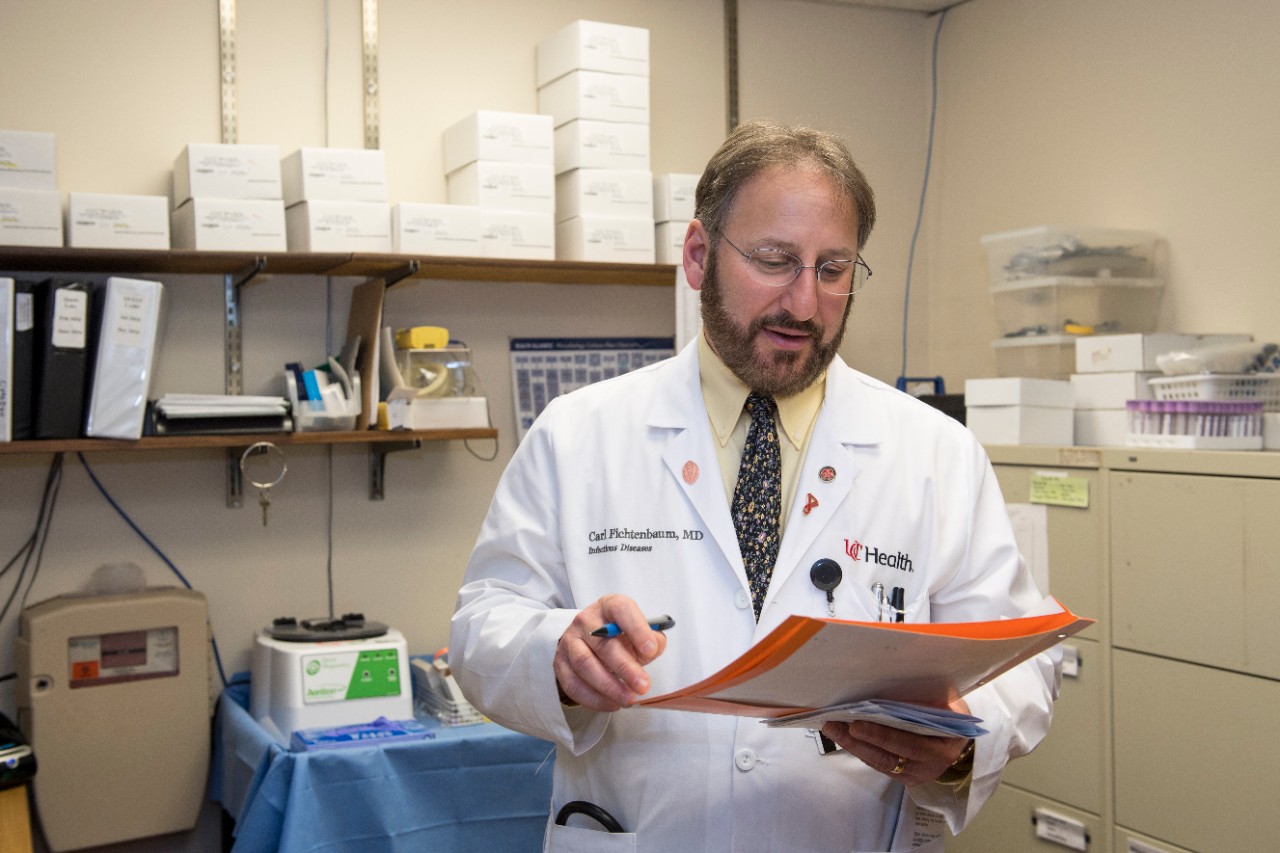
Carl Fichtenbaum, MD, of the Division of Infectious Diseases at the UC College of Medicine/ Photo/Colleen Kelley/UC Marketing + Brand
Healthline reported that we can usually predict what the Northern Hemisphere’s flu season will be like by looking at what recently transpired in the Southern Hemisphere.
Australia’s flu season runs from May to October, for example, and they recently saw a 13.5% increase in cases over the past year.
“We may expect something similar in the U.S. The peak will likely be late January or February,” Fichtenbaum said.
Though COVID-19 activity is increasing, hospitalizations are down compared to 2022, according to Fichtenbaum.
“This is due to widespread immunity from those that already have gotten COVID before and vaccine immunity,” he said.
It’s unclear when this COVID-19 wave will begin to dip, as it appears it has not yet peaked. RSV, on the other hand, may have just hit its peak as activity is slowly dropping. That said, RSV activity is still high and many states have reported an influx in hospitalizations following the holidays.
“The peak last year was late November 2022. And this year looks like it will be late December or January for the peak,” says Fichtenbaum.
Lead image/Roos Koole/Getty Images
Next Lives Here
The University of Cincinnati is classified as a Research 1 institution by the Carnegie Commission and is ranked in the National Science Foundation's Top-35 public research universities. UC's graduate students and faculty investigate problems and innovate solutions with real-world impact. Next Lives Here.
Related Stories
UC launches Bearcats Affordability Grant
January 7, 2026
The University of Cincinnati is making college more attainable for students across Ohio with the creation of the Bearcats Affordability Grant. The new grant will provide a pathway to tuition-free college for students of families who make less than $75,000 per year. Beginning in fall 2026, the Bearcats Affordability Grant will cover the remaining cost of tuition for Ohio residents who are Pell eligible.
Sugar overload killing hearts
November 10, 2025
Two in five people will be told they have diabetes during their lifetime. And people who have diabetes are twice as likely to develop heart disease. One of the deadliest dangers? Diabetic cardiomyopathy. But groundbreaking University of Cincinnati research hopes to stop and even reverse the damage before it’s too late.
Is going nuclear the solution to Ohio’s energy costs?
November 10, 2025

The Ohio Capital Journal recently reported that as energy prices continue to climb, economists are weighing the benefits of going nuclear to curb costs. The publication dove into a Scioto Analysis survey of 18 economists to weigh the pros and cons of nuclear energy. One economist featured was Iryna Topolyan, PhD, professor of economics at the Carl H. Lindner College of Business.