The Oncology Nursing Podcast: UC expert discusses antimetabolite drugs

The University of Cincinnati's Rowena Schwartz joined The Oncology Nursing Podcast to discuss what oncology nurses need to know about a class of chemotherapy drugs called antimetabolites.
Schwartz, PharmD, said antimetabolites are some of the oldest anti-cancer drugs that are "developed to be similar to naturally occurring compounds that are important in cell production." They work in different ways to accomplish the goal of killing cancer cells, and also have uses as antibacterial drugs, she said.
Each drug has different potential side effects, and even the same drug can have different side effects when given at different doses and regimens, Schwartz said, highlighting the need for every member of an oncology care team to be familiar with each specific drug, dose and regimen.
"If I don’t use a drug often, I will always look it up again before I do any kind of education for a patient," said Schwartz, professor of pharmacy practice at UC's James L. Winkle College of Pharmacy. "If I don’t use [a drug] routinely in my practice, I always find myself reviewing it just to make sure that a nuanced side effect that may be very important for a patient, I will go over."
Patient education is a job for the whole team, Schwartz said, and there needs to be collaboration between doctors, nurses and pharmacists.
"I think that in this day and age it is really important that there’s collaboration in developing whatever resources that we have," she said. "I guess that goes even beyond order sets to the education we deliver to patients to make sure it’s a consistent message. I think that is essential that the team knows what everybody is going to say so that it is consistent, because patients get so confused."
Even though antimetabolites are an older type of drug, Schwartz said she believes they will remain an important part of cancer treatment.
“I think that there are certain agents that are so foundational in some diseases that they will remain. Whether they remain first-line, maybe not; maybe they’ll go to second line as we see things evolve with new agents," she said. "Some of these drugs have been very effective in the diseases in which they are used to treat patients. There’s a long term place in therapy for these, and I think that we'll still be using these.”
Listen to The Oncology Nursing Podcast.
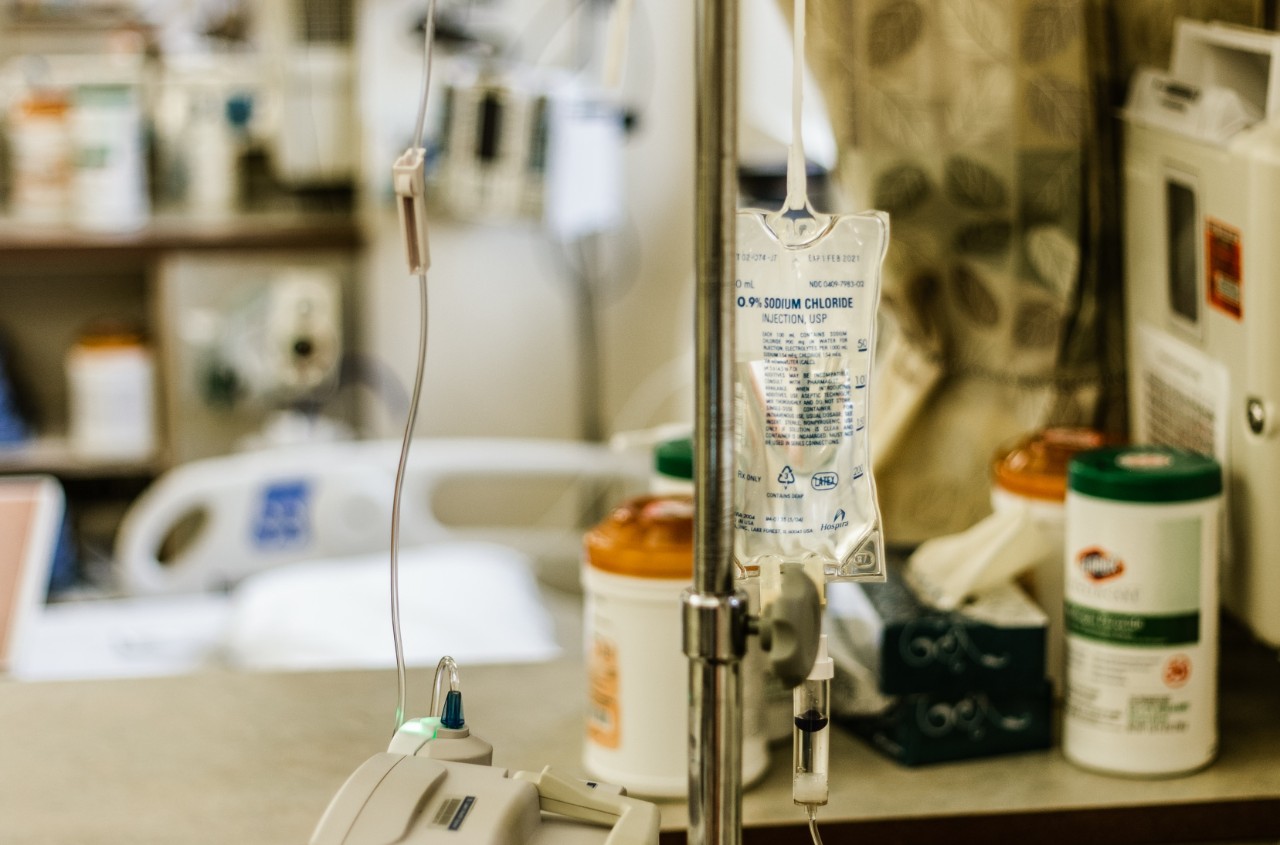
Featured photo at top of hospital room. Photo/Dmitri Karastelev/Unsplash.
Related Stories
Sugar overload killing hearts
November 10, 2025
Two in five people will be told they have diabetes during their lifetime. And people who have diabetes are twice as likely to develop heart disease. One of the deadliest dangers? Diabetic cardiomyopathy. But groundbreaking University of Cincinnati research hopes to stop and even reverse the damage before it’s too late.
Is going nuclear the solution to Ohio’s energy costs?
November 10, 2025

The Ohio Capital Journal recently reported that as energy prices continue to climb, economists are weighing the benefits of going nuclear to curb costs. The publication dove into a Scioto Analysis survey of 18 economists to weigh the pros and cons of nuclear energy. One economist featured was Iryna Topolyan, PhD, professor of economics at the Carl H. Lindner College of Business.
App turns smartwatch into detector of structural heart disease
November 10, 2025

An app that uses an AI model to read a single-lead ECG from a smartwatch can detect structural heart disease, researchers reported at the 2025 Scientific Sessions of the American Heart Association. Although the technology requires further validation, researchers said it could help improve the identification of patients with heart failure, valvular conditions and left ventricular hypertrophy before they become symptomatic, which could improve the prognosis for people with these conditions.