UC professor wins recognition for scholarship in India’s caste system
Text explores feminist influences on conflicts in Dalit culture, community

UC’s Shailaja Paik has been awarded the 2023 John F. Richards Prize in South Asian History for her book “The Vulgarity of Caste: Dalits, Sexuality and Humanity in Modern India.” Paik is the Charles P. Taft Distinguished Professor of History in the College of Arts and Sciences.
Conferred by the American Historical Association, the competitive award recognizes the most distinguished work of scholarship on South Asian History published in English. Applicants are evaluated on the basis of depth of research, methodological innovation, conceptual originality and literary excellence.
Published by Stanford University Press in 2022, the book explores the social and intellectual history of Dalit performance of Tamasha—a popular form of public, secular, traveling theater.
In India, Dalit were known as untouchables, as members of the lowest stratum of the castes. Some 200 million people, or 16% of the population of India, are Dalit, or born into social marginalization, economic disadvantage, exclusion and human rights violations. For centuries, Dalits have been forced to take manual jobs, working as cleaners, scavengers and waste pickers.

Cover of book, "The Vulgarity of Caste," provided by Stanford University Press.
In her book, Paik argues that Dalit artists, activists and leaders used Tamasha to negotiate the violence, exploitation and stigma inherent in their experience as members of the lowest caste. She also explores how Dalit Tamasha women became foundational actors in conflicts over caste, culture, class, gender and sexuality.
“This work is one of the many reasons Paik is at the forefront of Dalit feminist studies, and why she is one of the most innovative historians of South Asia writing today,” said Christian Lee Novetzke, professor in the South Asia Program at the University of Washington, in a release.
Paik knows of which she writes. Raised in a tenement in Pune, India, Paik herself is a Dalit. When she was a girl, water service was sporadic, and she carried vessels of water on her head from the city public tap to her home for bathing, cleaning and cooking.
Encouraged by her father, she pursued her education, earning a bachelor’s and master’s degree in history from the Savitribai Phule Pune University. Through a series of fellowships, Paik made her way to earn her doctorate, concentrating her research on the field of Dalit studies and focusing on ways to tell the stories of India’s underrepresented Dalit caste.
"My book offers the first social and intellectual history of Tamasha (popular, traveling secular theatre)—a supposedly traditional culture of Dalits (“Untouchable”), and especially of Dalit women," says Paik. "It has educational, societal, and legislative impact and it deepens global conversations on social justice, equality, and human rights, and the worldwide dialogue on caste and race."
Paik has been on faculty at UC since 2010, with her first book, “Dalit Women’s Education in Modern India: Double Discrimination” (Routledge), published in 2014.
Since then, she also has been awarded the Frederick Burkhardt Fellowship from the American Council of Learned Societies, the Stanford Humanities Center Fellowship, the American Institute of Indian Studies Fellowship, and the Luce Foundation Fellowship.
In addition to her work with the College of Arts and Sciences’ history department, Paik serves as an affiliate faculty member in both the departments of Asian Studies and Women’s, Gender, and Sexuality Studies. She teaches classes on South Asian history, society, culture and politics.
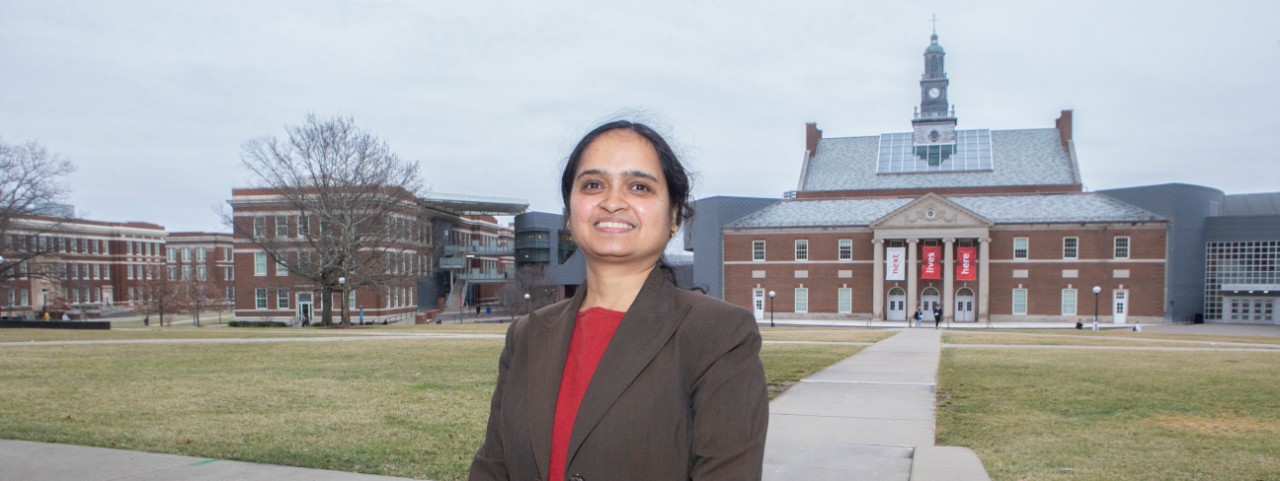
Featured image at top: UC associate professor of history Shailaja Paik. Credit/provided.
Impact Lives Here
The University of Cincinnati is leading public urban universities into a new era of innovation and impact. Our faculty, staff and students are saving lives, changing outcomes and bending the future in our city's direction. Next Lives Here.
Related Stories
Sugar overload killing hearts
November 10, 2025
Two in five people will be told they have diabetes during their lifetime. And people who have diabetes are twice as likely to develop heart disease. One of the deadliest dangers? Diabetic cardiomyopathy. But groundbreaking University of Cincinnati research hopes to stop and even reverse the damage before it’s too late.
Is going nuclear the solution to Ohio’s energy costs?
November 10, 2025

The Ohio Capital Journal recently reported that as energy prices continue to climb, economists are weighing the benefits of going nuclear to curb costs. The publication dove into a Scioto Analysis survey of 18 economists to weigh the pros and cons of nuclear energy. One economist featured was Iryna Topolyan, PhD, professor of economics at the Carl H. Lindner College of Business.
App turns smartwatch into detector of structural heart disease
November 10, 2025

An app that uses an AI model to read a single-lead ECG from a smartwatch can detect structural heart disease, researchers reported at the 2025 Scientific Sessions of the American Heart Association. Although the technology requires further validation, researchers said it could help improve the identification of patients with heart failure, valvular conditions and left ventricular hypertrophy before they become symptomatic, which could improve the prognosis for people with these conditions.