Know Stroke Podcast: UC expert discusses past, present and future of stroke research

The University of Cincinnati's Joseph Broderick, MD, recently joined the Know Stroke Podcast to discuss his first-hand experiences of how stroke care and research has progressed throughout his time as a physician-researcher.
"I started when we were literally testing tPA (a clot-busting drug and first proven treatment for ischemic strokes), and now we’re seeing some major advances," said Broderick, professor in UC’s Department of Neurology and Rehabilitation Medicine in the College of Medicine, director of the UC Gardner Neuroscience Institute and a UC Health physician. "But there’s still a lot of work to do because about half the people who get either a drug like tPA or have the clot pulled out still don’t have good outcomes. And we also have to work on how do we help people who had significant damage to the brain."
Broderick is the contact principal investigator for the FASTEST clinical trial that is testing a treatment for strokes caused by intracerebral hemorrhage, when blood vessels in the brain rupture and cause bleeding in the brain. There are currently no proven treatments for these kinds of strokes.
"In FASTEST, we’re using this drug that we know actually does slow bleeding," he said. "One of the things when we looked at the prior data from other trials is that the benefits seemed to occur if you gave it within a couple hours after onset. So what the challenge in this study is...we’re treating people within two hours of when they have the onset of their symptoms."
Listen to the Know Stroke Podcast.
Read more about the FASTEST trial.
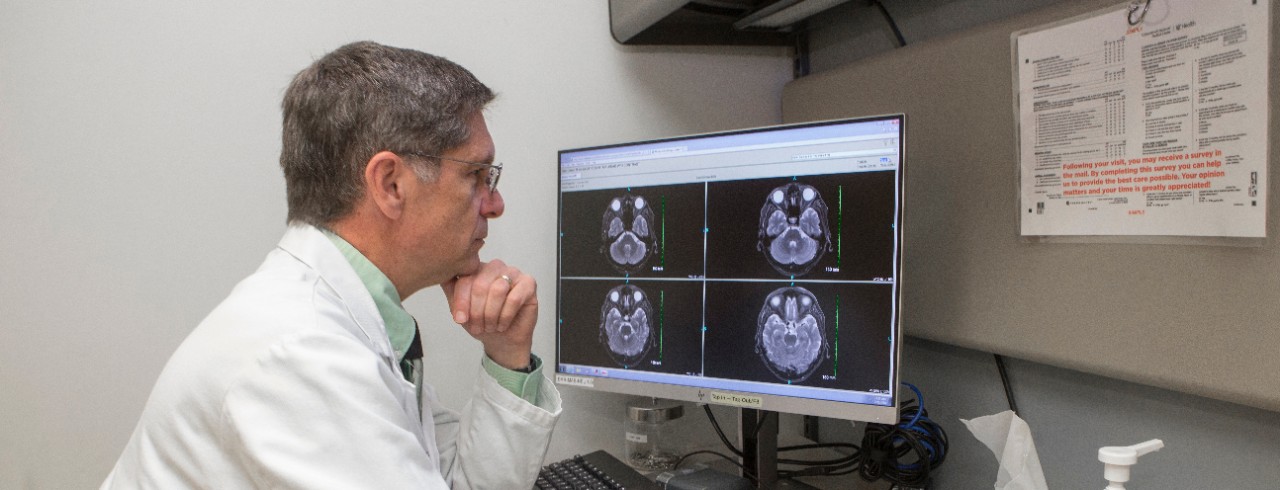
Featured photo at top of Dr. Broderick. Photo/Joseph Fuqua II/University of Cincinnati
Related Stories
Sugar overload killing hearts
November 10, 2025
Two in five people will be told they have diabetes during their lifetime. And people who have diabetes are twice as likely to develop heart disease. One of the deadliest dangers? Diabetic cardiomyopathy. But groundbreaking University of Cincinnati research hopes to stop and even reverse the damage before it’s too late.
Is going nuclear the solution to Ohio’s energy costs?
November 10, 2025

The Ohio Capital Journal recently reported that as energy prices continue to climb, economists are weighing the benefits of going nuclear to curb costs. The publication dove into a Scioto Analysis survey of 18 economists to weigh the pros and cons of nuclear energy. One economist featured was Iryna Topolyan, PhD, professor of economics at the Carl H. Lindner College of Business.
App turns smartwatch into detector of structural heart disease
November 10, 2025

An app that uses an AI model to read a single-lead ECG from a smartwatch can detect structural heart disease, researchers reported at the 2025 Scientific Sessions of the American Heart Association. Although the technology requires further validation, researchers said it could help improve the identification of patients with heart failure, valvular conditions and left ventricular hypertrophy before they become symptomatic, which could improve the prognosis for people with these conditions.