UC chemist’s 1980s research enabled lifesaving diagnostics
Medical radioisotope serves as key component in cardiac stress tests

Everything starts with an idea, and the University of Cincinnati makes sure that good ideas make a difference in the world.
One example is the work of Edward Deutsch, PhD, around the radioisotope Technetium-99m, which, with assistance from the university's technology transfer resources, have made Tc99m the most commonly used medical radioisotope in the world, a part of over 20 million diagnostic procedures annually.
Lifesaving research
Though technetium was discovered in 1937, it remained a curiosity for many years, with a very short half-life and only traces found in nature. (It was the first synthesized element.)
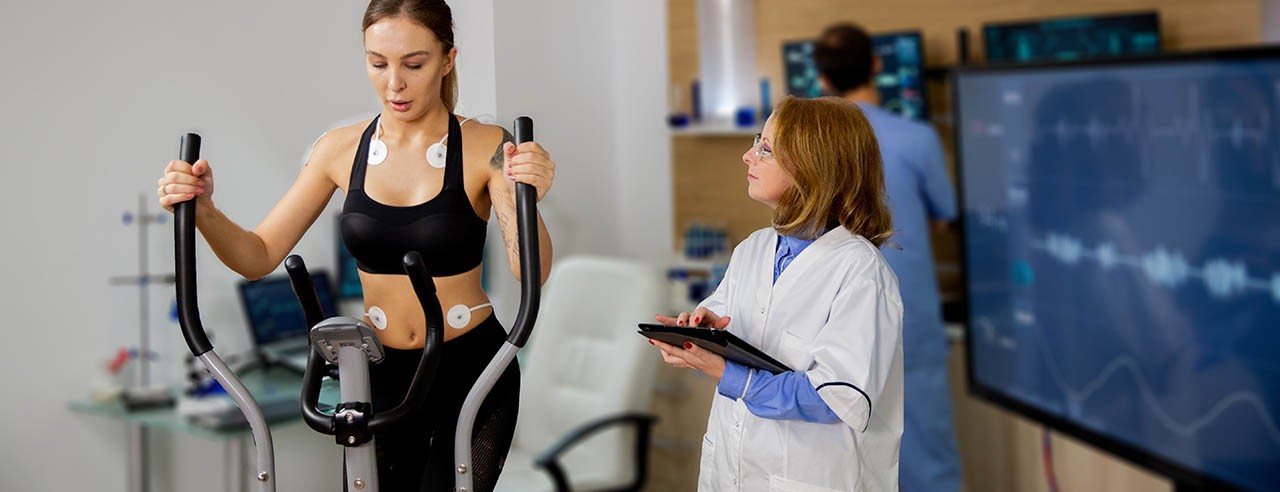
Deutsch’s research was instrumental in modern medicine’s ability to use Tc99m as an imaging agent in everything from bone and brain scans to cardiac stress tests — where it serves as a key component of Myoview or Cardiolite — to medical imaging of the lungs, liver, and infections and tumors of all kinds. Tc99m is particularly useful for detecting hard-to-find cancers, so it has literally been a lifesaver for millions.
As science journalist Mark Peplow puts it, technetium’s brief half-life allows it to light up targeted areas of the body, assessing how well they work without adverse patient reactions.
“Hooking the technetium atoms up with certain organic molecules or pharmaceuticals can even allow you to target specific types of tissue,” Peplow wrote. “Because technetium doesn't occur naturally, it doesn't interfere with any of the body's biochemistry. And since you need so little of the isotope, it keeps the radiation dose really low.”
Deutsch was a professor of chemistry at the University of Cincinnati when he received a series of National Institutes of Health grants to study Tc-99 as a myocardial imaging agent in the 1980s. He patented a series of technologies related to the use of Tc-99 in cardiac imaging.
From idea to reality
Creating a new product or service — that’s innovation. Taking the next step from creative idea to company, including licensing, patenting and business development — that’s technology transfer. The job of the 1819 Innovation Hub, created in 2018 as the centerpiece of the Cincinnati Innovation District, is to get world-changing ideas like Deutsch’s out of the lab and into the marketplace.
“Our mission in technology transfer is to help research make an impact through commercialization,” said Geoffrey Pinski, assistant vice president for technology transfer.
The tech transfer team offers innovators the resources they need to understand the market potential of their research, attract sponsors and secure rights and patents, all in service of advancing knowledge and making a positive impact on society.
Featured image at top: Image by DCStudion on Freepik.
Learn more about UC's Tech Transfer team
The 1819 Innovation Hub’s technology transfer team facilitates the transfer of inventions from academic research labs to market. Find out more at Inventor's Guide to Technology Transfer at the University of Cincinnati and Take your NEXT step.
Related Stories
New approach could treat cancer by rearranging tumor cell structures
November 10, 2025
The University of Cincinnati’s Jiajie Diao, PhD, and colleagues have published new research showing a proof of concept that rearranging the location of lipid droplets within cells can increase the effectiveness of cell starvation, making it a potential cancer treatment. The research was published as the November cover story in the journal Trends in Biotechnology.
Silicon Valley is closely watching UC’s NEXT Innovation Scholars
November 7, 2025
The University of Cincinnati’s NEXT Innovation Scholars program has built a network of elite Silicon Valley talent that’s seeking out undergraduate Bearcats and sharing insights with them.
Two University of Cincinnati colleges benefit from $4 million gift
November 7, 2025
University of Cincinnati alumni Mohammad H. Qayoumi, MS ’79, MS ’80, MBA ’84, PhD ’83 and Najia Karim, BS ’82, MEd ’83, RD, have made a $4 million gift supporting two of the university’s colleges. A donation from the couple establishes a fund and an endowed chair at the College of Engineering and Applied Science, as well as an endowed chair at the College of Allied Health Sciences.