WCPO: Middletown man hopes prostate cancer diagnosis inspires other to get screened
UC expert discusses prostate cancer

Reverend Michael Bailey and the University of Cincinnati Cancer Center's Nilesh Patil, MD, recently spoke with WCPO about the importance of screening during Prostate Cancer Awareness Month.
After being diagnosed with prostate cancer five years ago following years of routine checkups, Bailey is now cancer free following treatment.
"One of the reasons why this is a cancer where we advocate screening is because there is no symptoms of this condition,” said Patil, Cancer Center member and associate professor of surgery in the UC College of Medicine. "Prostate cancer is the most common cancer in men in most of the world if you rule out skin cancers, and so the incidences of prostate cancer is pretty high."
Patil said Black men are disproportionately affected by prostate cancer, with the Centers for Disease Control and Prevention reporting Black men are more likely to be diagnosed and twice as likely to die from prostate cancer, and are additionally more likely to be diagnosed at a younger age and with more advanced stages of the disease.
“Getting a blood test is probably the most important part of the screening because we do have a test that can alert you to if something is abnormal,” Patil said. “If you catch this disease early, you can treat it early, you can cure it early. And if you don’t diagnose it, the consequences to your lifestyle, to your quality of life are quite detrimental.”
“If you love life, you’re better off being here than being somewhere else,” Bailey said. “We only have a season and we need not to expedite it because we failed to do those checkups.”
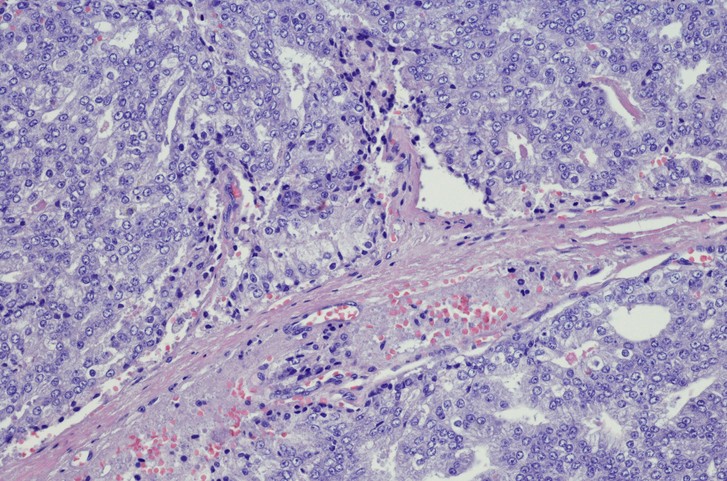
Featured photo at top of prostate cancer cells. Photo/iStock/OGphoto.
Screening can save lives
Current guidelines state men should get screened for prostate cancer if they are:
- Ages 50-70
- Ages 40 or older if a first-degree relative, including a father, uncle or grandfather, has had prostate cancer
Related Stories
Sugar overload killing hearts
November 10, 2025
Two in five people will be told they have diabetes during their lifetime. And people who have diabetes are twice as likely to develop heart disease. One of the deadliest dangers? Diabetic cardiomyopathy. But groundbreaking University of Cincinnati research hopes to stop and even reverse the damage before it’s too late.
Is going nuclear the solution to Ohio’s energy costs?
November 10, 2025

The Ohio Capital Journal recently reported that as energy prices continue to climb, economists are weighing the benefits of going nuclear to curb costs. The publication dove into a Scioto Analysis survey of 18 economists to weigh the pros and cons of nuclear energy. One economist featured was Iryna Topolyan, PhD, professor of economics at the Carl H. Lindner College of Business.
App turns smartwatch into detector of structural heart disease
November 10, 2025

An app that uses an AI model to read a single-lead ECG from a smartwatch can detect structural heart disease, researchers reported at the 2025 Scientific Sessions of the American Heart Association. Although the technology requires further validation, researchers said it could help improve the identification of patients with heart failure, valvular conditions and left ventricular hypertrophy before they become symptomatic, which could improve the prognosis for people with these conditions.