WLWT: Health experts recommend getting newly approved updated COVID-19 boosters
UC expert says new variants will trigger an increase in infections

The FDA approved and authorized new COVID-19 vaccine and booster shots from Moderna and Pfizer, as cases of the coronavirus have risen nationwide over the past few weeks. A CDC panel of outside vaccine advisers then voted by a wide majority to back new shots retargeted for newer variants ahead of the fall virus season.
The CDC committee voted in favor of "universal" recommendations for the shots to all Americans who are eligible, after weighing data and modeling backing the need for the new shots.
WLWT-TV interviewed Carl Fichtenbaum, MD, of the Division of Infectious Diseases at the UC College of Medicine about the new variants and the new vaccines.

Carl Fichtenbaum, MD, of the Division of Infectious Diseases at the UC College of Medicine/Photo/Joe Fuqua III/UC Marketing + Brand
"What we're seeing right now is a new strain, called EG.5, and that is sweeping across the country and it's likely to replace XBB.1.5 and all the other variants," said Fichtenbaum. "It's kind of a smorgasbord out there right now. And so we're going to see lots of people getting infected with that."
The new shots are similar to previously approved formulas but were updated to target the XBB variants — strains of the virus descended from the original Omicron variant — which became dominant last winter. Newer descendant strains have since emerged, though vaccine makers have announced early findings suggesting their shots will also work for the latest strains on the rise.
"So even if you just had COVID a couple of weeks ago, it's likely that another strain is coming, and you will still be at risk," Fichtenbaum said.
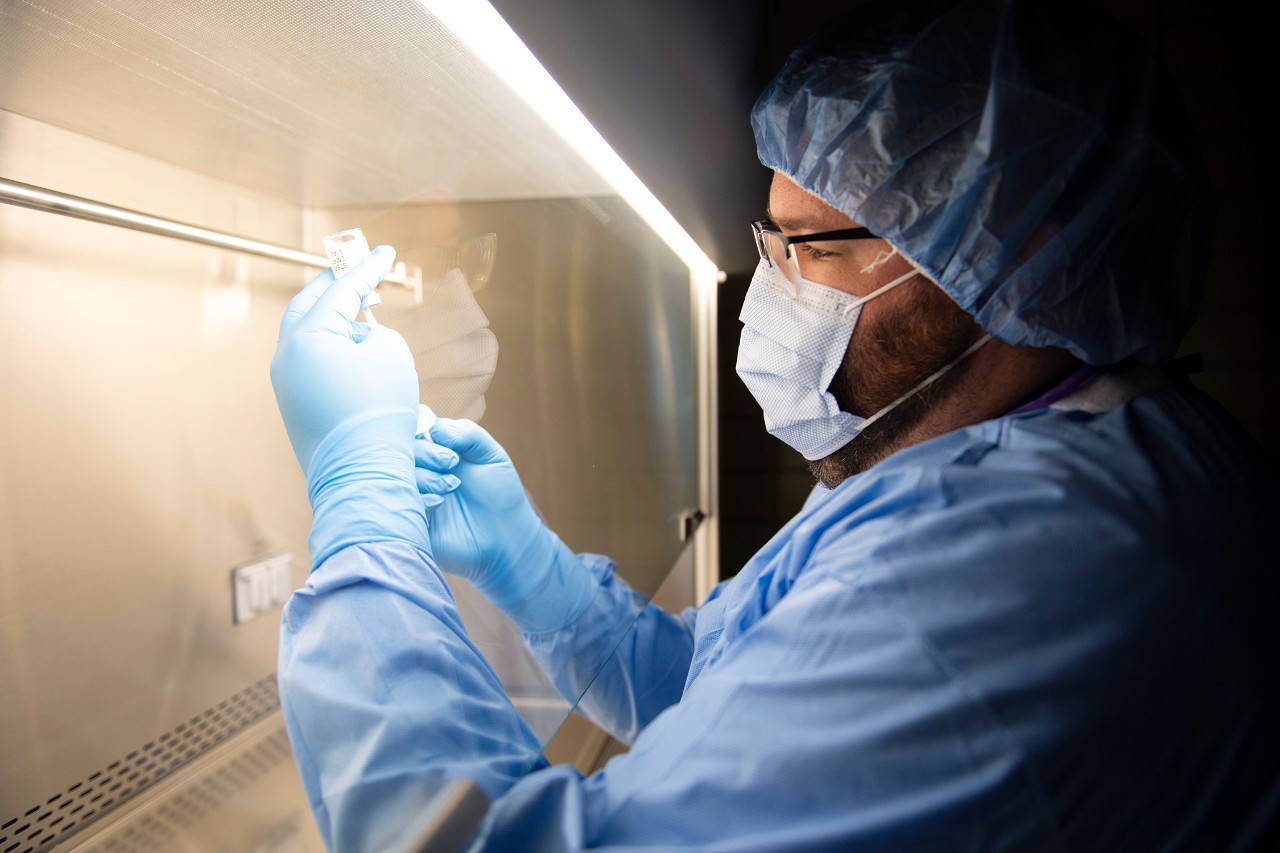
Lead photo/Colleen Kelley/UC Marketing + Brand
Next Lives Here
The University of Cincinnati is classified as a Research 1 institution by the Carnegie Commission and is ranked in the National Science Foundation's Top-35 public research universities. UC's graduate students and faculty investigate problems and innovate solutions with real-world impact. Next Lives Here.
Related Stories
Sugar overload killing hearts
November 10, 2025
Two in five people will be told they have diabetes during their lifetime. And people who have diabetes are twice as likely to develop heart disease. One of the deadliest dangers? Diabetic cardiomyopathy. But groundbreaking University of Cincinnati research hopes to stop and even reverse the damage before it’s too late.
Is going nuclear the solution to Ohio’s energy costs?
November 10, 2025

The Ohio Capital Journal recently reported that as energy prices continue to climb, economists are weighing the benefits of going nuclear to curb costs. The publication dove into a Scioto Analysis survey of 18 economists to weigh the pros and cons of nuclear energy. One economist featured was Iryna Topolyan, PhD, professor of economics at the Carl H. Lindner College of Business.
App turns smartwatch into detector of structural heart disease
November 10, 2025

An app that uses an AI model to read a single-lead ECG from a smartwatch can detect structural heart disease, researchers reported at the 2025 Scientific Sessions of the American Heart Association. Although the technology requires further validation, researchers said it could help improve the identification of patients with heart failure, valvular conditions and left ventricular hypertrophy before they become symptomatic, which could improve the prognosis for people with these conditions.