WCPO: DOD-backed clinical trial begins at UC
Research aims to repair meniscus tissue, reduce the odds of surgical failure

A Department of Defense-funded clinical trial being led at the University of Cincinnati aims to repair meniscus tissue and reduce the odds of surgical procedures failing, WCPO reported.

Brian Grawe
Amplicore, a UC spinoff biopharmaceutical company that is backed by the UC Venture Lab, has created a regenerative pharmaceutical solution for meniscal tears. Its injectable therapeutics are designed to be used alongside suturing of the damaged tissue to create a more pro-reparative, regenerative environment that reduces the odds of failure.
The injuries are of particular concern to the military.
“Muscular skeletal injuries in general are tremendously impactful to military personnel,” said Brian Grawe, MD, professor at the Department of Orthopedic Surgery at the UC College of Medicine. “It’s estimated that 25 million days are lost to active duty a year just on muscular skeletal injuries alone.”

James C. Y. Lin
Amplicore is using Simvastatin, an already Food and Drug Administration-approved drug used to treat high cholesterol, and redesigned its properties to create a treatment to change how meniscus tears are treated.
“The ultimate goal here is not to just treat the tissue itself but bring back the biomechanical function and for this reason, I think the military was very intrigued by our technology,” said James C. Y. Lin, PhD, Mary S. and Joseph S. Stern Jr. Professor of Orthopaedic Surgery and founder of Amplicore.
UC is the primary site for the research, and patients also will be enrolled at other sites across the United States, including Walter Reed National Military Medical Center.
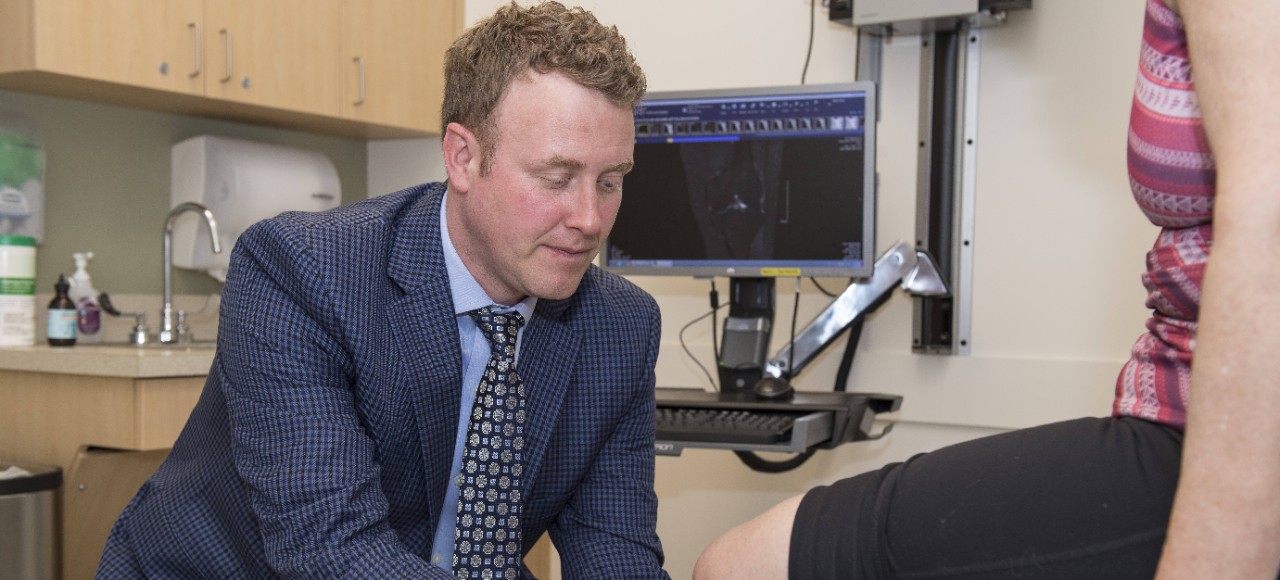
Featured image at top: Brian Grawe, MD, professor at the Department of Orthopedic Surgery and the director of sports medicine in UC’s College of Medicine, is the principal investigator of Amplicore's clinical trial that seeks a regenerative pharmaceutical solution for meniscal tears.
Related Stories
Sugar overload killing hearts
November 10, 2025
Two in five people will be told they have diabetes during their lifetime. And people who have diabetes are twice as likely to develop heart disease. One of the deadliest dangers? Diabetic cardiomyopathy. But groundbreaking University of Cincinnati research hopes to stop and even reverse the damage before it’s too late.
Is going nuclear the solution to Ohio’s energy costs?
November 10, 2025

The Ohio Capital Journal recently reported that as energy prices continue to climb, economists are weighing the benefits of going nuclear to curb costs. The publication dove into a Scioto Analysis survey of 18 economists to weigh the pros and cons of nuclear energy. One economist featured was Iryna Topolyan, PhD, professor of economics at the Carl H. Lindner College of Business.
App turns smartwatch into detector of structural heart disease
November 10, 2025

An app that uses an AI model to read a single-lead ECG from a smartwatch can detect structural heart disease, researchers reported at the 2025 Scientific Sessions of the American Heart Association. Although the technology requires further validation, researchers said it could help improve the identification of patients with heart failure, valvular conditions and left ventricular hypertrophy before they become symptomatic, which could improve the prognosis for people with these conditions.