Atlas Obscura: Biologists threw a fluorescent frog rave for science
UC biologist explains why some frogs glow in the dark

Atlas Obscura turned to a University of Cincinnati doctoral student to explain why many frogs glow in the dark under certain light.
Amartya Tashi Mitra is studying the development of vision in UC Professor Elke Buschbeck's lab. Mitra said the evidence suggests biofluorescence is one way frogs communicate in a world in which they are most active at night.

UC doctoral student Amartya Mitra. Photo/Provided
Florida State University researcher Courtney Whitcher shared her discovery that many frogs are biofluorescent with Atlas Obscura. Whitcher has been studying the phenomenon in the rainforests of South America.
Mitra was not part of the study, which was published as a preprint in the journal bioRxiv.
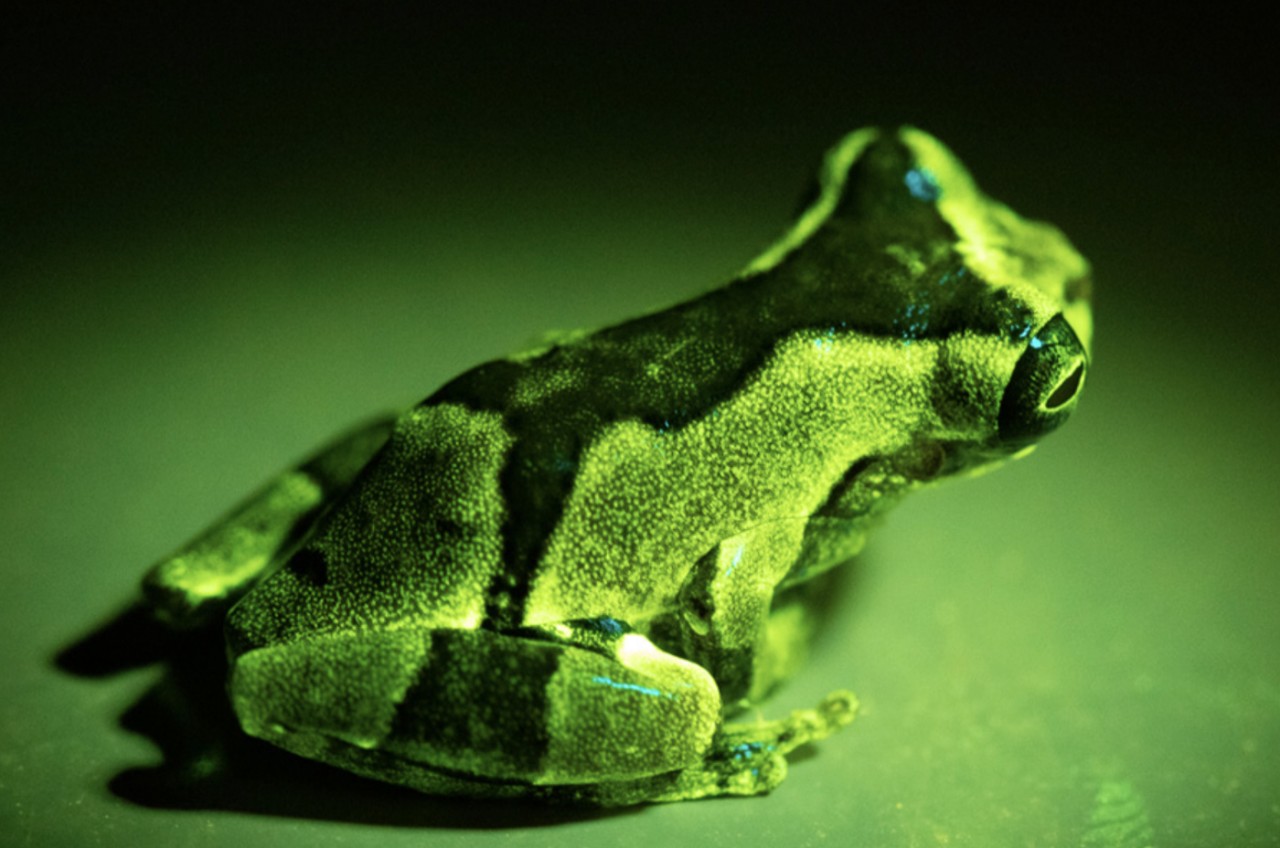
“It also seems that the species that they found to fluoresce seem to be things like tree frogs with really big eyes,” Mitra told Atlas Obscura.
“It’s quite likely that those species are using their vision to perform complex tasks like signaling. They didn’t find this kind of fluorescence in aquatic species, which have much smaller eyes and live in murky waters, so it does seem that this is something that evolved by a sensory drive to serve a very specific purpose.”
Featured image at top: A frog glows under a black light. Photo/Santiago Ron
Related Stories
Sugar overload killing hearts
November 10, 2025
Two in five people will be told they have diabetes during their lifetime. And people who have diabetes are twice as likely to develop heart disease. One of the deadliest dangers? Diabetic cardiomyopathy. But groundbreaking University of Cincinnati research hopes to stop and even reverse the damage before it’s too late.
Is going nuclear the solution to Ohio’s energy costs?
November 10, 2025

The Ohio Capital Journal recently reported that as energy prices continue to climb, economists are weighing the benefits of going nuclear to curb costs. The publication dove into a Scioto Analysis survey of 18 economists to weigh the pros and cons of nuclear energy. One economist featured was Iryna Topolyan, PhD, professor of economics at the Carl H. Lindner College of Business.
App turns smartwatch into detector of structural heart disease
November 10, 2025

An app that uses an AI model to read a single-lead ECG from a smartwatch can detect structural heart disease, researchers reported at the 2025 Scientific Sessions of the American Heart Association. Although the technology requires further validation, researchers said it could help improve the identification of patients with heart failure, valvular conditions and left ventricular hypertrophy before they become symptomatic, which could improve the prognosis for people with these conditions.