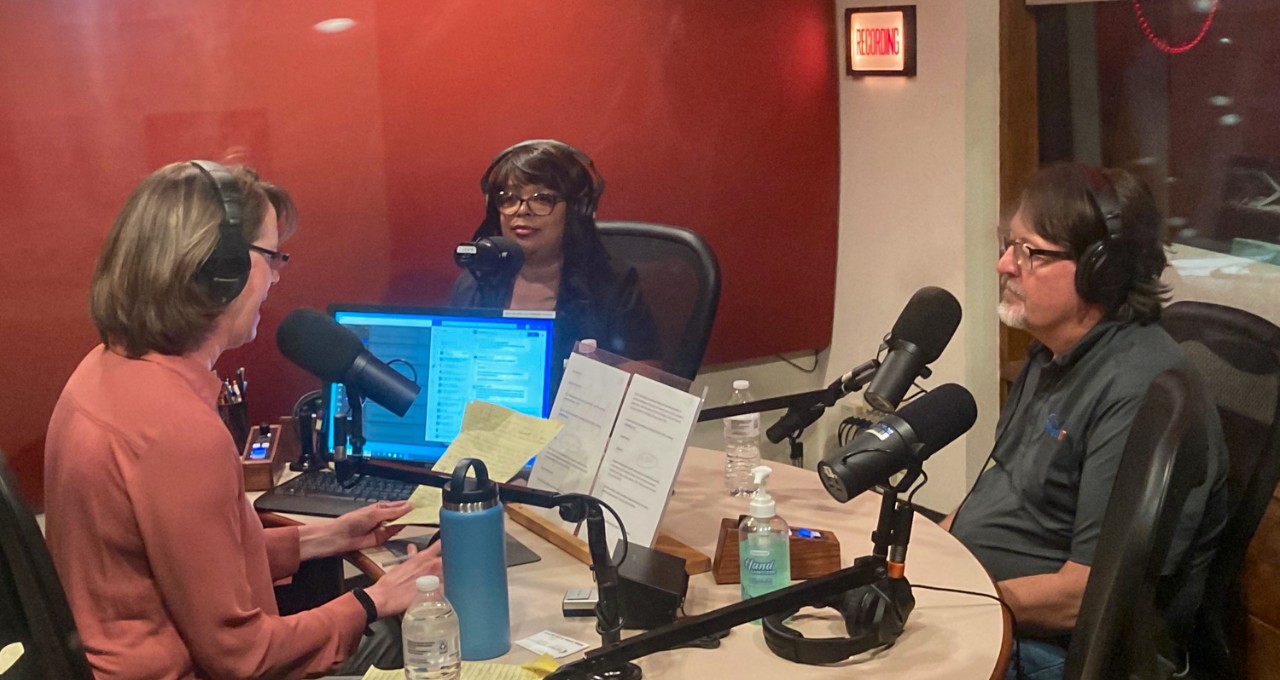
WVXU: AI continues to advance but at what cost?
UC aquatic toxicologist talks about mitigating unintended consequences

WVXU's Cincinnati Edition turned to a University of Cincinnati aquatic toxicologist to learn more about ways we can mitigate the risks of adopting new technology such as artificial intelligence into everyday life.
UC College of Arts and Sciences Assistant Professor Latonya Jackson said artificial intelligence is becoming more ubiquitous in research projects, such as water monitoring and measuring concentrations of contaminants.
She studies the long-term effects of toxins on fish in her biology lab.
Tech leaders such as former Google tech innovator Geoffrey Hinton are sounding an alarm about the risks posed by artificial intelligence.
But Jackson said there are benefits, too, particularly in long-term pollution monitoring.
"AI can be helpful not just for my research but in scientific research in general," Jackson said. "We can see if ice sheets are melting and at what rates. It helps identify concentrations of contaminants in water. It helps me to put all the data I generate into one place to do models and see how contaminants flow, how fast they go and what happens when there's rain."
Jackson was joined on the panel by Dave Hatter, a security consultant with intrustIT.

UC aquatic toxicologist Latonya Jackson studies the effects of water pollution on fish in her biology lab. Photo/Andrew Higley/UC Marketing + Brand
Related Stories
Sugar overload killing hearts
November 10, 2025
Two in five people will be told they have diabetes during their lifetime. And people who have diabetes are twice as likely to develop heart disease. One of the deadliest dangers? Diabetic cardiomyopathy. But groundbreaking University of Cincinnati research hopes to stop and even reverse the damage before it’s too late.
Is going nuclear the solution to Ohio’s energy costs?
November 10, 2025

The Ohio Capital Journal recently reported that as energy prices continue to climb, economists are weighing the benefits of going nuclear to curb costs. The publication dove into a Scioto Analysis survey of 18 economists to weigh the pros and cons of nuclear energy. One economist featured was Iryna Topolyan, PhD, professor of economics at the Carl H. Lindner College of Business.
App turns smartwatch into detector of structural heart disease
November 10, 2025

An app that uses an AI model to read a single-lead ECG from a smartwatch can detect structural heart disease, researchers reported at the 2025 Scientific Sessions of the American Heart Association. Although the technology requires further validation, researchers said it could help improve the identification of patients with heart failure, valvular conditions and left ventricular hypertrophy before they become symptomatic, which could improve the prognosis for people with these conditions.