Scientific American: Cool transportation hacks cities are using to fight climate change
UC’s Carlie Trott among experts cited in national article on climate change

Carlie Trott, a social psychologist at the University of Cincinnati, tells Scientific American that “small acts of everyday activism—such as cycling or planting community gardens—can help young people feel less anxious about climate change and more empowered to confront it.”
Trott was cited in the esteemed publication for a feature article on ways in which cities across the globe – and young people in those cities – are taking steps to reduce emissions.
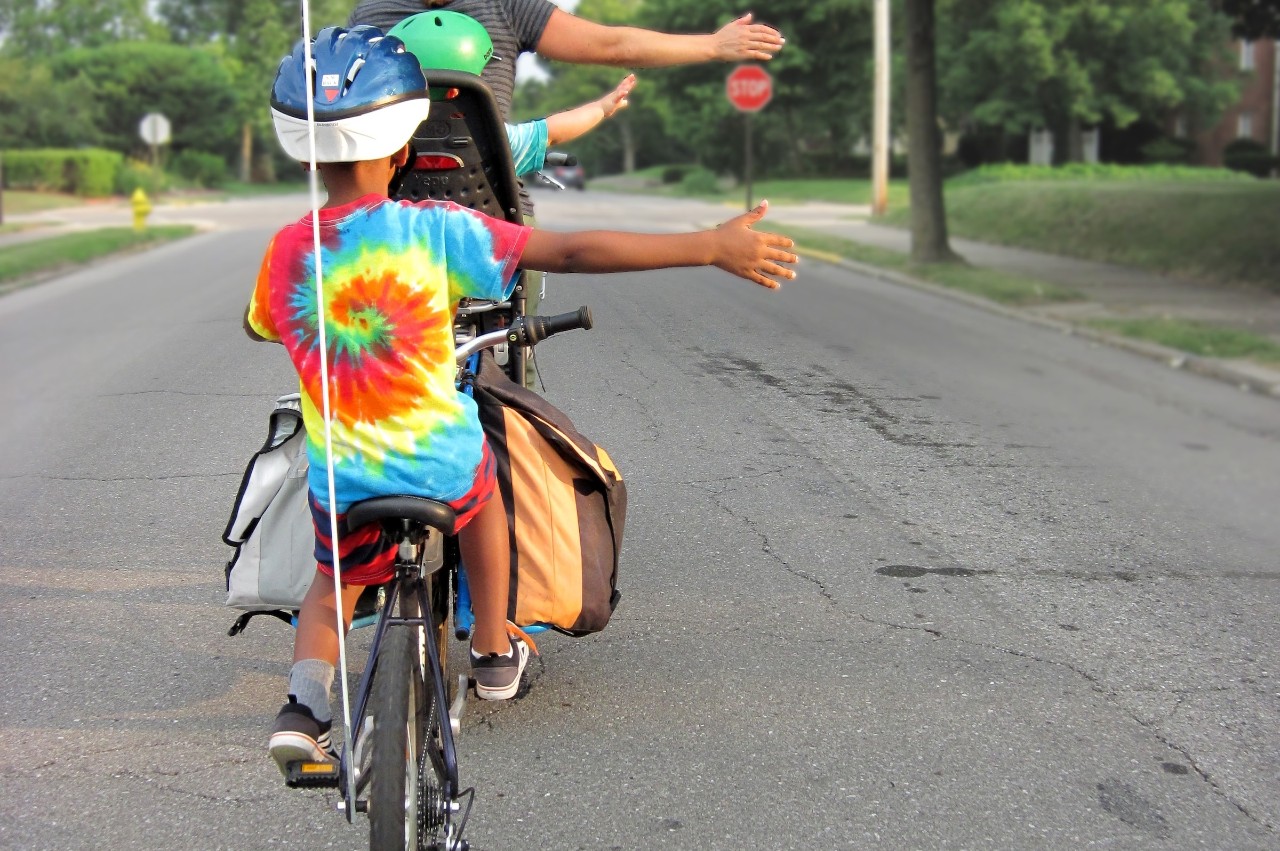
In Barcelona, for example, children started bicycling to and from school together with the help of adult volunteers in a group that has been termed a bicibús, or “bike bus,” and other cities are following suit.
Since Trott says there isn’t much existing research on how climate change affects young children psychologically, these types of efforts may assist young people with lessening climate anxiety.
Trott is an applied social psychologist and assistant professor in the Department of Psychology whose research aim is to bring visibility to, and work against the inequitable impacts of climate change, socially and geographically.
The article goes on to examine how pedestrian traffic and an increase in electric vehicles will impact climate change in the future.
Featured image by Mark Stosberg/Unsplash.
Impact Lives Here
The University of Cincinnati is leading public urban universities into a new era of innovation and impact. Our faculty, staff and students are saving lives, changing outcomes and bending the future in our city's direction. Next Lives Here.
Related Stories
Sugar overload killing hearts
November 10, 2025
Two in five people will be told they have diabetes during their lifetime. And people who have diabetes are twice as likely to develop heart disease. One of the deadliest dangers? Diabetic cardiomyopathy. But groundbreaking University of Cincinnati research hopes to stop and even reverse the damage before it’s too late.
Is going nuclear the solution to Ohio’s energy costs?
November 10, 2025

The Ohio Capital Journal recently reported that as energy prices continue to climb, economists are weighing the benefits of going nuclear to curb costs. The publication dove into a Scioto Analysis survey of 18 economists to weigh the pros and cons of nuclear energy. One economist featured was Iryna Topolyan, PhD, professor of economics at the Carl H. Lindner College of Business.
App turns smartwatch into detector of structural heart disease
November 10, 2025

An app that uses an AI model to read a single-lead ECG from a smartwatch can detect structural heart disease, researchers reported at the 2025 Scientific Sessions of the American Heart Association. Although the technology requires further validation, researchers said it could help improve the identification of patients with heart failure, valvular conditions and left ventricular hypertrophy before they become symptomatic, which could improve the prognosis for people with these conditions.