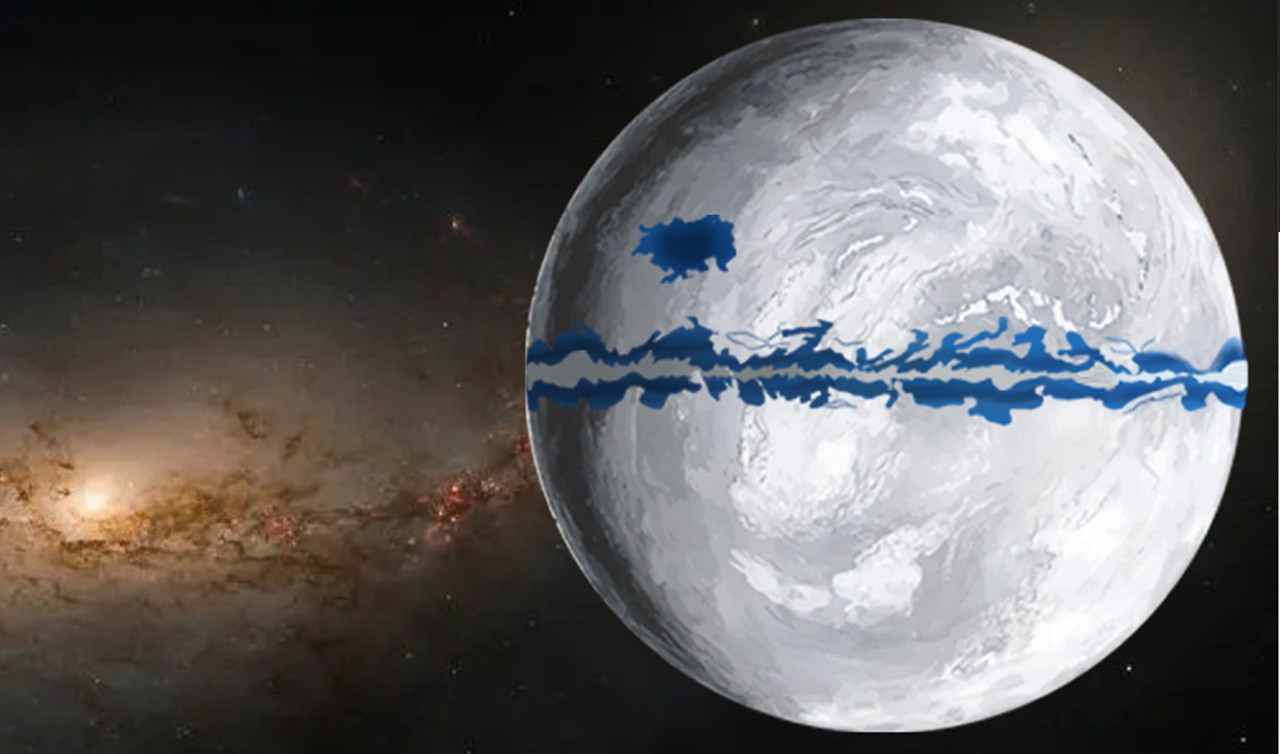
BBC: 'Snowball Earth' could have been a slushball
UC geologist says mid-latitude seas might have remained ice-free

BBC News highlighted research by a University of Cincinnati geologist who examined an ice age 635 million years ago that many scientists believed froze the planet solid from pole to pole.
But a new study published in the journal Nature Communications by an international team of scientists said evidence suggests some shallow seas in the mid-latitudes remained ice free, possibly allowing life to persist during this prolonged period of global glaciation.
UC College of Arts and Sciences geosciences Professor Thomas Algeo worked with researchers from the China University of Geosciences to use isotopic analysis to understand what life on Earth was like hundreds of millions of years before dinosaurs roamed the Earth.
“We called this ice age ‘Snowball Earth,'” Algeo said. “We used to believe that Earth was completely frozen during this long ice age. But it could be ‘Slushball Earth.’”
Featured illustration at top: University of Cincinnati researchers found evidence that a prolonged ice age 635 million years did not freeze the planet solid from pole to pole as previously believed. Graphic/Huyue Song

UC College of Arts and Sciences Professor Thomas Algeo studied life on Earth during a prolonged ice age 635 million years ago. Photo/Andrew Higley/UC Marketing + Brand
More UC Geosciences in the news
- Extreme Tech: 'Snowball Earth' may have been less icy than thought
- India Today: When Earth froze to death but somehow life survived
Related Stories
Sugar overload killing hearts
November 10, 2025
Two in five people will be told they have diabetes during their lifetime. And people who have diabetes are twice as likely to develop heart disease. One of the deadliest dangers? Diabetic cardiomyopathy. But groundbreaking University of Cincinnati research hopes to stop and even reverse the damage before it’s too late.
Is going nuclear the solution to Ohio’s energy costs?
November 10, 2025

The Ohio Capital Journal recently reported that as energy prices continue to climb, economists are weighing the benefits of going nuclear to curb costs. The publication dove into a Scioto Analysis survey of 18 economists to weigh the pros and cons of nuclear energy. One economist featured was Iryna Topolyan, PhD, professor of economics at the Carl H. Lindner College of Business.
App turns smartwatch into detector of structural heart disease
November 10, 2025

An app that uses an AI model to read a single-lead ECG from a smartwatch can detect structural heart disease, researchers reported at the 2025 Scientific Sessions of the American Heart Association. Although the technology requires further validation, researchers said it could help improve the identification of patients with heart failure, valvular conditions and left ventricular hypertrophy before they become symptomatic, which could improve the prognosis for people with these conditions.