Study identifies how microbiome may affect pancreatic cancer outcomes
Research finds certain species elevated in long-term survivors

Even as pancreatic cancer treatments improve, only about 9% of patients survive past five years. Researchers have searched unsuccessfully to find genetic differences that explain why some patients survive long term and some do not and have now shifted their focus to the gut microbiome.
The microbiome is a term used for the collection of microbes, including microorganisms like bacteria, that live on or in the human body. Jordan Kharofa, MD, said there was little known about the microbiome of long-term pancreatic cancer survivors.
“There is emerging science suggesting that pancreas cancer survivors have a robust immune response in their tumors and data suggests the gut microbiome can influence immune response,” said Kharofa, University of Cincinnati Cancer Center physician-researcher and associate professor in the UC College of Medicine’s Department of Radiation Oncology. “We wondered if there was a relationship with the gut microbiome in pancreatic cancer survivors.”
Kharofa and his colleagues recently published findings in the journal Cancer that found several enriched species associated with enhanced tumor immune response in the microbiomes of long-term pancreatic cancer survivors.
The research team analyzed microbiome data from pancreatic cancer survivors and a control group of pancreatic cancer patients. They found long-term survivors’ microbiomes had increased levels of several specific bacterial species including Faecalibacterium prausnitzii.

Jordan Kharofa, MD. Photo/University of Cincinnati
“Little information exists to help us understand why some patients are cured from pancreatic cancer and unfortunately most are not,” he said. “These species may help to promote immune response to pancreas cancer but this has not yet been proven.”
While it is still unknown exactly how or if these bacteria directly contribute to patients’ long-term survival, the species have been previously been associated with improved response to immunotherapy for patients with metastatic melanoma or skin cancer.
“There is a growing understanding that the microbiome is a part of the normal immune response. The importance of the microbiome in response to immunotherapy drugs in melanoma and other cancer types is well established,” Kharofa said. “For the first time we are seeing that similar species are enriched in patients cured from pancreas cancer. We’re excited to explore this further and to evaluate if modulating the microbiome can be a therapeutic avenue in these patients.”
Kharofa said these bacterial species have not been linked to any specific diet, lifestyle or genetic makeup that would give insight on how to naturally elevate levels in the microbiome. Some researchers have begun testing fecal transplants using stool from long-term survivors, and Kharofa said the Cancer Center team is in the early phase of exploring microbiome modulation through oral administration of bacterial species.
Read more about Kharofa's colorectal cancer microbiome research.
Impact Lives Here
The University of Cincinnati is leading public urban universities into a new era of innovation and impact. Our faculty, staff and students are saving lives, changing outcomes and bending the future in our city's direction. Next Lives Here.
The study was funded by the Give Hope Foundation. Other study authors include David Haslam, MD, Rachael Wilkinson, MS, Alison Weiss, PhD, Sameer Patel, MD, Kyle Wang, MD, Hope Esslinger, MPT, Olugbenga Olowokure, MD, Davendra Sohal, MD, Greg Wilson, MD, Syed Ahmad, MD, and Senu Apewokin, MD.
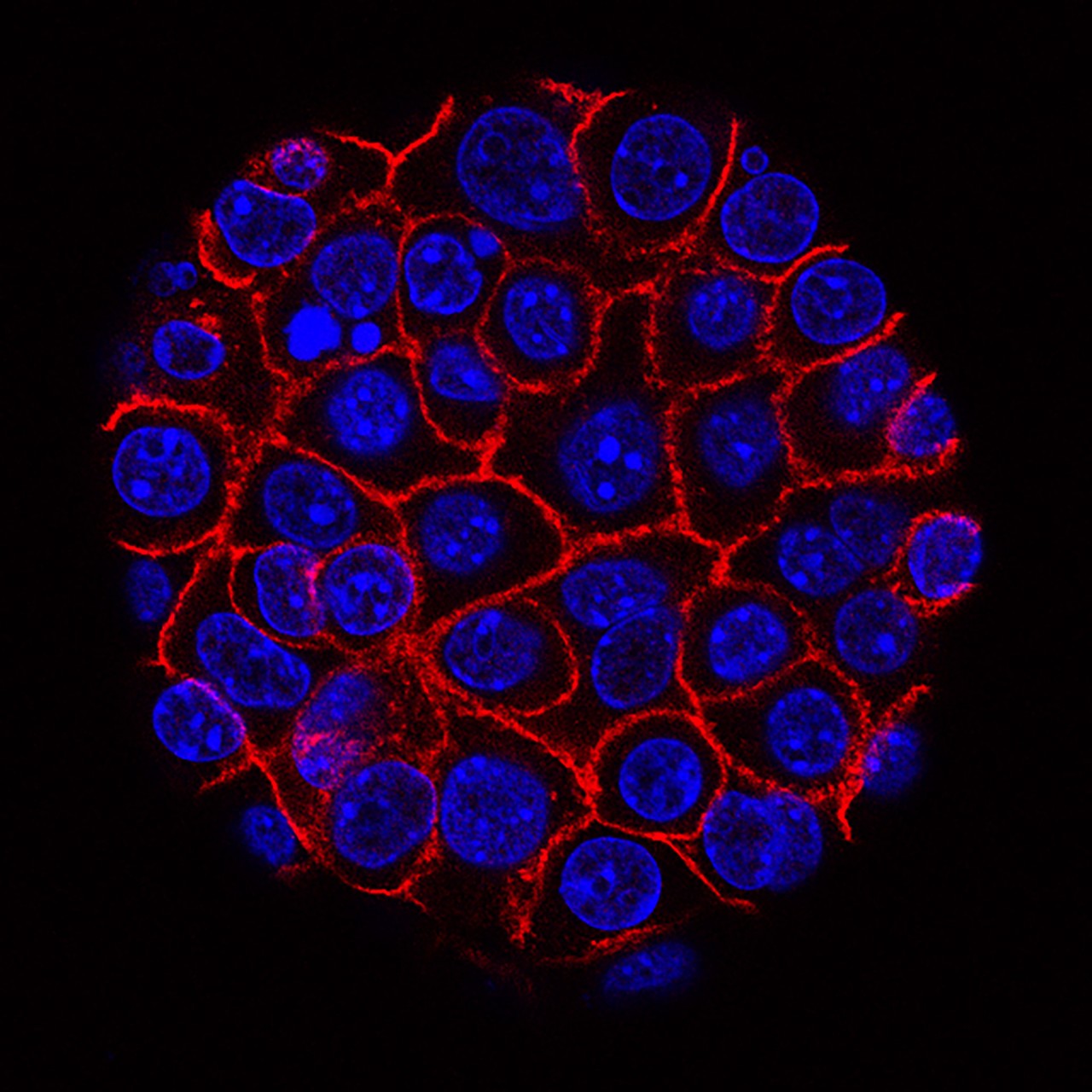
Featured photo at top of pancreatic cancer cell courtesy of the National Cancer Institute/Unsplash.
Related Stories
Sugar overload killing hearts
November 10, 2025
Two in five people will be told they have diabetes during their lifetime. And people who have diabetes are twice as likely to develop heart disease. One of the deadliest dangers? Diabetic cardiomyopathy. But groundbreaking University of Cincinnati research hopes to stop and even reverse the damage before it’s too late.
Is going nuclear the solution to Ohio’s energy costs?
November 10, 2025

The Ohio Capital Journal recently reported that as energy prices continue to climb, economists are weighing the benefits of going nuclear to curb costs. The publication dove into a Scioto Analysis survey of 18 economists to weigh the pros and cons of nuclear energy. One economist featured was Iryna Topolyan, PhD, professor of economics at the Carl H. Lindner College of Business.
App turns smartwatch into detector of structural heart disease
November 10, 2025

An app that uses an AI model to read a single-lead ECG from a smartwatch can detect structural heart disease, researchers reported at the 2025 Scientific Sessions of the American Heart Association. Although the technology requires further validation, researchers said it could help improve the identification of patients with heart failure, valvular conditions and left ventricular hypertrophy before they become symptomatic, which could improve the prognosis for people with these conditions.