Wired: Therapy part of psychedelic therapy is a mess
UC researcher says tested therapy protocols are needed to protect patients

Wired turned to a University of Cincinnati postdoctoral researcher to understand shortcomings in new experimental therapies that use psychedelics.
UC College of Arts and Sciences research associate Neşe Devenot is co-author of a new opinion piece in the journal JAMA Psychiatry that argues that psychedelic-assisted therapies need tested protocols to prevent patient harm.
Some clinical studies have reported serious adverse events among patients in psychedelic trials that include abuse, self harm and dependency.
“A lot of the ideas that are taken for granted about the way psychedelic-assisted therapy works are not evidence-based. They’re not ideas that are rooted in any kind of traditional scientific evidence,” Devenot told Wired.
And the speed at which researchers are racing to get the therapy out to the masses means that the time to scrutinize this component is running out. “They’re building the airplane while they’re flying it,” she says.
Devenot, who works in UC's Institute for Research in Sensing, was a guest on WVXU's Cincinnati Edition to discuss the growing interest around psychedelics. She spoke to Cincinnati Edition host Lucy May about the risks and potential rewards of psychedelics to treat a wide variety of mental health issues.
Devenot was co-author of a study in the Kennedy Institute of Ethics Journal that found psychedelics might help people change unwanted behaviors by helping them reinvent their perceptions of themselves.
UC researchers re-examined a smoking-cessation study that asked participants to write about their experience with psilocybin in conjunction with clinical treatment to quit smoking. They found that psychedelics combined with talk therapy often helped longtime smokers see themselves as nonsmokers. This new core identity might help explain why 80% of participants were able to stop smoking for six months and 60% remained smoking-free after five years.
“It wasn't just psilocybin,” Devenot told Cincinnati Edition. “Clinical trial leaders and clinicians were suggesting that the participants were at their root a nonsmoker. They were encouraging that shift in perspective.”
Devenot's colleague Allen Davis, director of Ohio State University's Center for Psychedelic Drug Research and Education, also joined the show to discuss its potential and the legal and political environment that makes studying psychedelics a challenge.
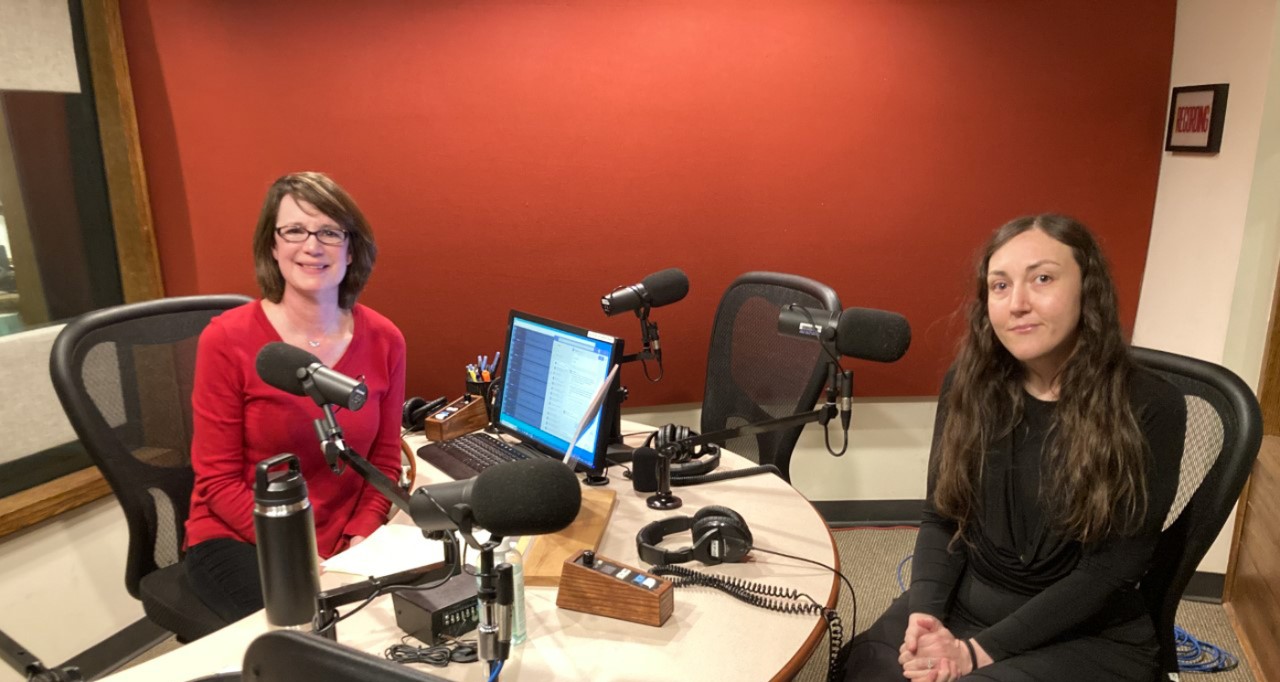
Featured image at top: Lucy May, left, host of WVXU's Cincinnati Edition, talks to UC postdoctoral research associate Neşe Devenot about psychedelics. Photo/Michael Miller
More UC research in the news
- Neuroscience News: Psychedelics may help people reinvent themselves
- New York Post: Psychedelics could transform cigarette addiction treatment
- Medical Xpress: Psychedelics may help people reinvent themselves
Related Stories
Sugar overload killing hearts
November 10, 2025
Two in five people will be told they have diabetes during their lifetime. And people who have diabetes are twice as likely to develop heart disease. One of the deadliest dangers? Diabetic cardiomyopathy. But groundbreaking University of Cincinnati research hopes to stop and even reverse the damage before it’s too late.
Is going nuclear the solution to Ohio’s energy costs?
November 10, 2025

The Ohio Capital Journal recently reported that as energy prices continue to climb, economists are weighing the benefits of going nuclear to curb costs. The publication dove into a Scioto Analysis survey of 18 economists to weigh the pros and cons of nuclear energy. One economist featured was Iryna Topolyan, PhD, professor of economics at the Carl H. Lindner College of Business.
App turns smartwatch into detector of structural heart disease
November 10, 2025

An app that uses an AI model to read a single-lead ECG from a smartwatch can detect structural heart disease, researchers reported at the 2025 Scientific Sessions of the American Heart Association. Although the technology requires further validation, researchers said it could help improve the identification of patients with heart failure, valvular conditions and left ventricular hypertrophy before they become symptomatic, which could improve the prognosis for people with these conditions.