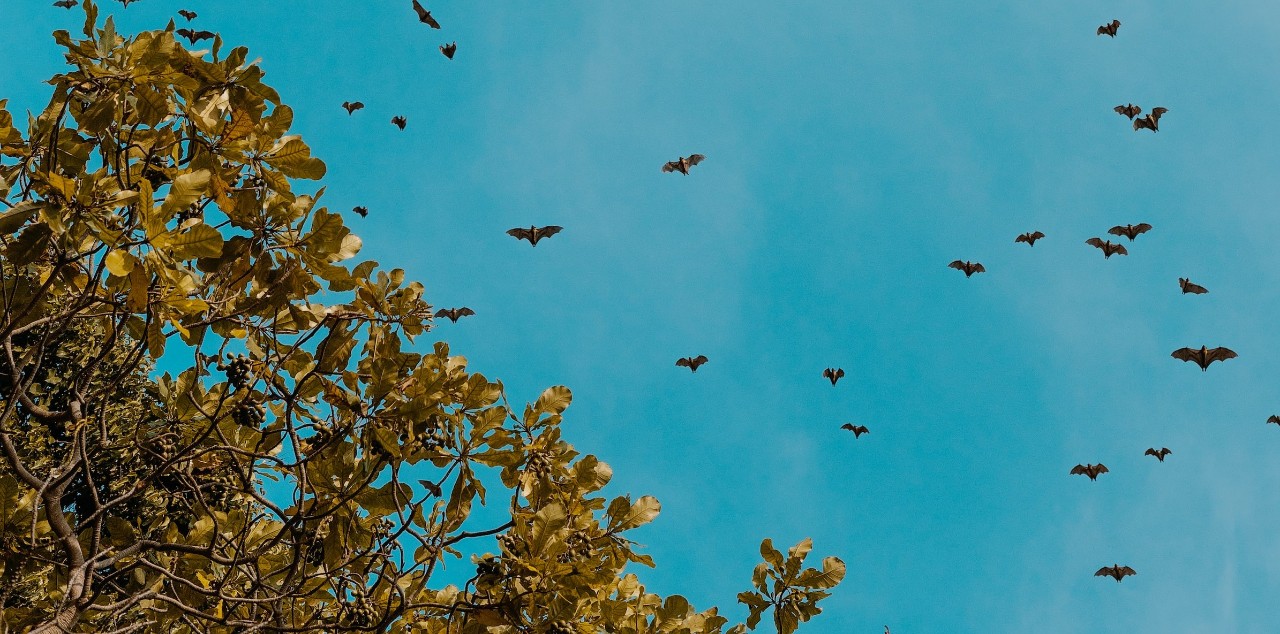
WCPO: UC and the Ohio Natural Resources Department want to count your bats
Citizen input is needed for a research study on bat population, dying due to a fungus

People usually only think about bats at Halloween; but many structures are domiciles for bats year-round; but, if you have bats at any time, there’s someone who wants to know: UC bat researcher Joe Johnston, an assistant professor of information technology at UC.
Johnston, in conjunction with the Ohio Department of Natural Resources, is conducting a study on Ohio’s bat population and how it’s been affected by a fungal infection called “white nose syndrome.” To do so, he needs citizen input and cooperation.
“We'll come out. We'll take a look, identify them, collect some basic information about the sites, such as the number of animals that are there, the species, the kind of structure that they're in," Johnston told WCPO about the effort to track the bats and determine what might be done to improve a decline in the bat population.
Then it's really a matter of the individual landowner’s interest in working with Johnson on the research project.
The project isn't about removing bats from someone's attic, or anything like that, Johnson says. "We're not going to show up, and say 'Oh, you've got this rare bat, you have to now dedicate your barn to their preservation.'
Property owners interested in participating can email Johnson at bats@uc.edu.
Read more about Johnson's research
Featured image at top courtesy of Unsplash.
Impact Lives Here
The University of Cincinnati is leading public urban universities into a new era of innovation and impact. Our faculty, staff and students are saving lives, changing outcomes and bending the future in our city's direction. Next Lives Here.
Related Stories
Sugar overload killing hearts
November 10, 2025
Two in five people will be told they have diabetes during their lifetime. And people who have diabetes are twice as likely to develop heart disease. One of the deadliest dangers? Diabetic cardiomyopathy. But groundbreaking University of Cincinnati research hopes to stop and even reverse the damage before it’s too late.
App turns smartwatch into detector of structural heart disease
November 10, 2025

An app that uses an AI model to read a single-lead ECG from a smartwatch can detect structural heart disease, researchers reported at the 2025 Scientific Sessions of the American Heart Association. Although the technology requires further validation, researchers said it could help improve the identification of patients with heart failure, valvular conditions and left ventricular hypertrophy before they become symptomatic, which could improve the prognosis for people with these conditions.
Combination immunotherapy helps overcome melanoma treatment resistance
November 10, 2025

MSN highlighted research led by the University of Cincinnati Cancer Center's Trisha Wise-Draper showing a combination of immunotherapy medications can activate a robust immune response and help overcome treatment resistance in patients with refractory melanoma.