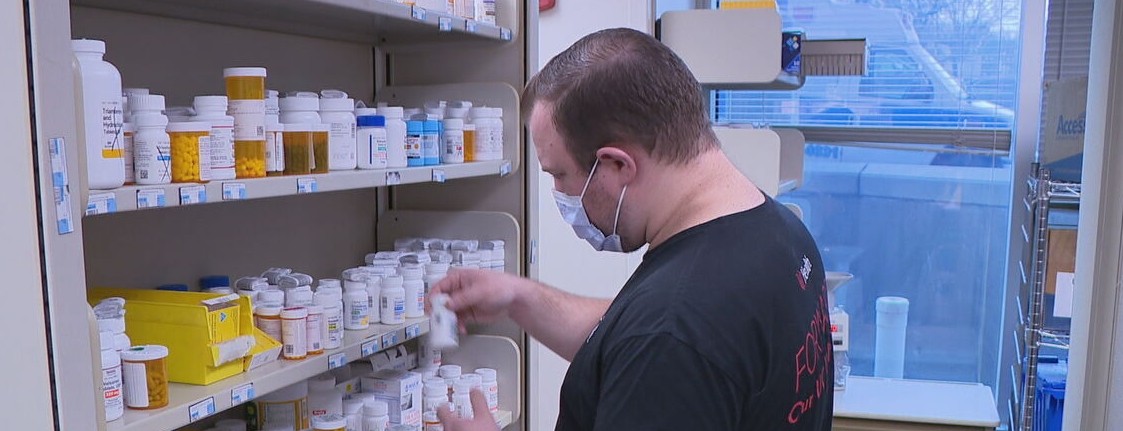
Local 12: UC pharmacy resident gives ultimate gift through Be the Match

Matthew Weaver signed up with Be the Match eight years ago, and a few weeks ago he was informed that he was a perfect match for a person with blood cancer in need of his stem cells to survive.
Weaver, a University of Cincinnati James L. Winkle College of Pharmacy alumnus and current pharmacy resident at UC Health, didn't have to go far for the procedure, as the academic health center is one of a few sites across the country that take stem cell donations.
"I think its the greatest gift that I could give this Christmas and hopefully it's a gift to their family to be able to see their loved one a little bit longer," Weaver told Local 12.
Caroline Alquist, MD, associate professor and director of transplantation immunology & therapeutic apheresis at the Hoxworth Blood Center, said the odds of being a stem cell match are slim, but it can make a huge difference.
"Stem cells are like little heat-seeking missiles. They will go to the bone marrow and they will start producing all the healthy cells that that patient needs," said Alquist.
Read or watch the Local 12 story.
Learn more about becoming a potential match.
Featured photo at top of Matthew Weaver courtesy of Local 12.
Related Stories
Sugar overload killing hearts
November 10, 2025
Two in five people will be told they have diabetes during their lifetime. And people who have diabetes are twice as likely to develop heart disease. One of the deadliest dangers? Diabetic cardiomyopathy. But groundbreaking University of Cincinnati research hopes to stop and even reverse the damage before it’s too late.
Is going nuclear the solution to Ohio’s energy costs?
November 10, 2025

The Ohio Capital Journal recently reported that as energy prices continue to climb, economists are weighing the benefits of going nuclear to curb costs. The publication dove into a Scioto Analysis survey of 18 economists to weigh the pros and cons of nuclear energy. One economist featured was Iryna Topolyan, PhD, professor of economics at the Carl H. Lindner College of Business.
App turns smartwatch into detector of structural heart disease
November 10, 2025

An app that uses an AI model to read a single-lead ECG from a smartwatch can detect structural heart disease, researchers reported at the 2025 Scientific Sessions of the American Heart Association. Although the technology requires further validation, researchers said it could help improve the identification of patients with heart failure, valvular conditions and left ventricular hypertrophy before they become symptomatic, which could improve the prognosis for people with these conditions.