Dispatch: Plant must find safer solution for coal ash
UC toxicologist explains risks associated with coal ash

The Columbus Dispatch turned to a University of Cincinnati aquatic toxicologist to explain the health risks associated with coal ash produced by power plants.
According to the Dispatch, the Environmental Protection Agency ruled that an Ohio power plant may not continue to dispose of waste coal ash in an unlined pond.

UC toxicologist Latonya Jackson is an assistant professor in UC's College of Arts and Sciences. Photo/Andrew Higley/UC Marketing + Brand
The John M. Gavin plant along the Ohio River burns coal to produce 2,600 megawatts of electricity for customers in southwest Ohio. But the plant is one of the biggest generators of greenhouse gas emissions among power plants in the United States.
According to the Dispatch, workers exposed to coal ash are more likely to be diagnosed with respiratory diseases such as COPD.
UC assistant professor Latonya Jackson told the Dispatch that coal ash contains toxins such as mercury and cadmium.
"It's in trace levels, but it's there," said Jackson, who studies aquatic toxicology in UC's College of Arts and Sciences. "I would hope that it would get regulated because it does pose a threat to human health."
In her lab, Jackson studies the long-term impacts of toxins on the growth, development and health of fish and other aquatic organisms.
The EPA says coal ash that leaches into groundwater can get into sources of drinking water.
Read the Columbus Dispatch story.
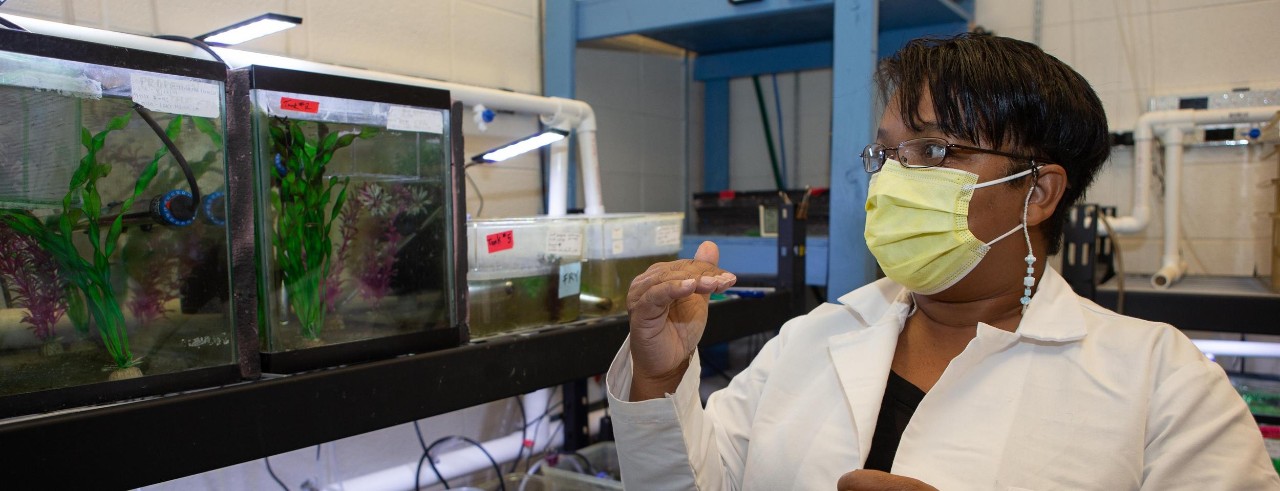
Featured image at top: UC assistant professor Latonya Jackson works with students in her biology lab. Photo/Andrew Higley/UC Marketing + Brand
Related Stories
Sugar overload killing hearts
November 10, 2025
Two in five people will be told they have diabetes during their lifetime. And people who have diabetes are twice as likely to develop heart disease. One of the deadliest dangers? Diabetic cardiomyopathy. But groundbreaking University of Cincinnati research hopes to stop and even reverse the damage before it’s too late.
Is going nuclear the solution to Ohio’s energy costs?
November 10, 2025

The Ohio Capital Journal recently reported that as energy prices continue to climb, economists are weighing the benefits of going nuclear to curb costs. The publication dove into a Scioto Analysis survey of 18 economists to weigh the pros and cons of nuclear energy. One economist featured was Iryna Topolyan, PhD, professor of economics at the Carl H. Lindner College of Business.
App turns smartwatch into detector of structural heart disease
November 10, 2025

An app that uses an AI model to read a single-lead ECG from a smartwatch can detect structural heart disease, researchers reported at the 2025 Scientific Sessions of the American Heart Association. Although the technology requires further validation, researchers said it could help improve the identification of patients with heart failure, valvular conditions and left ventricular hypertrophy before they become symptomatic, which could improve the prognosis for people with these conditions.