UC aerospace engineer says AI key to drone safety
UC professor talks to Complex Engineering Systems about future of drones

University of Cincinnati aerospace engineer Kelly Cohen and his doctoral student talked to the journal Complex Engineering Systems about how artificial intelligence will open the door to commercial drones and flying cars.

Kelly Cohen
Cohen, a subject editor for the journal, is a professor of aerospace engineering in UC's College of Engineering and Applied Science.
Cohen said new aerospace technologies are creating lucrative opportunities for companies.
“For this vision to be realized, you need to be able to guarantee safety. You need to be able to guarantee performance,” Cohen told the journal.
“Not all artificial intelligence systems are the same. There are those that are more trustworthy than others,” Cohen said. “If I'm going to have my children, my family, be in an autonomous car or autonomous air taxi, I've got to make sure that I'm not putting them in harm's way. To be able to trust the system, I need to have a set of very trustworthy autonomous systems.”
Cohen was selected for the inaugural cohort of research in the UC Digital Futures' anchor tenant development program. He and his students will be studying how artificial intelligence can help with real-time decisionmaking in both health care and aerospace applications.
UC doctoral student Jon Ander Martin studies battery performance in drones in Cohen's lab. Unlike planes that become lighter between takeoff and landing as they burn fuel, drones powered by batteries maintain a constant weight throughout their flight, he said.
Martin's research is dedicated to finding the right size battery for an unmanned aerial vehicle or drone. The battery must be big enough to maintain flight time without being so big as to hinder performance. Finding the perfect compromise is a crucial engineering consideration, he told Complex Engineering Systems.
“The more weight in an aircraft, the performance is going to be worse,” Martin said. “You need that trade-off between how many batteries you put in there and how large they are and what range you want to achieve. So you need to reach that optimum point.”
Martin is the lead author of a comparative study published in Complex Engineering Systems that examined battery modeling regression methods to study battery performance.
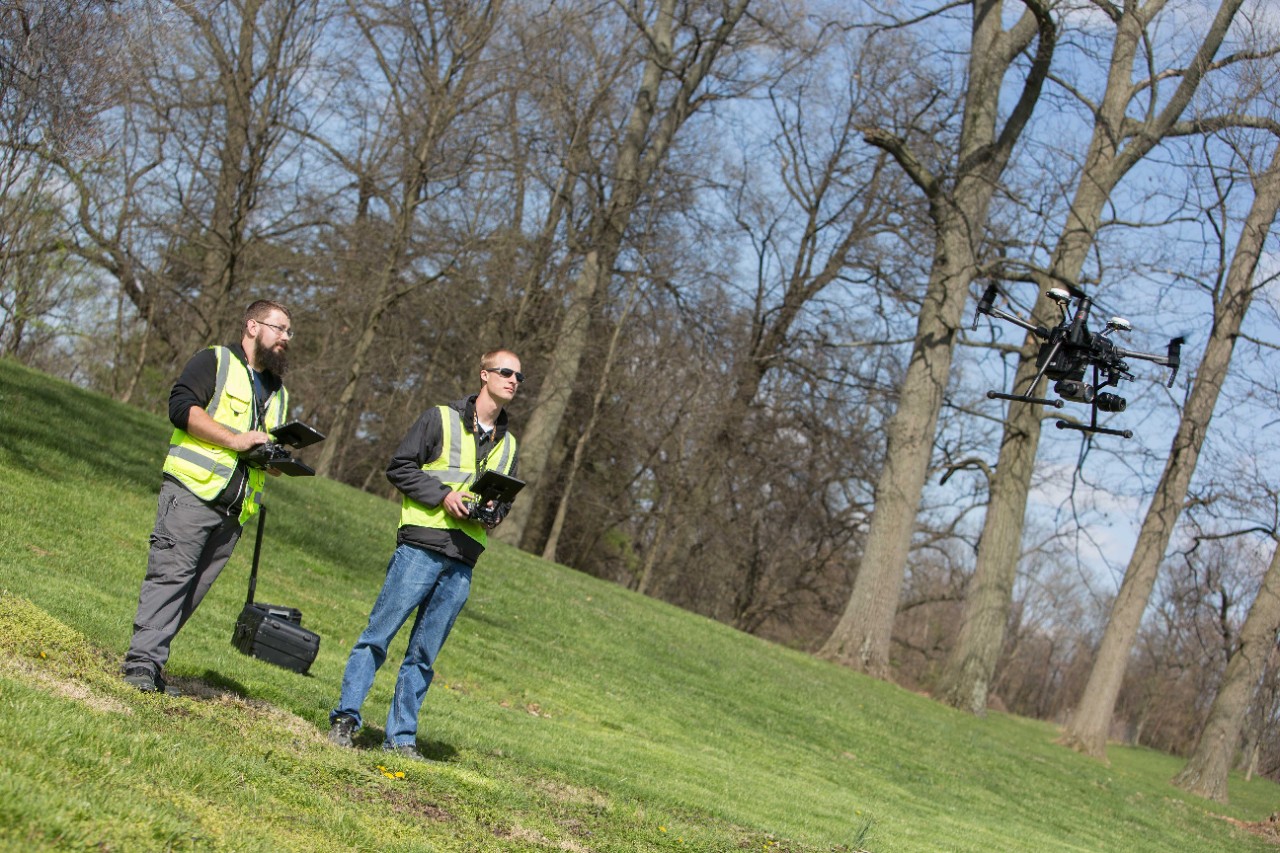
Featured image at top: UC aerospace engineers pilot a drone. Photo/Andrew Higley/UC Marketing + Brand
Related Stories
UC launches Bearcats Affordability Grant
January 7, 2026
The University of Cincinnati is making college more attainable for students across Ohio with the creation of the Bearcats Affordability Grant. The new grant will provide a pathway to tuition-free college for students of families who make less than $75,000 per year. Beginning in fall 2026, the Bearcats Affordability Grant will cover the remaining cost of tuition for Ohio residents who are Pell eligible.
Sugar overload killing hearts
November 10, 2025
Two in five people will be told they have diabetes during their lifetime. And people who have diabetes are twice as likely to develop heart disease. One of the deadliest dangers? Diabetic cardiomyopathy. But groundbreaking University of Cincinnati research hopes to stop and even reverse the damage before it’s too late.
Is going nuclear the solution to Ohio’s energy costs?
November 10, 2025

The Ohio Capital Journal recently reported that as energy prices continue to climb, economists are weighing the benefits of going nuclear to curb costs. The publication dove into a Scioto Analysis survey of 18 economists to weigh the pros and cons of nuclear energy. One economist featured was Iryna Topolyan, PhD, professor of economics at the Carl H. Lindner College of Business.