WVXU: Uncovering truth behind art forgeries
UC scientists, art historians work with museums to ferret out fakes

WVXU and Cincinnati Edition highlighted a collaboration between the University of Cincinnati and area museums using science to answer puzzling questions about art masterpieces.

An exhibit at the Cincinnati Art Museum features a Tang dynasty earthenware sculpture of a dancing horse that dates back to 609-907 CE. Photo/Cincinnati Museum Center/Gift of Carl and Eleanor Strauss, 1997
WVXU spoke to Cincinnati Art Museum East Asian art curator Hou-mei Sung and conservator Kelly Rectenwald about how UC chemists were able to answer questions about a 1,300-year-old Chinese dancing horse sculpture.
UC College of Arts and Sciences assistant professor of chemistry Pietro Strobbia and his colleagues at the Institute of Heritage Science in Italy used tiny samples of the terra cotta horse to determine that a suspicious tassel on the horse's forehead was made of plaster and added at some later date than its creation.
The museum removed the tassel from the piece in keeping with what its experts knew about similar pieces.
"A lot of people were calling it a unicorn because it looked like this horn on top of the head, which was very unusual for this type of statue," Rectenwald told WVXU.

The Taft Museum of Art exhibit Fakes, Forgeries and Followers opening Oct. 22 features this painting, An Elderly Woman, by a follower of Rembrandt van Rijn from the mid-1600s. (Oil on panel. Bequest of Charles Phelps Taft and Anna Sinton Taft, 1931.402)
UC also worked with experts at the Taft Museum of Art to examine paintings for its upcoming exhibition Fakes, Forgeries and Followers from the Taft Collection that runs from Oct. 22-Feb.5.
UC College of Arts and Sciences postdoctoral fellow of chemistry Lyndsay Kissel told WVXU's Cincinnati Edition that art historians can learn more about the age of a painting from a chemical analysis of its pigments. Chromium pigments, for example, are a 20th century invention, she said.
Art historian Christopher Platts, an assistant professor in UC's College of Design, Architecture, Art, and Planning, told Cincinnati Edition he is planning a small exhibition of Renaissance and Baroque paintings from UC's art collection. Some of these are 19th or 20th century forgeries or imitations that UC researchers examined.
"The great thing about a teaching institution or teaching museum as opposed to a large public museum is you can put forgeries or fakes on display for pedagogical reasons," Platts told Cincinnati Edition. "In my courses on Renaissance and Baroque art, we'll talk about the stylistic differences and connoisseurship and actually do a demonstration of the scientific examination of art with our whole research group using those instruments."
Listen to WVXU's story about how UC helped solve the mystery of the Dancing Horse.
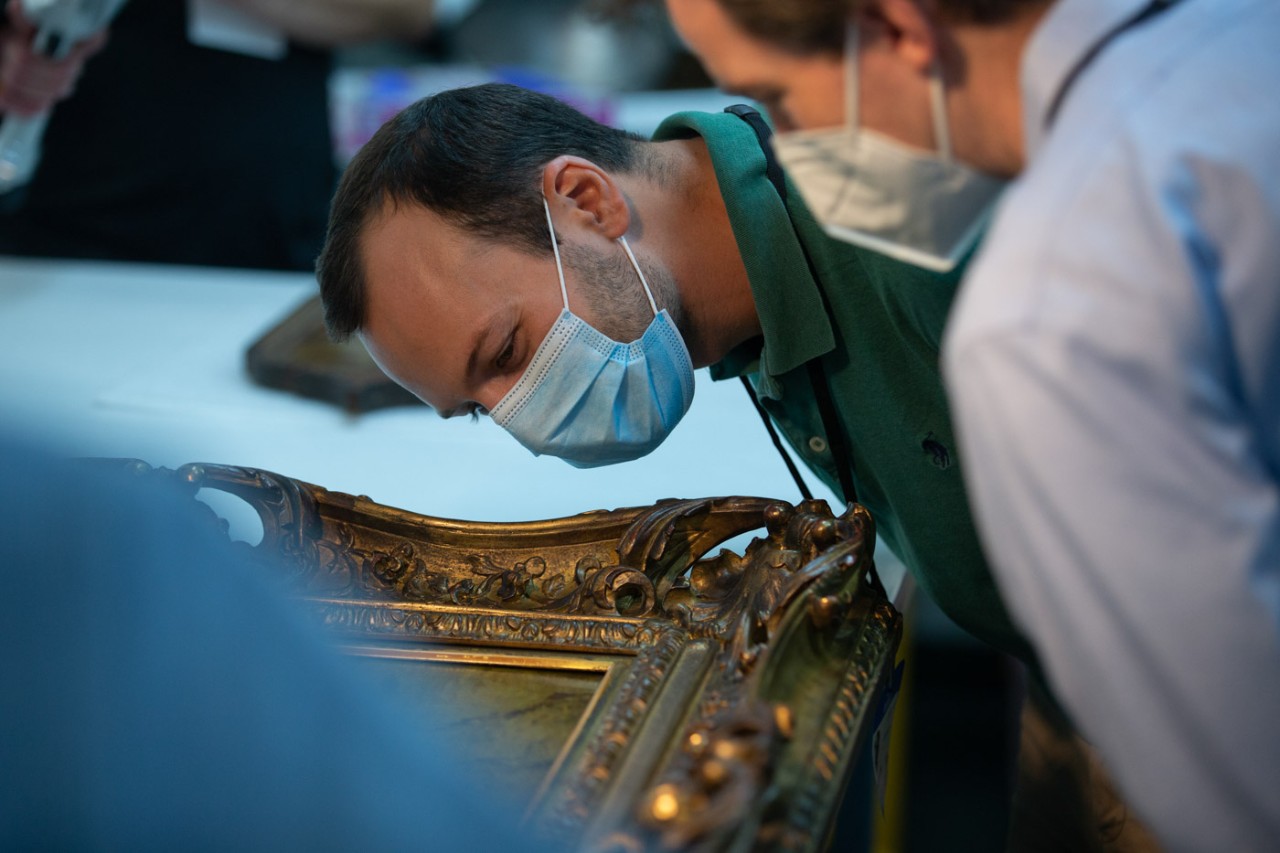
Featured image at top: UC assistant professor of chemistry Pietro Strobbia and postdoctoral research Lyndsay Kissel examine a painting in the conservator lab of the Taft Museum of Art. Photo/Andrew Higley/UC Marketing + Brand
Related Stories
Sugar overload killing hearts
November 10, 2025
Two in five people will be told they have diabetes during their lifetime. And people who have diabetes are twice as likely to develop heart disease. One of the deadliest dangers? Diabetic cardiomyopathy. But groundbreaking University of Cincinnati research hopes to stop and even reverse the damage before it’s too late.
Is going nuclear the solution to Ohio’s energy costs?
November 10, 2025

The Ohio Capital Journal recently reported that as energy prices continue to climb, economists are weighing the benefits of going nuclear to curb costs. The publication dove into a Scioto Analysis survey of 18 economists to weigh the pros and cons of nuclear energy. One economist featured was Iryna Topolyan, PhD, professor of economics at the Carl H. Lindner College of Business.
App turns smartwatch into detector of structural heart disease
November 10, 2025

An app that uses an AI model to read a single-lead ECG from a smartwatch can detect structural heart disease, researchers reported at the 2025 Scientific Sessions of the American Heart Association. Although the technology requires further validation, researchers said it could help improve the identification of patients with heart failure, valvular conditions and left ventricular hypertrophy before they become symptomatic, which could improve the prognosis for people with these conditions.