Enquirer: Power to Cincinnati water plant failed
UC engineers explain significance of shutdown

The Cincinnati Enquirer turned to two University of Cincinnati engineering professors to explain the significance of the city's main water treatment plant shutting down briefly in May, forcing the city to rely on water from a neighboring county.
The outage did not lead to any disruptions in service to its 1.1 million customers, the Enquirer said.

Steven Buchberger
UC College of Engineering and Applied Science professor Dionysios Dionysiou told the Enquirer it's important the public knows about outages, but he emphasized utilities may have procedures about how and when to inform the public.
Dionysiou is an international expert in water treatment who was recognized by Saudi Arabia this year with the prestigious Prince Sultan Bin Abdulaziz International Prize for Water.
Dionysiou told the Enquirer that the Cincinnati water system is considered one of the best in the world.
Steven Buchberger, a professor of civil and environmental engineering in UC's College of Engineering and Applied Science, told the Enquirer that the treatment plant's backups are important to provide redundancies during an emergency like the one in May.
"Like any piece of equipment, pumping stations can experience mechanical breakdowns, routine maintenance or power outages," Buchberger told The Enquirer. "Municipal water distribution systems are usually designed with plenty of redundancy so that if part of the system goes offline, service can be supplied and maintained by another part of the system."

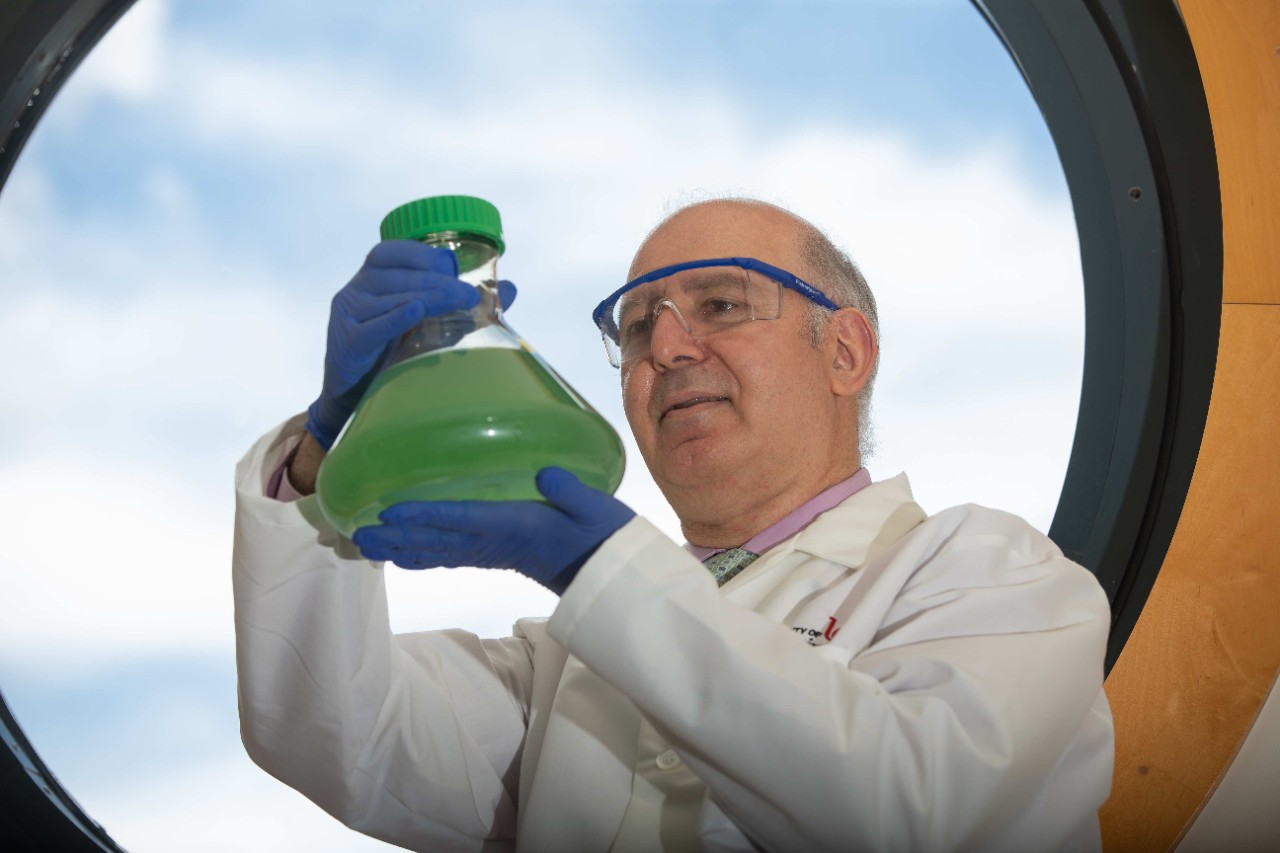
UC College of Engineering and Applied Science professor Dionysios Dionysiou is an internationally recognized expert in water treatment. Photo/Andrew Higley/UC Marketing + Brand
Related Stories
Sugar overload killing hearts
November 10, 2025
Two in five people will be told they have diabetes during their lifetime. And people who have diabetes are twice as likely to develop heart disease. One of the deadliest dangers? Diabetic cardiomyopathy. But groundbreaking University of Cincinnati research hopes to stop and even reverse the damage before it’s too late.
Is going nuclear the solution to Ohio’s energy costs?
November 10, 2025

The Ohio Capital Journal recently reported that as energy prices continue to climb, economists are weighing the benefits of going nuclear to curb costs. The publication dove into a Scioto Analysis survey of 18 economists to weigh the pros and cons of nuclear energy. One economist featured was Iryna Topolyan, PhD, professor of economics at the Carl H. Lindner College of Business.
App turns smartwatch into detector of structural heart disease
November 10, 2025

An app that uses an AI model to read a single-lead ECG from a smartwatch can detect structural heart disease, researchers reported at the 2025 Scientific Sessions of the American Heart Association. Although the technology requires further validation, researchers said it could help improve the identification of patients with heart failure, valvular conditions and left ventricular hypertrophy before they become symptomatic, which could improve the prognosis for people with these conditions.