UC launches Cincy BEARCAT study
Research hopes to learn more about the causes of cardiac arrest

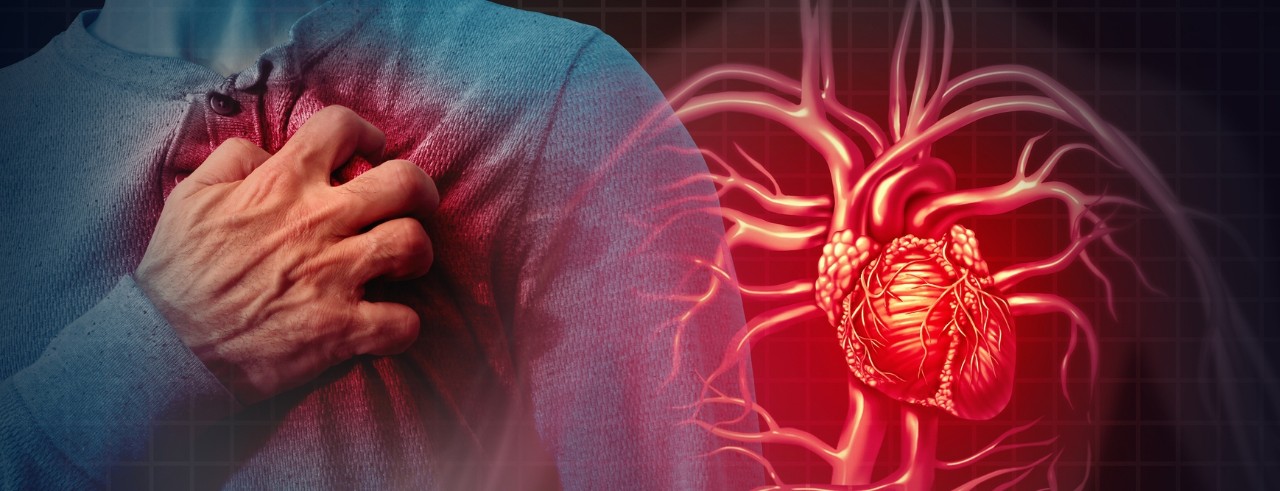
Each year in the U.S., there are more than 356,000 sudden cardiac arrests. Researchers at the University of Cincinnati are hoping to learn more about the causes of cardiac arrest through the Cincinnati Biorepository to Enhance the Acute Resuscitation of Cardiac Arrest Patients (Cincy BEARCAT) study.
“We know a little bit about what causes cardiac arrest,” says Justin Benoit, MD, assistant professor in the Department of Emergency Medicine at the UC College of Medicine. “Sometimes it can be due to a heart attack, or a severe infection, a respiratory problem. However, once that person is actually in cardiac arrest, we don’t really understand what’s going on with the human body at that point in time. Cincy BEARCAT is all about finding out what’s actually going on, and how we can reverse it quickly to save someone’s life.”

Justin Benoit, MD, of the Department of Emergency Medicine at the UC College of Medicine
Benoit says no one routinely collects blood samples on cardiac arrest patients in the U.S. He says that while all cardiac arrest patients are currently put into one of two categories, he believes there is a lot more diversity in those patients. The working theory of Cincy BEARCAT is that before the patient ever gets to the hospital, they are going to find differences between patients that are currently unknown.
“Not only that, but we believe these differences will change over the course of the time EMS is with the patient,” Benoit says. “Ultimately, we hope that knowledge of these differences will allow us to better target our treatment efforts based on the exact problem(s) of each specific patient.”
Benoit says they will be collecting blood samples of around three tablespoons which will be stored in a biorepository to examine later and try to determine if the sample can reveal what caused the cardiac arrest and how it can be reversed in the future. Those samples may also be used in current and future research.
“My goal is, 20 years from now, if somebody’s in cardiac arrest, when Cincinnati Fire and other EMS agencies roll up on scene, they’re going to be able to get a little blood sample, run it through a point of care machine and it’s going to tell us, ‘the patient is having this kind of cardiac arrest, you need to treat it this way,’” says Benoit. “We’re going to be a lot more specific about how we treat patients in the future.”
WKRC-TV, Local 12, produced a story on the research that was syndicated across the U.S. See that coverage here.
Related Stories
Sugar overload killing hearts
November 10, 2025
Two in five people will be told they have diabetes during their lifetime. And people who have diabetes are twice as likely to develop heart disease. One of the deadliest dangers? Diabetic cardiomyopathy. But groundbreaking University of Cincinnati research hopes to stop and even reverse the damage before it’s too late.
Is going nuclear the solution to Ohio’s energy costs?
November 10, 2025

The Ohio Capital Journal recently reported that as energy prices continue to climb, economists are weighing the benefits of going nuclear to curb costs. The publication dove into a Scioto Analysis survey of 18 economists to weigh the pros and cons of nuclear energy. One economist featured was Iryna Topolyan, PhD, professor of economics at the Carl H. Lindner College of Business.
App turns smartwatch into detector of structural heart disease
November 10, 2025

An app that uses an AI model to read a single-lead ECG from a smartwatch can detect structural heart disease, researchers reported at the 2025 Scientific Sessions of the American Heart Association. Although the technology requires further validation, researchers said it could help improve the identification of patients with heart failure, valvular conditions and left ventricular hypertrophy before they become symptomatic, which could improve the prognosis for people with these conditions.