Local 12: New survey shows many still hesitant to receive COVID-19 vaccine, boosters
UC research shows a more understanding approach is needed

Research out of the University of Cincinnati examines why some people in the community were hesitant to get vaccinated against COVID-19, especially in the early days of the pandemic. WKRC-TV, Local 12, interviewed one of the researchers, Melinda Butsch-Kovacic, PhD, associate dean of research for the Department of Environmental Health Sciences at the UC College of Medicine.
“COVID is not over. I mean, I’m with you, I want it to be over but it’s not over, and it may not be over for some time yet,” said Butsch-Kovacic.
According to the Center for Diseases Control’s tracker, COVID-19 is definitely not over.
“It may not be over for some time yet, we are going to be dealing with this for at least a couple more years I would imagine,” said Dr. Butsch Kovacic.

Melinda Butsch-Kovacic, PhD, associate dean of research in the Department of Environmental Health Sciences at the UC College of Medicine/Colleen Kelley/UC Marketing + Brand
So that means initial vaccines and boosters are critically important as our immunity from initial vaccinations or previous infections fades.
But this survey of nearly 1,400 people found that vaccines, and especially boosters, are not expected to be popular anytime soon.
The COVID-19 data tracker says barely one in three of people ( 34.7 %) eligible have even gotten one.
The most common concerns listed in this survey are still vaccine effectiveness (41.1%) and safety (40.2%).
“If we don’t get vaccinated and we don’t have a population where we reduce the level of COVID, we are still going to have this issue,” said Butsch Kovacic.
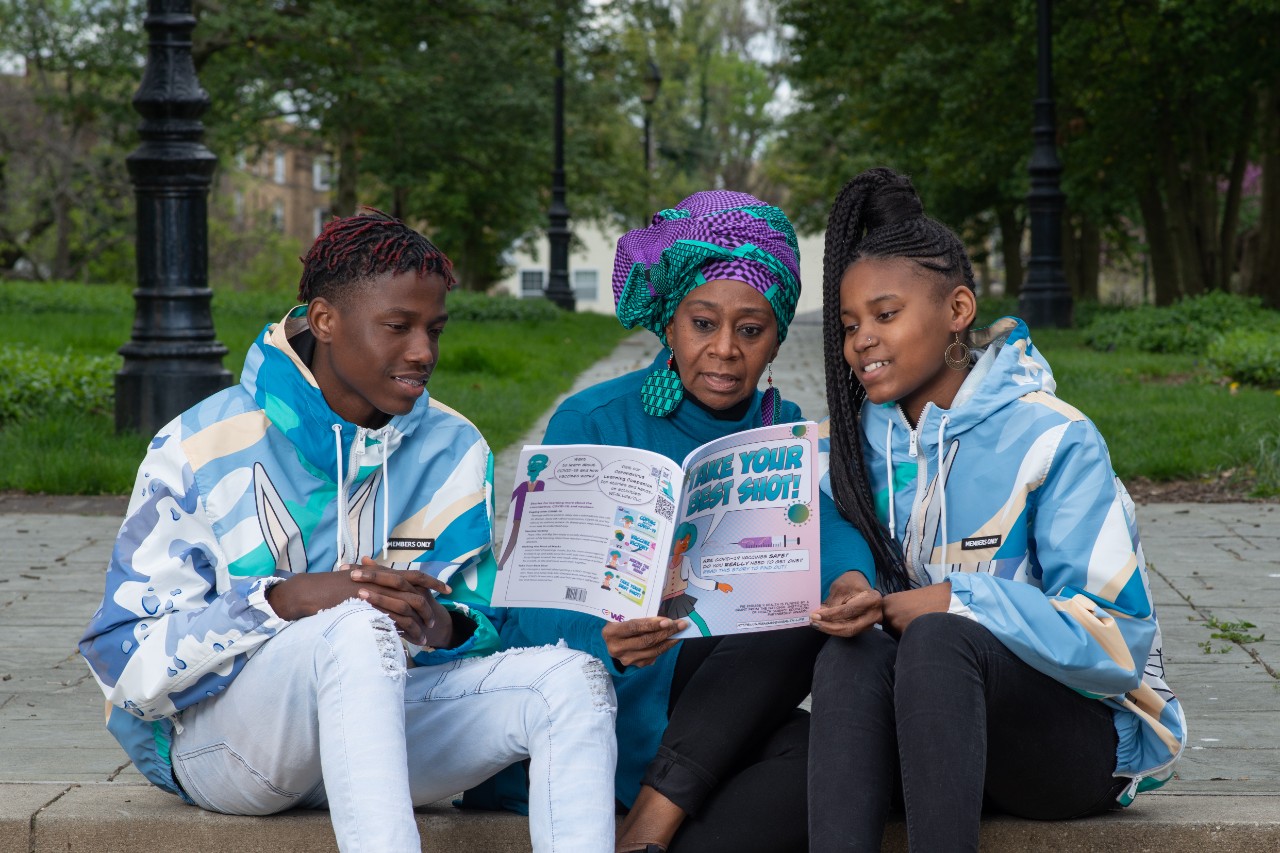
Butsch-Kovacic says when her team tried to do community education about vaccines, people avoided them, she says likely because of three things: People are tired of talking about COVID-19, they do not want to get attacked or belittled if they don’t want to get a vaccine, and they are getting vaccine information from non-medical sources.
“I think there are some reasons that people don’t want to get vaccinated, I think there are good reasons, but they should be good reasons, not because you believe something that’s not even possible,” said Butsch-Kovacic.
If your source, she says, is someone other than a healthcare provider, you may want to get a second opinion.
Read more about the research here.
The research was also reported on by Cleveland.com. See that coverage here.
Lead photo/Susan Gertz
Next Lives Here
The University of Cincinnati is classified as a Research 1 institution by the Carnegie Commission and is ranked in the National Science Foundation's Top-35 public research universities. UC's medical, graduate and undergraduate students and faculty investigate problems and innovate solutions with real-world impact. Next Lives Here.
Related Stories
Sugar overload killing hearts
November 10, 2025
Two in five people will be told they have diabetes during their lifetime. And people who have diabetes are twice as likely to develop heart disease. One of the deadliest dangers? Diabetic cardiomyopathy. But groundbreaking University of Cincinnati research hopes to stop and even reverse the damage before it’s too late.
Is going nuclear the solution to Ohio’s energy costs?
November 10, 2025

The Ohio Capital Journal recently reported that as energy prices continue to climb, economists are weighing the benefits of going nuclear to curb costs. The publication dove into a Scioto Analysis survey of 18 economists to weigh the pros and cons of nuclear energy. One economist featured was Iryna Topolyan, PhD, professor of economics at the Carl H. Lindner College of Business.
App turns smartwatch into detector of structural heart disease
November 10, 2025

An app that uses an AI model to read a single-lead ECG from a smartwatch can detect structural heart disease, researchers reported at the 2025 Scientific Sessions of the American Heart Association. Although the technology requires further validation, researchers said it could help improve the identification of patients with heart failure, valvular conditions and left ventricular hypertrophy before they become symptomatic, which could improve the prognosis for people with these conditions.