55KRC: Death of Olivia Newton-John highlights breast cancer survivorship

Olivia Newton-John died last week, according to her family. While no cause of death has been announced, the actress and singer had been open about her battle with breast cancer that began in 1992. Newton-John's story demonstrates that a breast cancer diagnosis is not a death sentence, as she lived for many years after initial diagnosis.
Elizabeth Shaughnessy, MD, PhD, professor and vice chair of patient experience in the University of Cincinnati's Department of Surgery in the College of Medicine, a UC Health breast cancer surgeon, president of the Association of Women Surgeons and a breast cancer survivor, joined 55KRC's Simply Medicine program to discuss breast cancer survivorship and the importance of screening.
Shaughnessy said even decades after initial diagnosis, cancer cells can recur after remaining dormant for years.
"Sometimes we have small cells that can escape and they can travel elsewhere, oftentimes to the bone marrow," she told Simply Medicine. "It’s an area of active research, why do these sometimes start to grow after decades of being dormant. It’s hard to know. We do know that some subsets of breast cancer can recur, and they can recur decades down the line."
Shaughnessy encouraged women to advocate for themselves when they feel something is off, even if mammograms do not detect anything. She noted the recent passage of House Bill 371 will help women with dense breast tissue that can obscure cancers on mammograms to receive other, more effective screenings.
"If I feel something that’s a little off, I am going to be biopsying it just simply because not everything is going to be detected," Shaughnessy said. "Even in myself, I found a mass on self-exam right before I was supposed to have a screening mammogram."
Listen to the Simply Medicine segment. (Note: Segment begins around 29:03 mark.)
Read more about Shaughnessy's breast cancer journey.
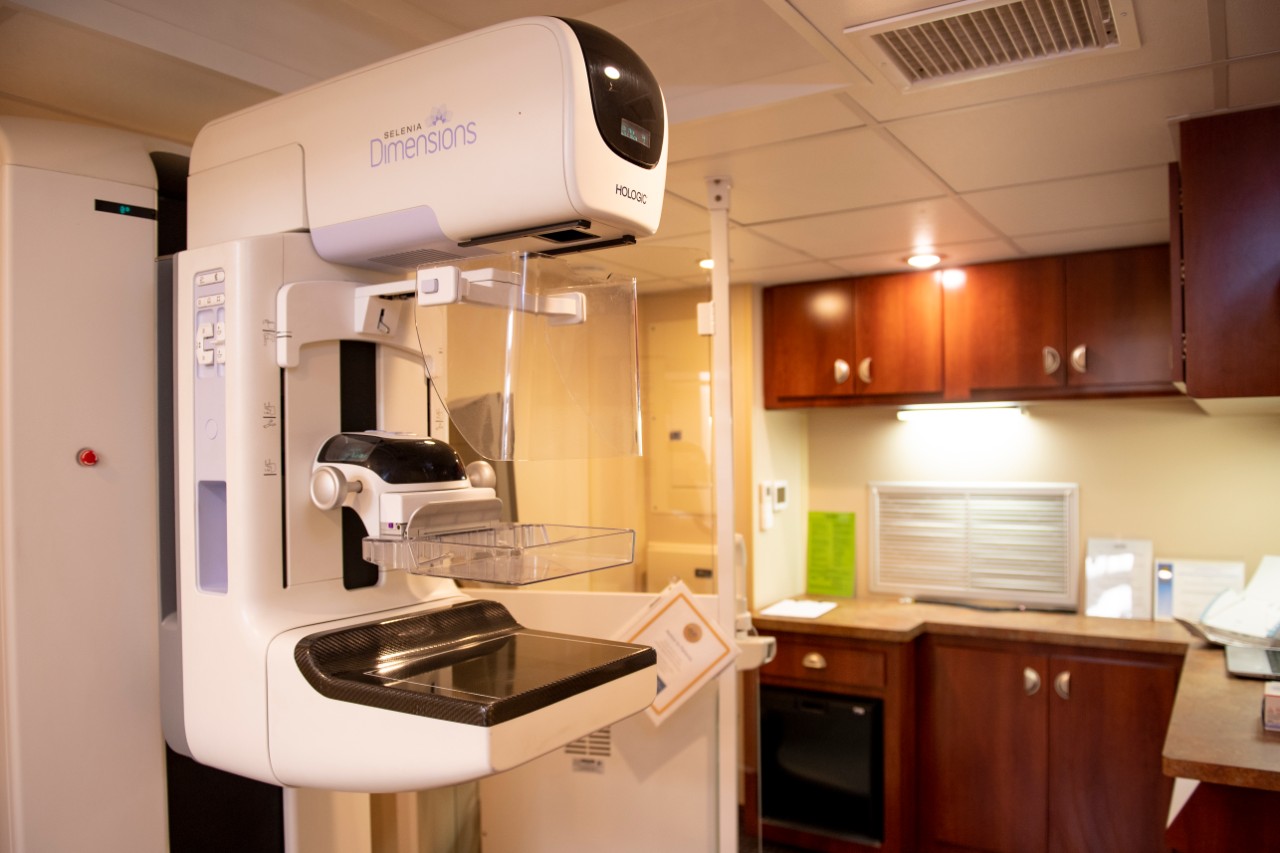
Featured photo at top of a 3D mammogram machine. Photo/Colleen Kelley/UC Creative + Brand
Related Stories
Sugar overload killing hearts
November 10, 2025
Two in five people will be told they have diabetes during their lifetime. And people who have diabetes are twice as likely to develop heart disease. One of the deadliest dangers? Diabetic cardiomyopathy. But groundbreaking University of Cincinnati research hopes to stop and even reverse the damage before it’s too late.
Is going nuclear the solution to Ohio’s energy costs?
November 10, 2025

The Ohio Capital Journal recently reported that as energy prices continue to climb, economists are weighing the benefits of going nuclear to curb costs. The publication dove into a Scioto Analysis survey of 18 economists to weigh the pros and cons of nuclear energy. One economist featured was Iryna Topolyan, PhD, professor of economics at the Carl H. Lindner College of Business.
App turns smartwatch into detector of structural heart disease
November 10, 2025

An app that uses an AI model to read a single-lead ECG from a smartwatch can detect structural heart disease, researchers reported at the 2025 Scientific Sessions of the American Heart Association. Although the technology requires further validation, researchers said it could help improve the identification of patients with heart failure, valvular conditions and left ventricular hypertrophy before they become symptomatic, which could improve the prognosis for people with these conditions.