BioSpace: Why China’s biotech sector thrives despite a global recession
UC political scientist comments on the strength of China’s biopharma gains

China’s foray into biotech companies is relatively new in comparison to Western nations, but it’s gaining speed while other nations struggle with economic downturns.
“China has made a huge push since 2010 to develop biotech companies that can compete at the apex of the world economy,” Thomas Moore, Ph.D., associate professor at UC’s School of Public and International Affairs told BioSpace.
In 2015, he says, the Chinese government launched the Made in China 2025 Initiative to develop key industries to the point where, by 2025, it would not have to rely either on imports of finished products or upon global supply chains in which its companies played a subordinate role in collaborating with major foreign companies.
Moore continued. “Beyond meeting China’s own needs, the additional aim was for these companies to become peer competitors of the large corporate behemoths from other countries that dominate global markets.”
According to the article, in 2000, China did not have one company on the Forbes Global 2000 list. In 2021, it had 14. This is good for second place on this list, behind the United States which had 31.
“The entire Chinese biotech infrastructure, including individual biotech companies themselves, have been the beneficiaries of substantial funding and other kinds of policy and regulatory assistance to help them succeed,” said Moore.
Moore, who is also an affiliate associate professor in Asian Studies, teaches undergraduate and graduate courses on globalization, international political economy, U.S.-China relations, and the politics and international relations of East Asia.
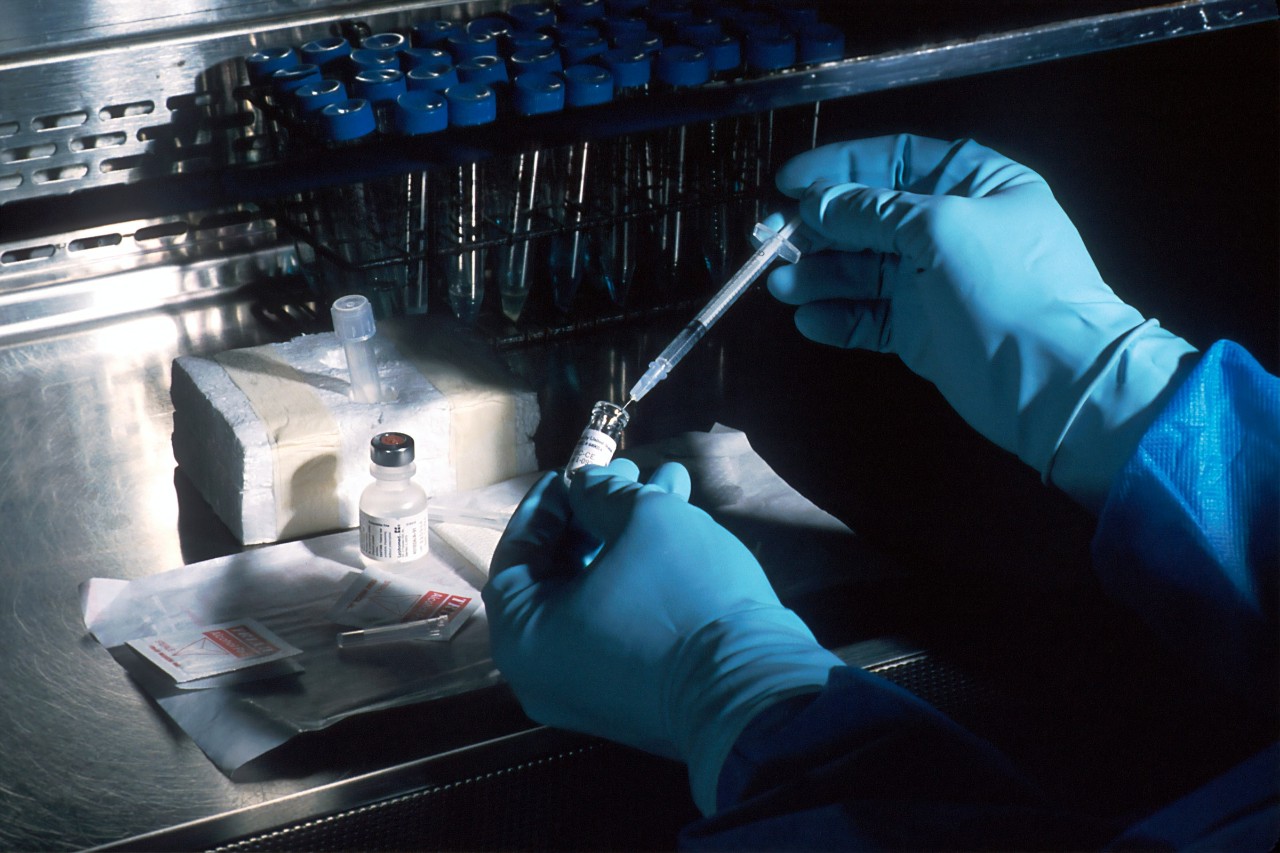
Featured photo at top courtesy of the National Cancer Institute.
Impact Lives Here
The University of Cincinnati is leading public urban universities into a new era of innovation and impact. Our faculty, staff and students are saving lives, changing outcomes and bending the future in our city's direction. Next Lives Here.
Related Stories
Sugar overload killing hearts
November 10, 2025
Two in five people will be told they have diabetes during their lifetime. And people who have diabetes are twice as likely to develop heart disease. One of the deadliest dangers? Diabetic cardiomyopathy. But groundbreaking University of Cincinnati research hopes to stop and even reverse the damage before it’s too late.
Is going nuclear the solution to Ohio’s energy costs?
November 10, 2025

The Ohio Capital Journal recently reported that as energy prices continue to climb, economists are weighing the benefits of going nuclear to curb costs. The publication dove into a Scioto Analysis survey of 18 economists to weigh the pros and cons of nuclear energy. One economist featured was Iryna Topolyan, PhD, professor of economics at the Carl H. Lindner College of Business.
App turns smartwatch into detector of structural heart disease
November 10, 2025

An app that uses an AI model to read a single-lead ECG from a smartwatch can detect structural heart disease, researchers reported at the 2025 Scientific Sessions of the American Heart Association. Although the technology requires further validation, researchers said it could help improve the identification of patients with heart failure, valvular conditions and left ventricular hypertrophy before they become symptomatic, which could improve the prognosis for people with these conditions.