Yahoo News/WCPO: Monkeypox reported in Cincinnati, but doctor says not to hit panic button yet
UC expert says disease spreads by close contact

The Cincinnati Health Department recently confirmed two cases of monkeypox in the city, and the disease has been reported in nearly all 50 states. In a story produced by WCPO-TV and published on Yahoo News, Carl Fichtenbaum, MD, professor in the Division of Infectious Diseases at the UC College of Medicine says monkeypox has had limited outbreaks for decades, but now it’s spreading across the world.
Fichtenbaum said it spreads by having close contact with someone. He noted it needs to be sufficient contact, such as eating a meal or spending hours with someone.

Carl Fichtenbaum, MD, of the Division of Infectious Diseases at the UC College of Medicine/Photo/Colleen Kelley/UC Marketing + Brand
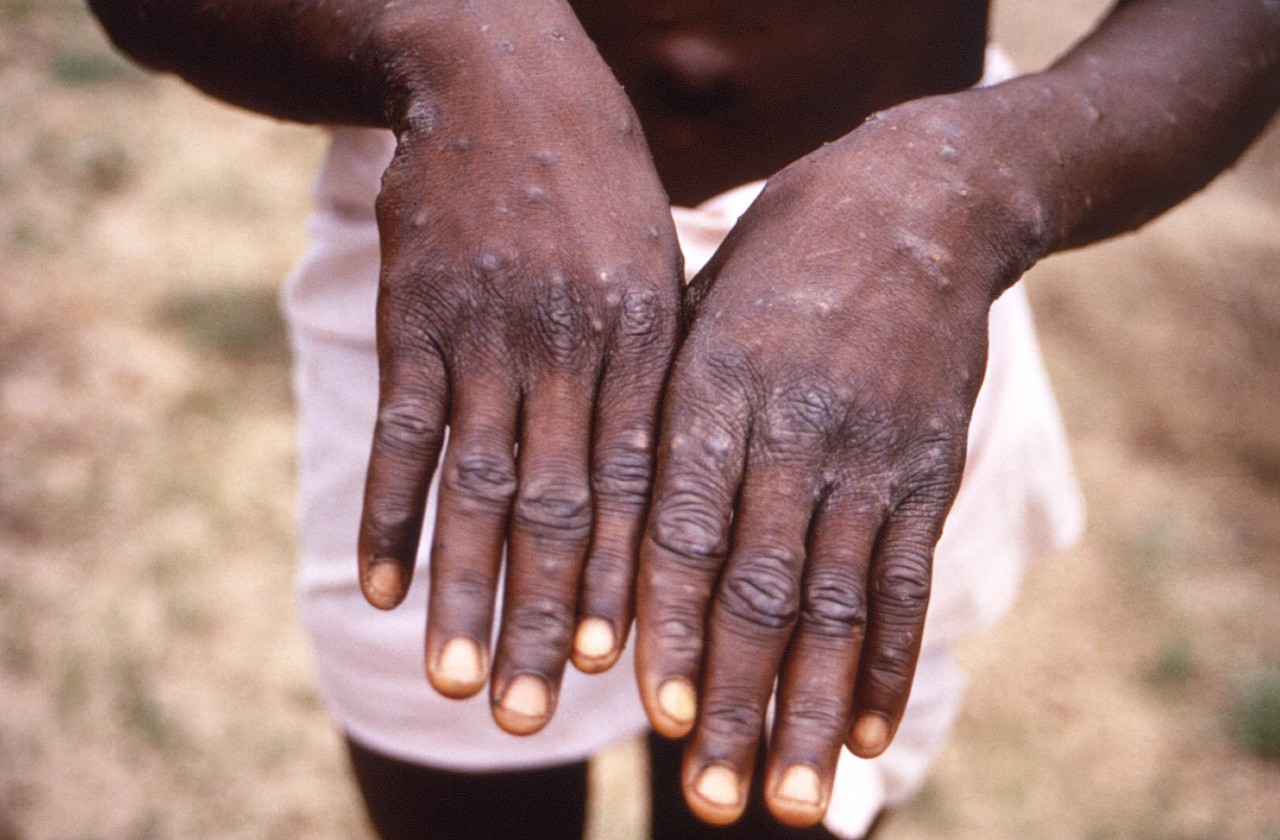
“It’s a virus that causes a sort of mild flu-like illness and you get spots on your skin, blisters, pustules,” he said. “Most people do get a rash and it can start out like a little red bump and then almost look like white head where it gets a little cover on it and you can almost see some puss underneath it. Sometimes it can look like a blister and sometimes it comes up in a variety of different shapes and sizes and forms.”
He said the rash is why some doctors are having trouble identifying monkeypox.
“The rash doesn’t have to look uniform in some way and it can come in various different places of the body, it doesn’t have to be all over," Fichtenbaum said. "It can be in just one place and I think that’s fooled some of the doctors who have been looking at people."
Fichtenbaum believes the World Health Organization declared monkeypox a global health emergency to help contain it.
“When you list an emergency, what that does is send an alert to countries to enlist the support of their public health system to try and contain the spread of the disease,” Fichtenbaum said.
Fichtenbaum said there are likely more cases of monkeypox than what is reported in the U.S. due to a lack of testing and vaccine availability.
“Testing is pretty limited and that’s one of the big problems right now,” Fichtenbaum said. “They are probably people who have very atypical cases and so they’re not even being tested.”
Fichtenbaum was also featured in a story produced by Spectrum News about the COVID-19 pill Paxlovid. See that coverage here.
Next Lives Here
The University of Cincinnati is classified as a Research 1 institution by the Carnegie Commission and is ranked in the National Science Foundation's Top-35 public research universities. UC's graduate students and faculty investigate problems and innovate solutions with real-world impact. Next Lives Here.
Related Stories
Sugar overload killing hearts
November 10, 2025
Two in five people will be told they have diabetes during their lifetime. And people who have diabetes are twice as likely to develop heart disease. One of the deadliest dangers? Diabetic cardiomyopathy. But groundbreaking University of Cincinnati research hopes to stop and even reverse the damage before it’s too late.
Is going nuclear the solution to Ohio’s energy costs?
November 10, 2025

The Ohio Capital Journal recently reported that as energy prices continue to climb, economists are weighing the benefits of going nuclear to curb costs. The publication dove into a Scioto Analysis survey of 18 economists to weigh the pros and cons of nuclear energy. One economist featured was Iryna Topolyan, PhD, professor of economics at the Carl H. Lindner College of Business.
App turns smartwatch into detector of structural heart disease
November 10, 2025

An app that uses an AI model to read a single-lead ECG from a smartwatch can detect structural heart disease, researchers reported at the 2025 Scientific Sessions of the American Heart Association. Although the technology requires further validation, researchers said it could help improve the identification of patients with heart failure, valvular conditions and left ventricular hypertrophy before they become symptomatic, which could improve the prognosis for people with these conditions.