Discover: What caused the Devonian extinction?
UC geology professor Thomas Algeo shares his theory

Discover Magazine turned to a University of Cincinnati geologist to learn more about what caused a mass extinction about 360 million years ago.
The Devonian extinction wiped out as many as 80% of animal species. Wildlife of the Devonian ranged from trilobites to prehistoric precursors of amphibians. The Devonian is known as the Age of Fishes for the great diversity of marine life it spawned.
UC College of Arts and Sciences geology professor Thomas Algeo said the Devonian saw the vast proliferation of vascular plants as well that turned the Earth green with new life: mosses, ferns and trees. Meanwhile, marine life also flourished.

UC geologist Thomas Algeo. Photo/Joseph Fuqua II/UC Marketing + Brand
So what happened?
The extinction coincided with a period of global cooling, likely from volcanic eruptions that covered the sky in sun-reflecting ash. Scientists have also observed the crash of dissolved oxygen in the water required to support marine life, which would have wreaked havoc with the food chain.
“The two leading theories are cooling and the spread of anoxia in the marine environment,” Algeo told Discover Magazine. “The fact of the matter is that they both occurred simultaneously, and they both may have played a role.”
But what caused the oceans to lose oxygen?
Algeo said the explosion of new plant life on Earth for the first time generated a wealth of nutrients or fertilizer that ended up in the water. This created enormous algae blooms. When algae dies, the resulting decomposition removes oxygen from the water, creating vast dead zones.
Algeo said Devonian mass extinction has a lot in common with the current mass extinction we're witnessing today because it has a biological origin: humans.
“It’s important to try to understand the trajectory of events and how they ripple through the biosphere at large in order to try and prevent the worst effects of mass extinction in the future,” Algeo told Discover.
Read the Discover Magazine story.
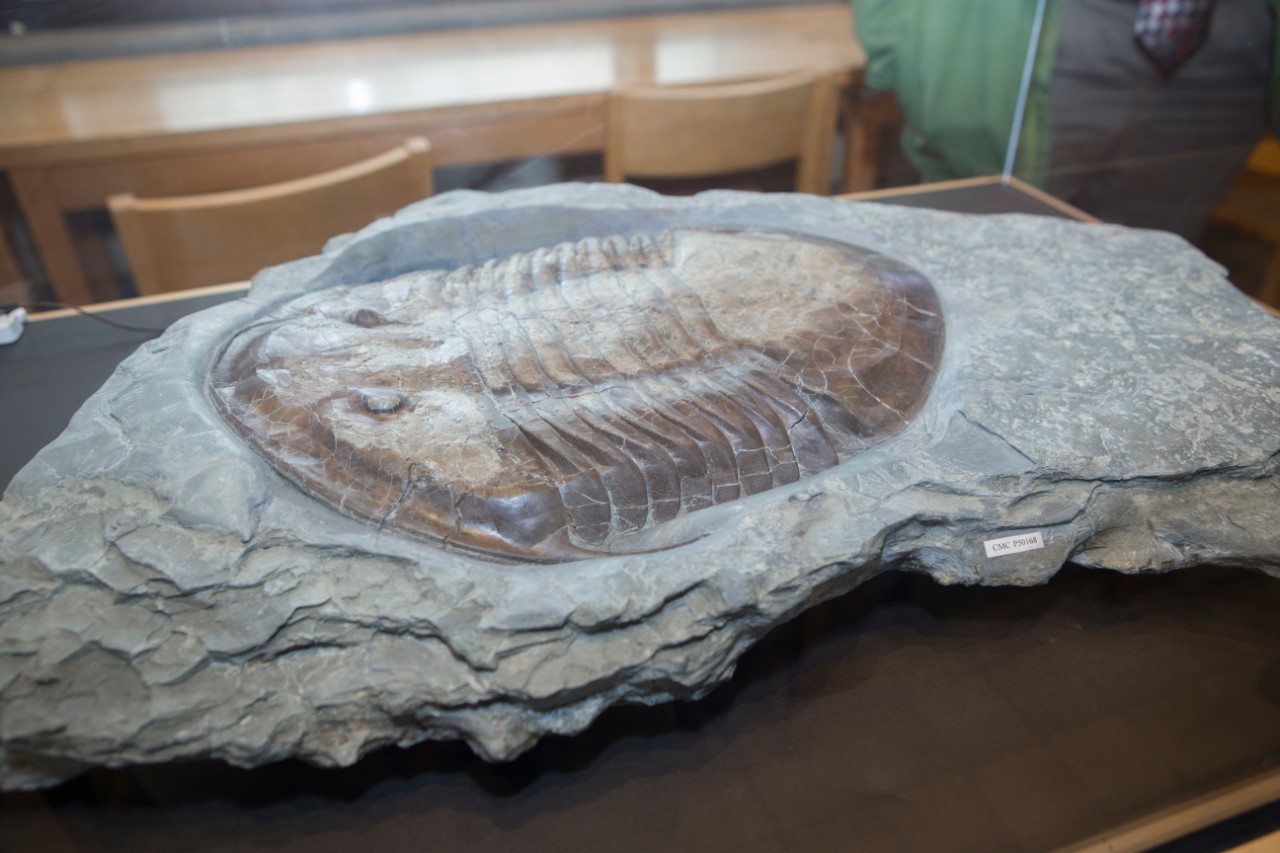
Featured image at top: A fossilized trilobite on display in UC's Geology Department. Photo/Joseph Fuqua II/UC Marketing + Brand

Scientists believe volcanic eruptions played a role in the Devonian mass extinction more than 360 million years ago. Illustration/Margaret Weiner/UC Marketing + Brand
Related Stories
Sugar overload killing hearts
November 10, 2025
Two in five people will be told they have diabetes during their lifetime. And people who have diabetes are twice as likely to develop heart disease. One of the deadliest dangers? Diabetic cardiomyopathy. But groundbreaking University of Cincinnati research hopes to stop and even reverse the damage before it’s too late.
Is going nuclear the solution to Ohio’s energy costs?
November 10, 2025

The Ohio Capital Journal recently reported that as energy prices continue to climb, economists are weighing the benefits of going nuclear to curb costs. The publication dove into a Scioto Analysis survey of 18 economists to weigh the pros and cons of nuclear energy. One economist featured was Iryna Topolyan, PhD, professor of economics at the Carl H. Lindner College of Business.
App turns smartwatch into detector of structural heart disease
November 10, 2025

An app that uses an AI model to read a single-lead ECG from a smartwatch can detect structural heart disease, researchers reported at the 2025 Scientific Sessions of the American Heart Association. Although the technology requires further validation, researchers said it could help improve the identification of patients with heart failure, valvular conditions and left ventricular hypertrophy before they become symptomatic, which could improve the prognosis for people with these conditions.