Apex: Air Force awards grants to UC, tech partner
UC will work with AI company VISIMO on unmanned aerial systems

The Academic Partnership Engagement Experiment or APEX highlighted a research partnership between the University of Cincinnati and a Pennsylvania company to develop new artificial intelligence algorithms using U.S. Air Force grants.
VISIMO, based in Pittsburgh, Pennsylvania, was the recipient of small business technology transfer grants totaling $2.2 million to develop new autonomous navigation systems for unmanned aerial vehicles and spherical robots called orbs.
Researchers in UC's Department of Aerospace Engineering and Engineering Mechanics will work with VISIMO to develop artificial intelligence algorithms for sense-and-avoid neural network architectures. This will allow the orbs or drones to perceive, learn, decide and act more efficiently and effectively on their own.
“We come up with novel approaches alongside subject matter experts from universities who inform the creation of our models,” Emma Lamberton, grants, and contracts manager at VISIMO, told APEX.
The Air Force has awarded more than $25 million in research and development grants to research institutions across the country. According to APEX, the latest phase of grants is designed to bridge the "valley of death," the tricky period when a new technology project isn't quite ready for the marketplace but is too narrow in scope to draw additional attention from other research institutions that might otherwise help it mature.
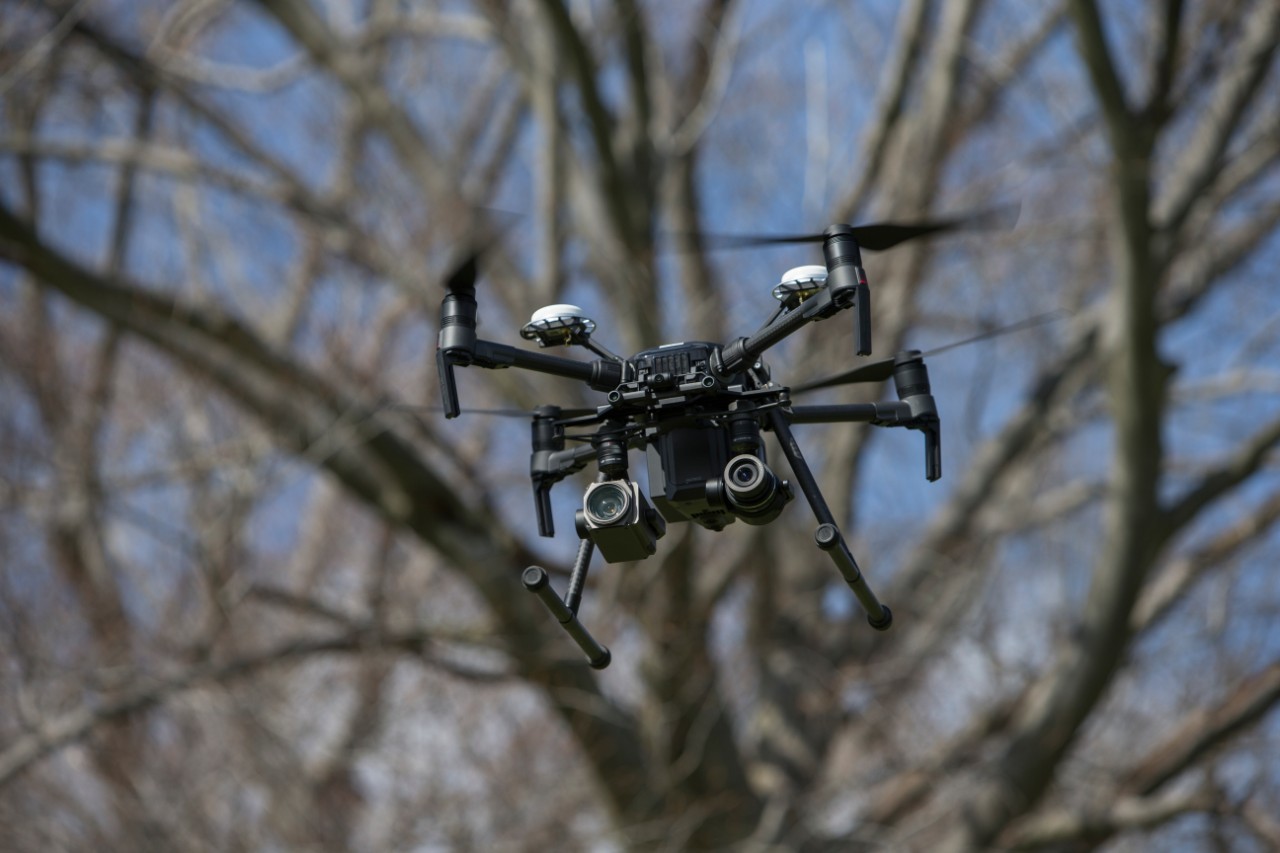
Featured pic at top: UC will work with Pennsylvania company VISIMO to develop new AI technology for drones and spherical robots called orbs. Photo/Andrew Higley/UC Marketing + Brand
Related Stories
Sugar overload killing hearts
November 10, 2025
Two in five people will be told they have diabetes during their lifetime. And people who have diabetes are twice as likely to develop heart disease. One of the deadliest dangers? Diabetic cardiomyopathy. But groundbreaking University of Cincinnati research hopes to stop and even reverse the damage before it’s too late.
Is going nuclear the solution to Ohio’s energy costs?
November 10, 2025

The Ohio Capital Journal recently reported that as energy prices continue to climb, economists are weighing the benefits of going nuclear to curb costs. The publication dove into a Scioto Analysis survey of 18 economists to weigh the pros and cons of nuclear energy. One economist featured was Iryna Topolyan, PhD, professor of economics at the Carl H. Lindner College of Business.
App turns smartwatch into detector of structural heart disease
November 10, 2025

An app that uses an AI model to read a single-lead ECG from a smartwatch can detect structural heart disease, researchers reported at the 2025 Scientific Sessions of the American Heart Association. Although the technology requires further validation, researchers said it could help improve the identification of patients with heart failure, valvular conditions and left ventricular hypertrophy before they become symptomatic, which could improve the prognosis for people with these conditions.