TIME: The Tulsa shooting is a reminder health care workers face violence every day
UC expert says health care workers are exhausted by endless worrying

A shooting at a Tulsa medical facility on June 1 that left four people dead has renewed the discussion around violence against health care workers. TIME magazine reported that according to Bureau of Labor Statistics data, health care and social service workers are five times as likely to be injured from violence in their workplace than other workers, and the number of such injuries has risen dramatically over the last decade—from 6.4 incidents per 10,000 workers annually in 2011, to 10.3 per 10,000 in 2020. Healthcare workers say the situation has become even worse during the COVID-19 pandemic; in September, nearly a third of respondents to a National Nurses United survey said they’d experienced an increase in workplace violence.
One of the expert sources quoted in the story from TIME was Gordon Gillespie, PhD, and associate dean of research for the UC College of Nursing who researches violence against health care workers. He tells TIME tensions are high because many people are tired of the endless partisan back and forth on COVID-19.
Many health care workers are exhausted by endless worrying—about personal protective equipment, the risk of getting sick, or having to pick up the slack for ill coworkers.
“Everyone is just tired, and their resilience is down. And so when you have things happen, you’re more likely to escalate even faster,” says Gillespie.
Gordon argues that it’s key to train health care workers for violence, and to make it more difficult for people with violent intent to get into hospitals—which, he admits, is a challenge, because hospitals are designed to welcome people, not to lock down.
Read more about Gillespie's research on preventing violence against health care workers here.
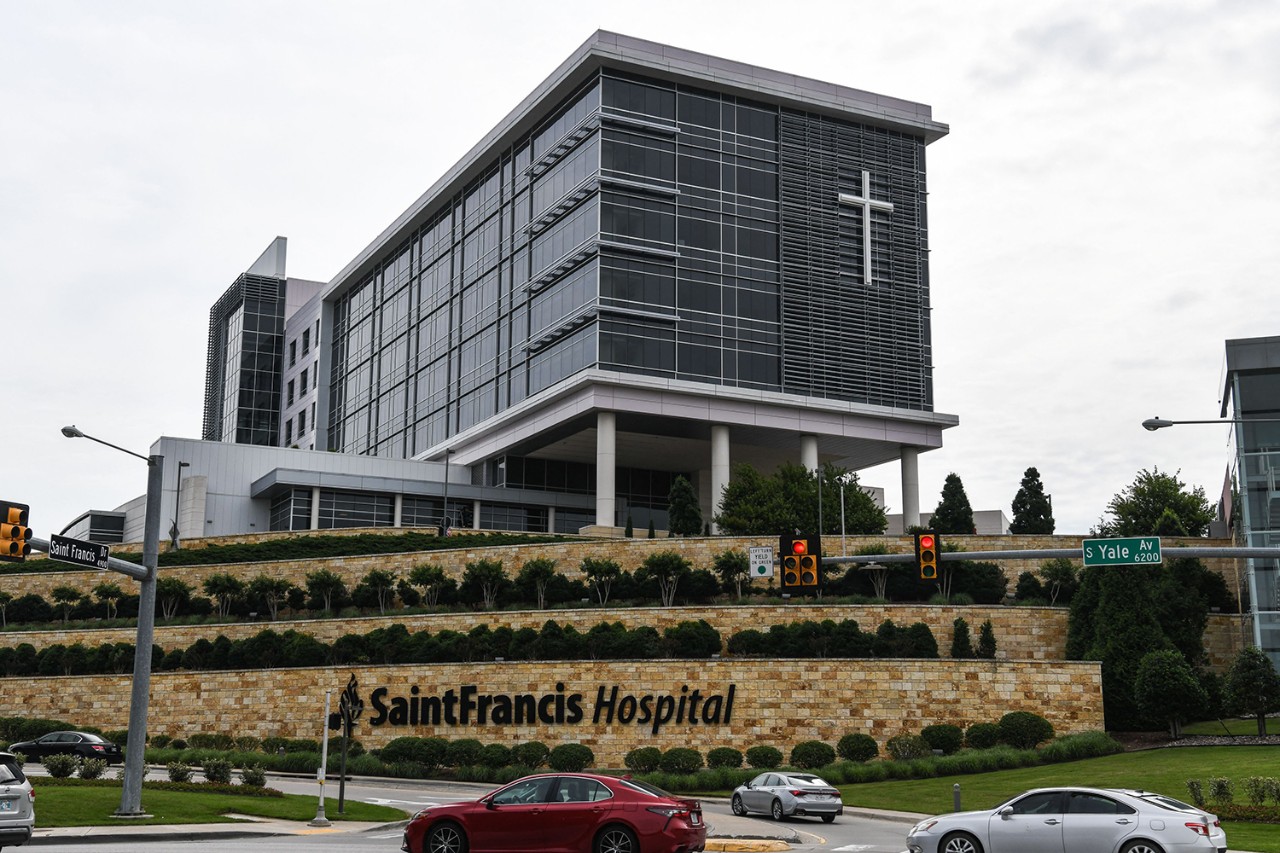
Lead photo of St. Francis Hospital in Tulsa/Chandan Khanna/AFP via Getty Images
Next Lives Here
The University of Cincinnati is classified as a Research 1 institution by the Carnegie Commission and is ranked in the National Science Foundation's Top-35 public research universities. UC's medical, graduate and undergraduate students and faculty investigate problems and innovate solutions with real-world impact. Next Lives Here.
Related Stories
Sugar overload killing hearts
November 10, 2025
Two in five people will be told they have diabetes during their lifetime. And people who have diabetes are twice as likely to develop heart disease. One of the deadliest dangers? Diabetic cardiomyopathy. But groundbreaking University of Cincinnati research hopes to stop and even reverse the damage before it’s too late.
Is going nuclear the solution to Ohio’s energy costs?
November 10, 2025

The Ohio Capital Journal recently reported that as energy prices continue to climb, economists are weighing the benefits of going nuclear to curb costs. The publication dove into a Scioto Analysis survey of 18 economists to weigh the pros and cons of nuclear energy. One economist featured was Iryna Topolyan, PhD, professor of economics at the Carl H. Lindner College of Business.
App turns smartwatch into detector of structural heart disease
November 10, 2025

An app that uses an AI model to read a single-lead ECG from a smartwatch can detect structural heart disease, researchers reported at the 2025 Scientific Sessions of the American Heart Association. Although the technology requires further validation, researchers said it could help improve the identification of patients with heart failure, valvular conditions and left ventricular hypertrophy before they become symptomatic, which could improve the prognosis for people with these conditions.