UC research featured as cover story of neuroscience journal

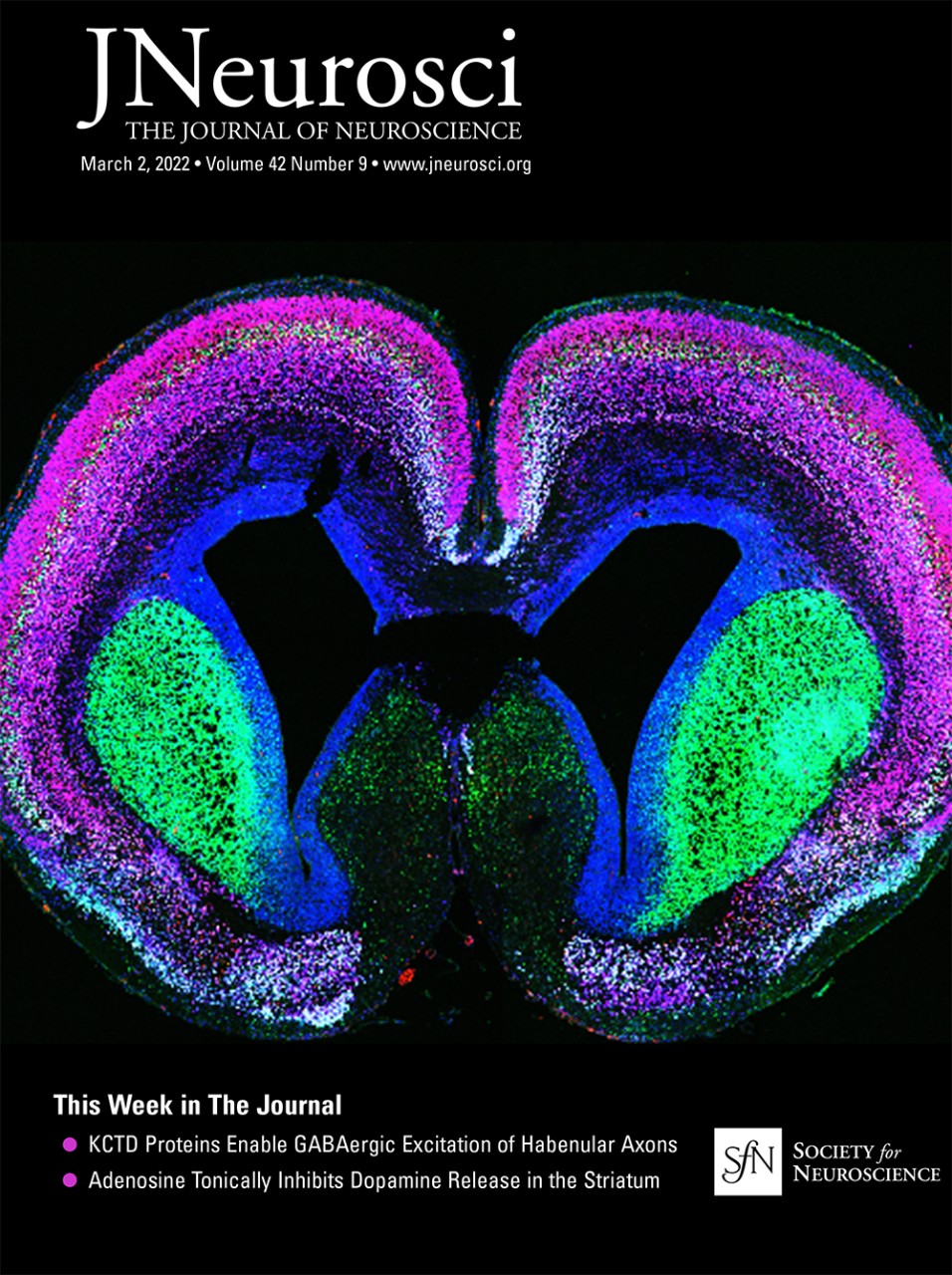
The cover of the March 2022 volume of the Journal of Neuroscience may at first glance look like a piece of pointillism artwork. Its brilliant colors of magenta, blue and green grabbed the eyes of the journal's editors, who decided to put it on the front page.
June Goto, PhD, assistant professor with the division of pediatric neurosurgery in the University of Cincinnati's College of Medicine and the study's main author, describes what the image actually is.
"This is a beautiful picture of a normal-looking brain before the onset of hydrocephalus," Goto says. "The colors indicate the different layers of cortical cerebral cortex."
The chosen image shows a section of the brain from a mouse 18 days after fertilization (E18). At this point, the mouse's cortical layers are well retained, but will start to thin after its birth.
Goto and Francesco Mangano, DO, professor and Mary Jane and Bob Tritsch Chair of Pediatric Neurosurgery and also one of the study's authors, picked several images for submission to the journal, but ultimately decided on the featured image.
"It was very surprising," Goto says of her first cover article.

Journal of Neuroscience Features CCHMC Research on Cover. Courtesy of Journal of Neuroscience.
The study itself looked at the effect of anti-inflammatory drug treatment on a neonatal hydrocephalus model. Although it did not largely improve the ventricular site, it did significantly improve the neuronal cell development.
"It was a great surprise for us because it had such drastic functional and developmental effect," said Goto, "even though you don't see much improvement in the anatomy itself."
The results of this study excite Goto, who says this published article is just the beginning.
"I'd like to address whether using anti-inflammatory drugs can actually improve the neurological symptoms of hydrocephalus," she said.
Goto will investigate that next and hopes to publish the results within two years.
Featured photo at top courtesy of the Journal of Neuroscience.
Related Stories
Sugar overload killing hearts
November 10, 2025
Two in five people will be told they have diabetes during their lifetime. And people who have diabetes are twice as likely to develop heart disease. One of the deadliest dangers? Diabetic cardiomyopathy. But groundbreaking University of Cincinnati research hopes to stop and even reverse the damage before it’s too late.
App turns smartwatch into detector of structural heart disease
November 10, 2025

An app that uses an AI model to read a single-lead ECG from a smartwatch can detect structural heart disease, researchers reported at the 2025 Scientific Sessions of the American Heart Association. Although the technology requires further validation, researchers said it could help improve the identification of patients with heart failure, valvular conditions and left ventricular hypertrophy before they become symptomatic, which could improve the prognosis for people with these conditions.
Combination immunotherapy helps overcome melanoma treatment resistance
November 10, 2025

MSN highlighted research led by the University of Cincinnati Cancer Center's Trisha Wise-Draper showing a combination of immunotherapy medications can activate a robust immune response and help overcome treatment resistance in patients with refractory melanoma.