CCM alumnus' choral commission shares hope for those struggling with memory loss
Alex Gartner’s “Toward Something New” will be premiered by the Durham Children’s Choir in late May

UC College-Conservatory of Music alumnus Alex Gartner (BM Music Education, ‘12) recently finished a 10-minute choral work for treble chorus that was commissioned by a coalition of memory care associations, including TimeSlips Creative Storytelling and Dementia Inclusive Durham. The piece “Toward Something New” will be premiered by North Carolina's Durham Children’s Choir in late May.

Alex Gartner. Photo/Provided.
The work focuses on memory loss and being present in the moment, honoring the experiences of both the person struggling with memory and their loved ones. "Its message is one of hope — hope that new memories and shared experiences can be forged through impactful encounters with music and the arts," Gartner says.
“The primary emotion associated with memory loss is appropriately named: loss," he adds. "A person experiencing memory loss for the first time — perhaps due to dementia, amnesia, Alzheimer’s disease, natural aging and the like — often replaces lost memories and shared experiences with feelings of loss, frustration and loneliness. However, this piece exists in a different sphere, one that is defined not so much by pain, but by possibility."
"When we open ourselves to experience another without judgement, without fear and without our own baggage, we can begin to see the beauty and authenticity in the person in front of us. As choirs embark on this work, each singer is encouraged to consider that it means to approach someone new without any preconceived notions — just two people sharing a space with one another.”
In addition to composition, Gartner is an educator and conductor currently serving as the Artistic and Executive Director of the Pensacola’s Children’s Chorus. The choir will make their Carnegie Hall debut on June 13, 2022. He also has a book entitled The Business of Choir set to be published this summer.
“I suppose I really found my compositional voice with my experience with the Cincinnati Youth Choir, where I started as an accompanist during my undergraduate years at CCM," Gartner says. "I later became an intern through the music education division, and after graduation I was hired as the Richard W. Wesp Assistant Director. Working with choirs of all ages helped me realize what youth voices are capable of. So much of the repertoire out there is trite and is frankly disrespectful of what children can do with their voice. I was doubly blessed with a top-notch education through the music education division and the division of choral studies who instilled me with high standards for music making and learning.”
“I strive to create music that is meaningful, challenges the preconceived notion of the listener about what youth are capable of, and provide opportunities for young people to express themselves through the beauty of choral music. It’s really fun and challenging work.”
Learn more about Alex Gartner’s work and upcoming performances.

Jaime Sharp
CCM Graduate Assistant, Marketing + Communications
Jaime Sharp is a master's student studying Vocal Performance at CCM. She serves as the Vice President of the CCM Graduate Student Association and Student Liaison for the CCM DEI Committee. Jaime holds a bachelor's from the University of Michigan.
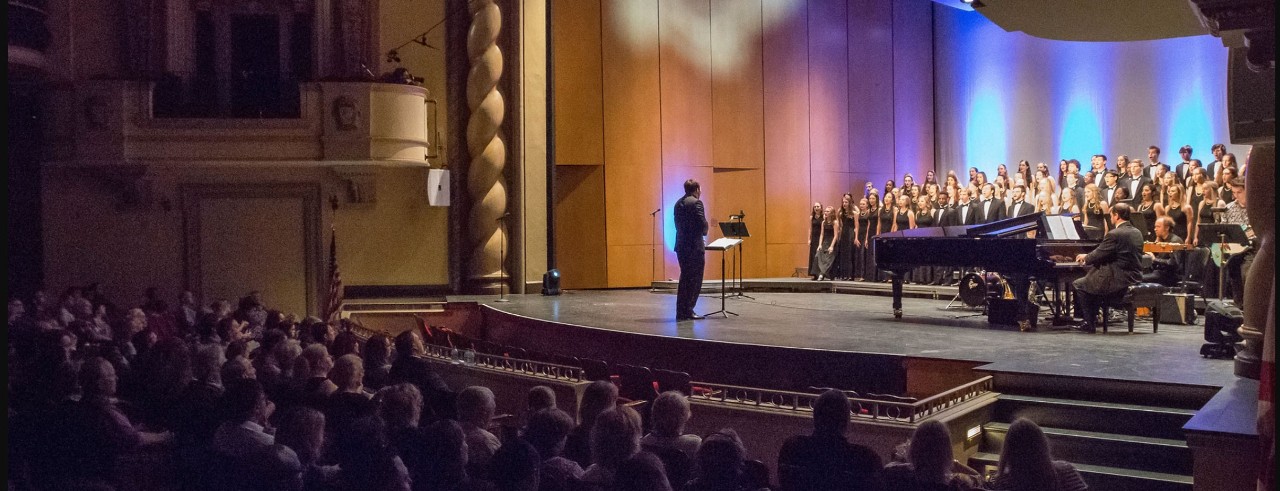
Featured image at the top: Alex Gartner leading a choir during a performance. Photo/alexgartner.com.
Related Stories
Sugar overload killing hearts
November 10, 2025
Two in five people will be told they have diabetes during their lifetime. And people who have diabetes are twice as likely to develop heart disease. One of the deadliest dangers? Diabetic cardiomyopathy. But groundbreaking University of Cincinnati research hopes to stop and even reverse the damage before it’s too late.
App turns smartwatch into detector of structural heart disease
November 10, 2025

An app that uses an AI model to read a single-lead ECG from a smartwatch can detect structural heart disease, researchers reported at the 2025 Scientific Sessions of the American Heart Association. Although the technology requires further validation, researchers said it could help improve the identification of patients with heart failure, valvular conditions and left ventricular hypertrophy before they become symptomatic, which could improve the prognosis for people with these conditions.
Combination immunotherapy helps overcome melanoma treatment resistance
November 10, 2025

MSN highlighted research led by the University of Cincinnati Cancer Center's Trisha Wise-Draper showing a combination of immunotherapy medications can activate a robust immune response and help overcome treatment resistance in patients with refractory melanoma.