CureToday: UC enrolling patients for glioblastoma trial

A new clinical trial at the University of Cincinnati is studying the effectiveness of a new two-pronged immunotherapy treatment procedure to treat the most aggressive and deadly type of brain tumors, called glioblastomas. Originating from healthy brain cells, glioblastomas can form in any area of the brain.
Soma Sengupta, MD, PhD, said the trial will administer two immunotherapy drugs in tandem with each other. She noted previous research has shown a single-arm immunotherapy treatment has not been effective, leading to the combination therapy being tested in the trial.
In collaboration with the Dana-Farber Cancer Insitute in Boston, a teaching affiliate of Harvard Medical School, researchers aim to enroll 24 patients in the Phase 1 study.
For more trial and enrollment information, contact Alex Love at lovea4@ucmail.uc.edu.
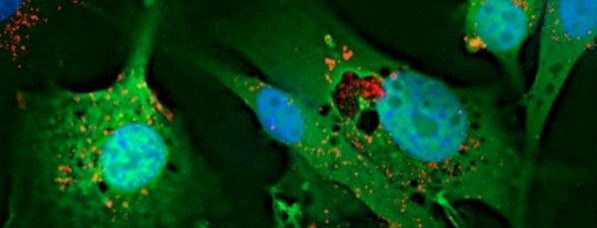
Featured photo at top of glioblastoma cells in culture courtesy of National Cancer Institute.
Related Stories
Sugar overload killing hearts
November 10, 2025
Two in five people will be told they have diabetes during their lifetime. And people who have diabetes are twice as likely to develop heart disease. One of the deadliest dangers? Diabetic cardiomyopathy. But groundbreaking University of Cincinnati research hopes to stop and even reverse the damage before it’s too late.
Is going nuclear the solution to Ohio’s energy costs?
November 10, 2025

The Ohio Capital Journal recently reported that as energy prices continue to climb, economists are weighing the benefits of going nuclear to curb costs. The publication dove into a Scioto Analysis survey of 18 economists to weigh the pros and cons of nuclear energy. One economist featured was Iryna Topolyan, PhD, professor of economics at the Carl H. Lindner College of Business.
App turns smartwatch into detector of structural heart disease
November 10, 2025

An app that uses an AI model to read a single-lead ECG from a smartwatch can detect structural heart disease, researchers reported at the 2025 Scientific Sessions of the American Heart Association. Although the technology requires further validation, researchers said it could help improve the identification of patients with heart failure, valvular conditions and left ventricular hypertrophy before they become symptomatic, which could improve the prognosis for people with these conditions.