Nature profiles College of Medicine neuroscience doctoral student Christin Godale

Christin Godale, a doctoral student in the Neuroscience Graduate Program, was recently featured in an article in Nature highlighting her advocacy work for neuroscience funding.
Godale was diagnosed at age 2 with epilepsy, which led to her interest in neuroscience. She works with the Society for Neuroscience and has met with federal policymakers and elected officials to increase funding for research.
“Like many people with epilepsy, I rely on anti-seizure medications, which allow me to pursue my dreams and ambitions. Advocating for basic science is very personal for the epilepsy community and myself. Researchers should consider the voices of patient advocates when performing basic research, writing a grant application or giving a scientific presentation,” she says in the article.
Godale works in the laboratory of Steve Danzer, PhD, associate professor in the Department of Anesthesiology, at Cincinnati Children’s.
Last year Godale was selected as an award recipient of the National Institutes of Health (NIH) Outstanding Scholars in Neuroscience Award Program, which recognizes early-career scientists who are conducting exceptional research and who have great academic potential in their scientific training. She also has received an NIH Predoctoral Fellowship from the National Institute of Neurological Disorders and a Predoctoral Fellowship from the American Epilepsy Society.

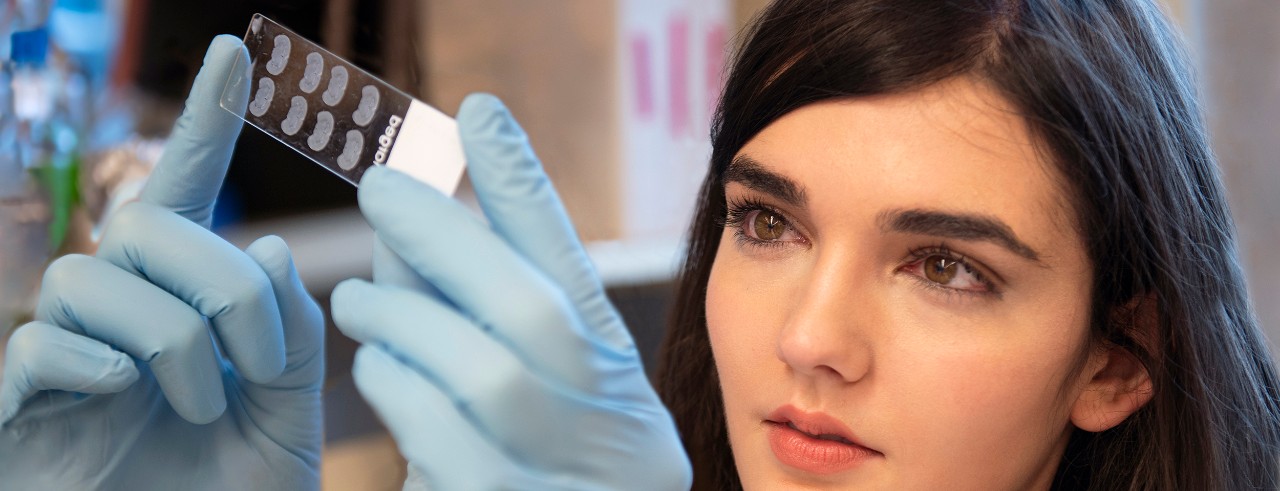
UC College of Medicine graduate student Christin Godale. (Photo courtesy of Cincinnati Children's)
Featured image at top: Christin Godale/Colleen Kelley/UC Creative + Brand.
Tags
Related Stories
Sugar overload killing hearts
November 10, 2025
Two in five people will be told they have diabetes during their lifetime. And people who have diabetes are twice as likely to develop heart disease. One of the deadliest dangers? Diabetic cardiomyopathy. But groundbreaking University of Cincinnati research hopes to stop and even reverse the damage before it’s too late.
App turns smartwatch into detector of structural heart disease
November 10, 2025

An app that uses an AI model to read a single-lead ECG from a smartwatch can detect structural heart disease, researchers reported at the 2025 Scientific Sessions of the American Heart Association. Although the technology requires further validation, researchers said it could help improve the identification of patients with heart failure, valvular conditions and left ventricular hypertrophy before they become symptomatic, which could improve the prognosis for people with these conditions.
Combination immunotherapy helps overcome melanoma treatment resistance
November 10, 2025

MSN highlighted research led by the University of Cincinnati Cancer Center's Trisha Wise-Draper showing a combination of immunotherapy medications can activate a robust immune response and help overcome treatment resistance in patients with refractory melanoma.