Repertoire: UC engineer talks about human factors in medicine
Biomedical engineering professor says ease of use is a big factor in every new product

Repertoire magazine, a trade publication for health care distributors, spoke to a University of Cincinnati biomedical engineer about why it's important to consider how doctors and patients will use medical products when designing them.
UC College of Engineering and Applied Science professor Mary Beth Privitera told Repertoire that each product should consider whom will use it, including the user's language, education or skill level and even relevant cultural norms.

Mary Beth Privitera. Photo/Jay Yocis/UC Creative + Brand
Designers also must consider in what setting the medical product will be used.
"No product development occurs where the goal isn't ease of use," said Privitera, who serves as co-chair for the Association for the Advancement of Medical Instrumentation's Human Engineering Committee. "But sometimes it gets lost."
Privitera said the industry has advanced greatly over the years, in part because of regulations governing product evaluations.
"The fact of the matter is, we've realized we can't develop safe medical devices without considering usability," Privitera told Repertoire. "Ten years ago, we were just recognizing the need to take into account human factors. The conversation has changed: Now, it's about what constitutes good human factors engineering."
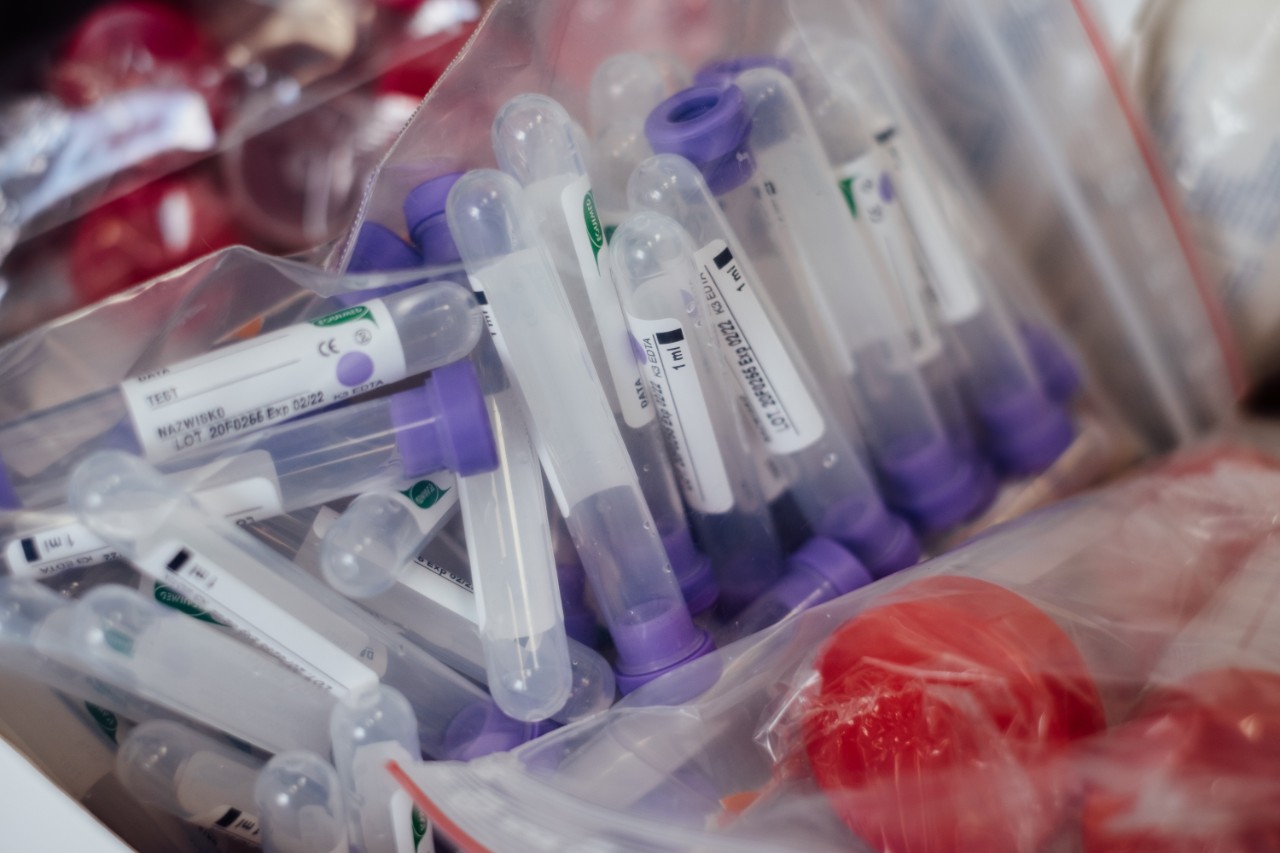
Featured image at top: Blood collection tubes. Photo/Freestocks/Unsplash
Related Stories
Sugar overload killing hearts
November 10, 2025
Two in five people will be told they have diabetes during their lifetime. And people who have diabetes are twice as likely to develop heart disease. One of the deadliest dangers? Diabetic cardiomyopathy. But groundbreaking University of Cincinnati research hopes to stop and even reverse the damage before it’s too late.
Is going nuclear the solution to Ohio’s energy costs?
November 10, 2025

The Ohio Capital Journal recently reported that as energy prices continue to climb, economists are weighing the benefits of going nuclear to curb costs. The publication dove into a Scioto Analysis survey of 18 economists to weigh the pros and cons of nuclear energy. One economist featured was Iryna Topolyan, PhD, professor of economics at the Carl H. Lindner College of Business.
App turns smartwatch into detector of structural heart disease
November 10, 2025

An app that uses an AI model to read a single-lead ECG from a smartwatch can detect structural heart disease, researchers reported at the 2025 Scientific Sessions of the American Heart Association. Although the technology requires further validation, researchers said it could help improve the identification of patients with heart failure, valvular conditions and left ventricular hypertrophy before they become symptomatic, which could improve the prognosis for people with these conditions.