Heartland moving past its Rust Belt image
Wall Street Journal column highlights Intel investment, region’s revival

Intel’s announcement that it’s building a state-of-the-art semiconductor plant near Columbus is the latest sign that America’s industrial heartland is moving beyond its Rust Belt image.
Intel will invest $20 billion in the complex, which will manufacture computer chips that power devices including phones, cars, computers and home appliances. The investment eventually could expand to $100 billion.
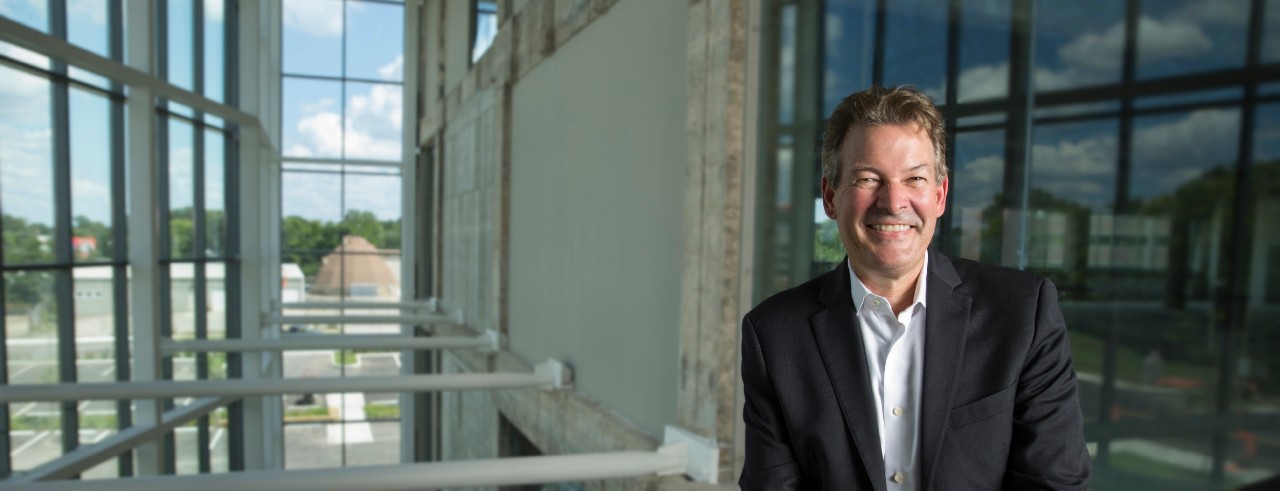
In a column published by The Wall Street Journal, David J. Adams, executive director of the Cincinnati Innovation District and chief innovation officer at the University of Cincinnati, and Richard Florida, a professor at the University of Toronto and an adviser to the Cincinnati Innovation District, wrote the investment shows a shift away from the country’s predominantly bicoastal tech economy.
“The Intel investment is one of many signs that, after years of unsung effort, the revival of America’s industrial heartland is finally under way,” they wrote.
Adams and Florida cited a number of reasons for the region’s turnaround.
The COVID-19 pandemic and subsequent global supply-chain crisis has prompted businesses to reestablish manufacturing in the United States. The heartland is well-positioned to attract manufacturing with its large industrial sites, access to transportation and available workforce, among other factors.
“Programs like the Cincinnati Talent Acceleration Program, a partnership between the University of Cincinnati and Microsoft with funding from the Ohio Department of Higher Education, are helping existing workers to develop skills for tech-driven manufacturing jobs,” Florida and Adams wrote.
Next Lives Here
The University of Cincinnati is classified as a Research 1 institution by the Carnegie Commission and is ranked in the National Science Foundation's Top-35 public research universities. UC's undergraduate, graduate and medical students and faculty investigate problems and innovate solutions with real-world impact. Next Lives Here.
Related Stories
Sugar overload killing hearts
November 10, 2025
Two in five people will be told they have diabetes during their lifetime. And people who have diabetes are twice as likely to develop heart disease. One of the deadliest dangers? Diabetic cardiomyopathy. But groundbreaking University of Cincinnati research hopes to stop and even reverse the damage before it’s too late.
Is going nuclear the solution to Ohio’s energy costs?
November 10, 2025

The Ohio Capital Journal recently reported that as energy prices continue to climb, economists are weighing the benefits of going nuclear to curb costs. The publication dove into a Scioto Analysis survey of 18 economists to weigh the pros and cons of nuclear energy. One economist featured was Iryna Topolyan, PhD, professor of economics at the Carl H. Lindner College of Business.
App turns smartwatch into detector of structural heart disease
November 10, 2025

An app that uses an AI model to read a single-lead ECG from a smartwatch can detect structural heart disease, researchers reported at the 2025 Scientific Sessions of the American Heart Association. Although the technology requires further validation, researchers said it could help improve the identification of patients with heart failure, valvular conditions and left ventricular hypertrophy before they become symptomatic, which could improve the prognosis for people with these conditions.