WCPO: UC study: Your kid's screen time might not be as problematic as you think
UC children’s media expert speaks to media about ‘tweens’ use of media during pandemic

The time children spend on technology might not be as concerning as thinking about what you’re using it for,” said Nancy Jennings, PhD and professor in UC’s School of Communication, Film and Media Studies.
Jennings, director of UC’s Children's Education and Entertainment Research (CHEER) Lab, recently conducted a study of how 9-13 year olds used media during the COVID-19 2020 summer.
Her findings are published in Psychology of Popular Media.
Some of the findings include:
- The majority of parents (83.7%) reported that their children were using media more during COVID-19 than before.
- One in five parents (21.2%) indicated that they had made a purchase of a household media device during COVID-19 and the most often reported purchases were for computing technologies such as laptop/desktop (25.5%) and Chromebooks (17.1%).
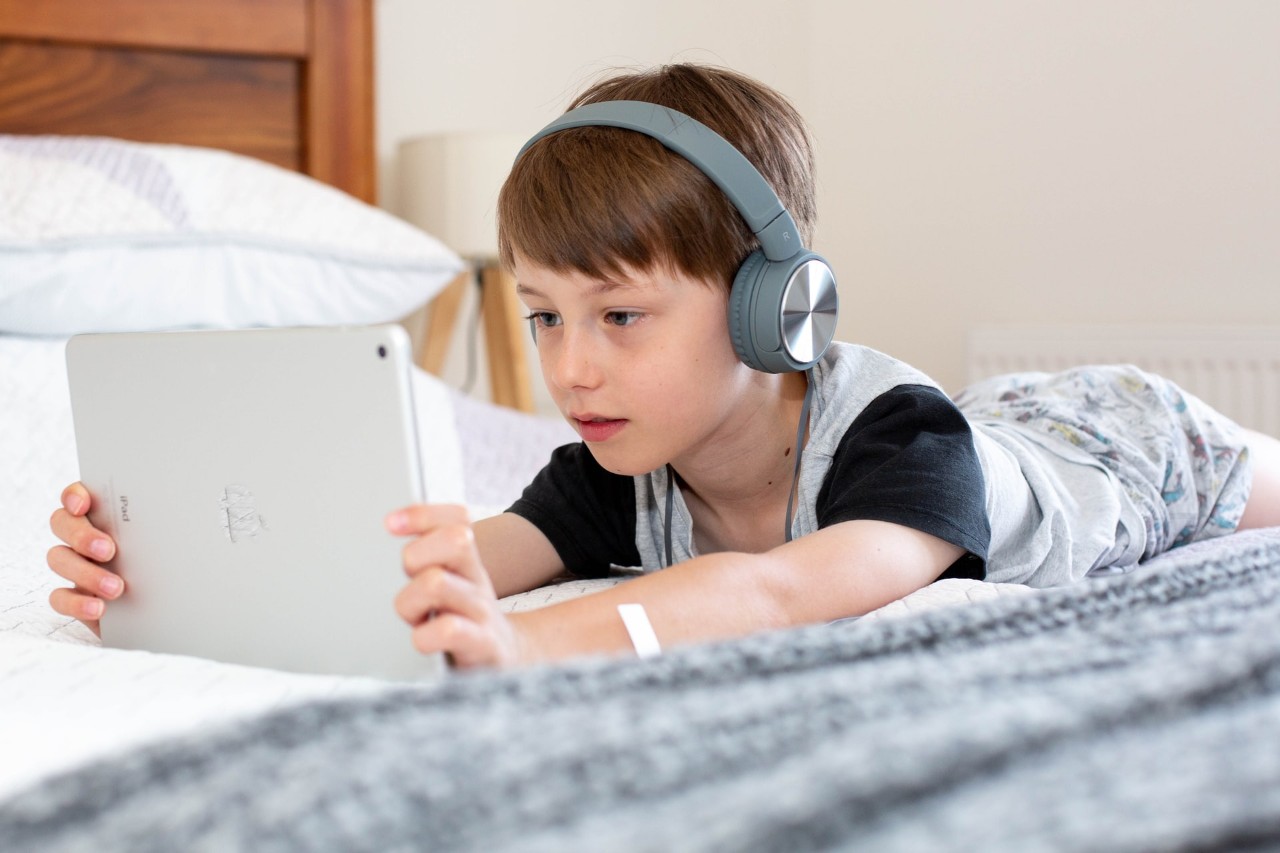
Featured photo at top courtesy of Unsplash/Emily Wade.
Impact Lives Here
The University of Cincinnati is leading public urban universities into a new era of innovation and impact. Our faculty, staff and students are saving lives, changing outcomes and bending the future in our city's direction. Next Lives Here.
Related Stories
Sugar overload killing hearts
November 10, 2025
Two in five people will be told they have diabetes during their lifetime. And people who have diabetes are twice as likely to develop heart disease. One of the deadliest dangers? Diabetic cardiomyopathy. But groundbreaking University of Cincinnati research hopes to stop and even reverse the damage before it’s too late.
Is going nuclear the solution to Ohio’s energy costs?
November 10, 2025

The Ohio Capital Journal recently reported that as energy prices continue to climb, economists are weighing the benefits of going nuclear to curb costs. The publication dove into a Scioto Analysis survey of 18 economists to weigh the pros and cons of nuclear energy. One economist featured was Iryna Topolyan, PhD, professor of economics at the Carl H. Lindner College of Business.
App turns smartwatch into detector of structural heart disease
November 10, 2025

An app that uses an AI model to read a single-lead ECG from a smartwatch can detect structural heart disease, researchers reported at the 2025 Scientific Sessions of the American Heart Association. Although the technology requires further validation, researchers said it could help improve the identification of patients with heart failure, valvular conditions and left ventricular hypertrophy before they become symptomatic, which could improve the prognosis for people with these conditions.