Medscape: UC study identifies geographic gaps in HIV treatment
UC's Health Geography and Disease Modeling lab highlights disparities in care in rural Africa

Can geospatial mapping fill in the gaps in areas lagging behind in global efforts to end the HIV epidemic?
It's a question Medscape asked in covering the latest study from the University of Cincinnati's Health Geography and Disease Modeling Lab.
UC doctoral student Hana Kim worked with an international team of researchers on a project to map the distance rural Africans living with HIV must travel to reach the nearest hospital or clinic for treatment.
The study published this month in the journal PLOS Global Public Health identified disparities in the availability of care across countries. People living in more than 90% of Sudan and Mauritania had to drive more than an hour for health services.
The UC study found that in 17 countries, about half of the population with HIV live in places with limited access to health care, the study found. And in Kenya, Rwanda and Burundi, almost nobody has to drive more than an hour to the nearest clinic, doctor’s office or hospital for treatment.
The study concluded that expanding health care in these underserved communities could improve not just HIV response but the response to the COVID-19 pandemic and other public health issues as well.
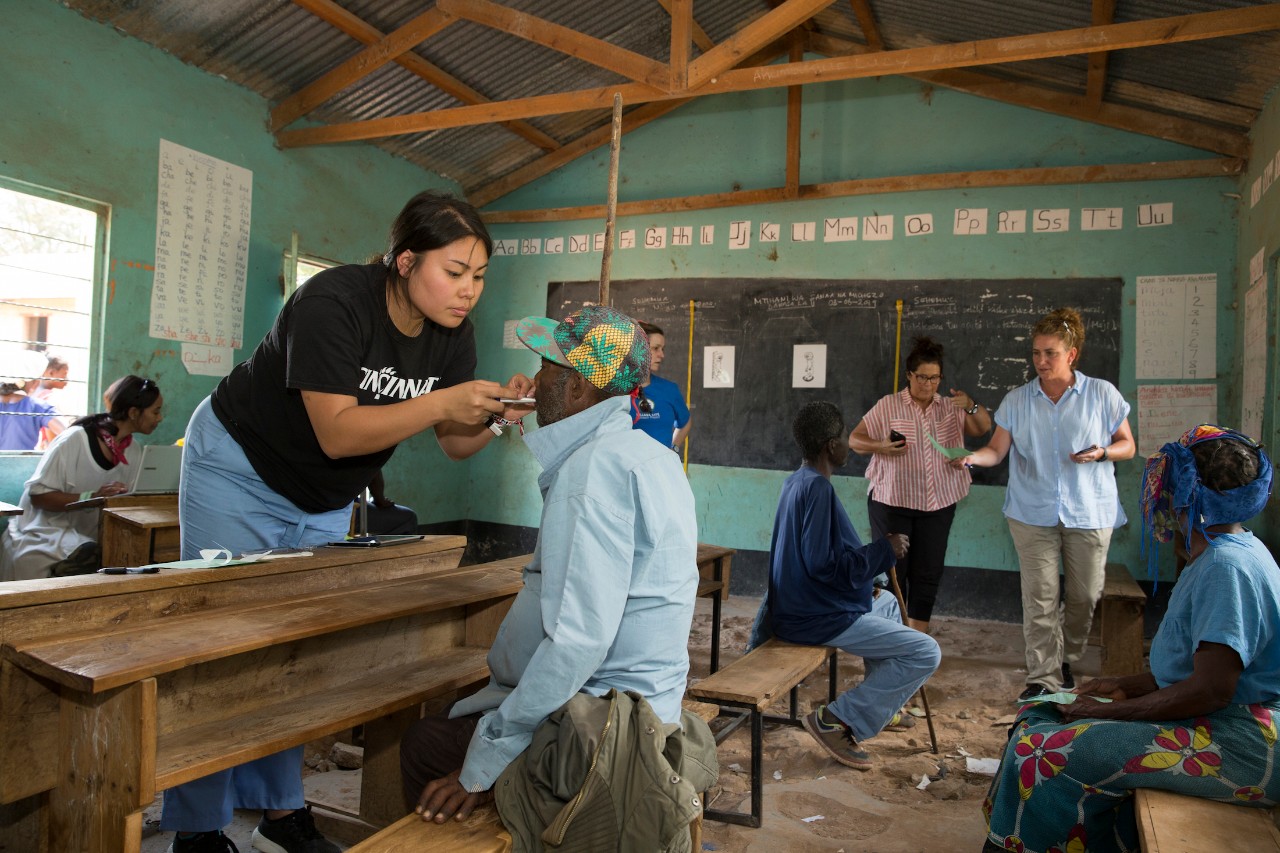
Featured image at top: UC College of Nursing student Sabrina Bernardo examines a patient in a makeshift health clinic set up in a schoolhouse in rural Tanzania in 2019 as part of UC's partnership with Village Life Outreach. Photo/Lisa Ventre/UC Creative + Brand

Maps of Sub-Saharan Africa show HIV-positive populations living within a 10-, 30- or 60-minute walk or drive to the nearest health care provider: A. 10-minutes by car. D. 10-minute walk. B. 30-minutes by car. E. 30-minute walk. C. 60-minute drive. F. 60-minute walk. Graphic/UC Health Geography and Disease Modeling Lab
Related Stories
Sugar overload killing hearts
November 10, 2025
Two in five people will be told they have diabetes during their lifetime. And people who have diabetes are twice as likely to develop heart disease. One of the deadliest dangers? Diabetic cardiomyopathy. But groundbreaking University of Cincinnati research hopes to stop and even reverse the damage before it’s too late.
Is going nuclear the solution to Ohio’s energy costs?
November 10, 2025

The Ohio Capital Journal recently reported that as energy prices continue to climb, economists are weighing the benefits of going nuclear to curb costs. The publication dove into a Scioto Analysis survey of 18 economists to weigh the pros and cons of nuclear energy. One economist featured was Iryna Topolyan, PhD, professor of economics at the Carl H. Lindner College of Business.
App turns smartwatch into detector of structural heart disease
November 10, 2025

An app that uses an AI model to read a single-lead ECG from a smartwatch can detect structural heart disease, researchers reported at the 2025 Scientific Sessions of the American Heart Association. Although the technology requires further validation, researchers said it could help improve the identification of patients with heart failure, valvular conditions and left ventricular hypertrophy before they become symptomatic, which could improve the prognosis for people with these conditions.