Helping patients heal from home
UC Clermont professor collaborates on cutting-edge art therapy research

A University of Cincinnati Clermont College professor has joined a team of UC researchers from across disciplines to study how a self-guided art therapy app and robotic pets affect the mood of patients.
Professor Meera Rastogi, psychologist, art therapist and program coordinator for UC’s pre-art therapy certificate program, is collaborating on the pilot study with Dr. Soma Sengupta, associate professor in neurology and the Harold C. Schott Endowed Chair of Molecular Therapeutics (Neurosurgery), and Claudia Rebola, associate dean for research, associate professor and director of the new Center for DAAP Research and Innovation (CDRI) on Health and Wellbeing in UC’s College of Design, Architecture, Art and Planning.
Rastogi was focused specifically on the art therapy aspect of the research. She said the COVID-19 pandemic made traditional art therapy services inaccessible for many patients, which increased interest in remote alternatives. The study is exploring whether an art therapy app, which guides patients through creative exercises, can improve patients’ well-being.
“We know through research that engaging in artwork decreases anxiety levels,” Rastogi said. “When engaged in art, you can experience a flow state and lose track of time — a good distraction for patients dealing with difficult conditions or diagnoses. Our app helps people work with images to reframe and think about their situation differently.”
I feel like being at UC Clermont I have the best of both worlds — access to major university resources but the benefits of being at a small college.
Meera Rastogi Professor of Psychology, UC Clermont
The study plans to track 10 participants with acoustic neuromas — a type of benign brain tumor that can affect hearing and balance — from UC’s Brain Tumor Center over the next six to eight months. Rastogi said her ultimate goal is to make art therapy interventions accessible to more people.
“Maybe the app gets someone interested so they end up seeing an art therapist or developing a passion for art,” she said. “I hope people feel like they have grown from doing guided interventions.”
Providing Clermont students with research and real-world opportunities has long been a focus for the professor, who feels her teaching is enhanced by being involved with the current research and practice in her field.
“I feel like being at UC Clermont I have the best of both worlds — access to major university resources but the benefits of being at a small college,” Rastogi said. “I like stretching myself and thinking about things in new ways. Research makes me a more engaged learner — like I want my students to be.”
Learn more about Rastogi’s research project.
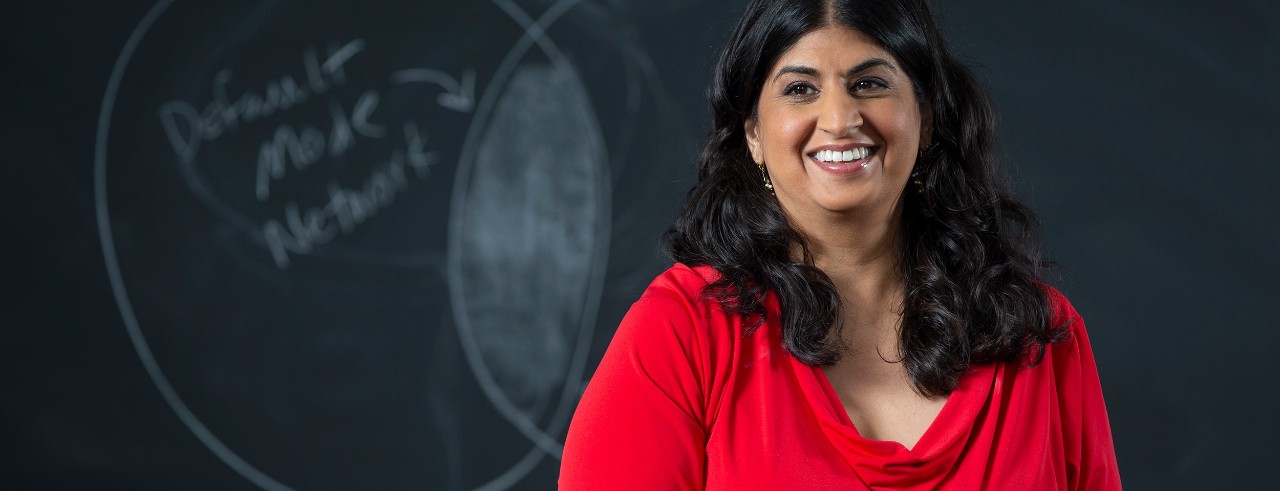
Featured photo at top: University of Cincinnati professor Meera Rastogi is studying how a self-guided art therapy app and robotic pets affect the mood of patients. Photo by Joseph Fuqua/Fuqua Graphics.
Related Stories
Sugar overload killing hearts
November 10, 2025
Two in five people will be told they have diabetes during their lifetime. And people who have diabetes are twice as likely to develop heart disease. One of the deadliest dangers? Diabetic cardiomyopathy. But groundbreaking University of Cincinnati research hopes to stop and even reverse the damage before it’s too late.
App turns smartwatch into detector of structural heart disease
November 10, 2025

An app that uses an AI model to read a single-lead ECG from a smartwatch can detect structural heart disease, researchers reported at the 2025 Scientific Sessions of the American Heart Association. Although the technology requires further validation, researchers said it could help improve the identification of patients with heart failure, valvular conditions and left ventricular hypertrophy before they become symptomatic, which could improve the prognosis for people with these conditions.
Combination immunotherapy helps overcome melanoma treatment resistance
November 10, 2025

MSN highlighted research led by the University of Cincinnati Cancer Center's Trisha Wise-Draper showing a combination of immunotherapy medications can activate a robust immune response and help overcome treatment resistance in patients with refractory melanoma.