WVXU: UC experts discuss P&G's new green policies
Environmental studies professors talk to WVXU about climate change

WVXU talked to two University of Cincinnati professors in environmental studies about Procter & Gamble Co.'s new initiative designed to reduce the Fortune 500 company's carbon footprint.
P&G, one of the world's biggest consumer-goods companies, announced this month that it plans to reduce greenhouse gas emissions to net zero by 2040. The Cincinnati-based company is the latest global manufacturer to pledge to take steps to address climate change caused in part by human-generated greenhouse gases.
“We are fully committed to use P&G’s innovation and ingenuity to unlock new solutions to address climate change,” P&G President David S. Taylor said in a statement. “The task ahead of us is urgent, difficult and much bigger than any single company or country. P&G is tackling these challenges head-on by reducing our footprint and leveraging our scale to foster unprecedented collaboration across our value chain.”

Robert Hyland
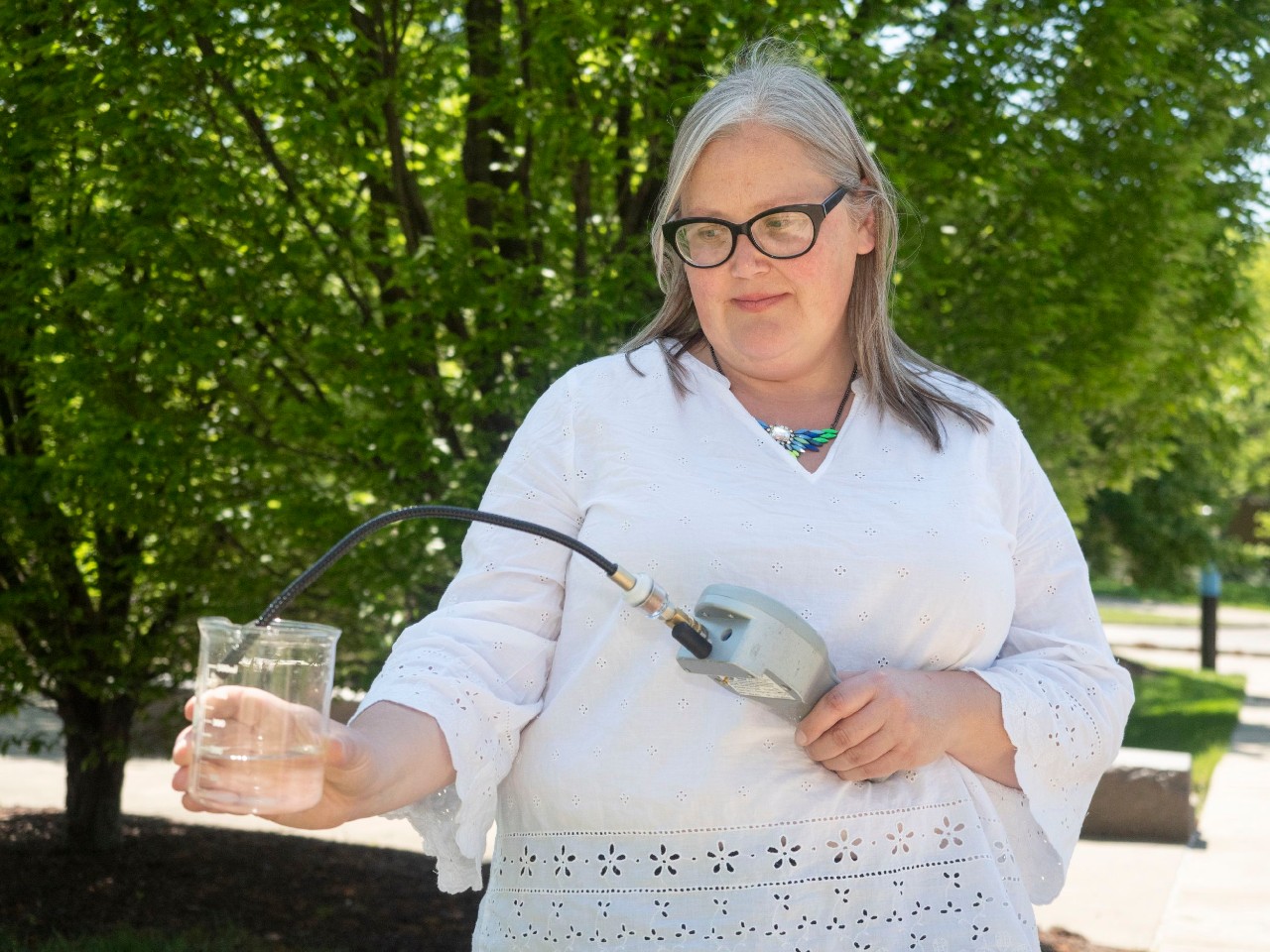
WVXU talked to UC College of Arts and Sciences associate professor Amy Townsend-Small and associate professor educator Robert Hyland about what P&G's pledge means. Both teach in UC's Environmental Studies Program.
"One thing, obviously, that P&G has been criticized for is deforestation," Townsend-Small told WVXU. "So in order to make up the difference for cutting down old growth trees, you have to replant a forest that you somehow can guarantee is never going to be cut down or burned. And that's extremely difficult because, how do you do that?"
P&G said it would make changes throughout the company from its supply chain to manufacturing.
Townsend-Small told WVXU that the company could use its considerable corporate influence to encourage governments around the world to enact conservation measures.
"They need to use their political power. They have lobbyists that have a lot of influence on our government and world governments," she said. "I think that they should be putting pressure on the government to enact regulations on greenhouse gas emissions."
Hyland noted the issue of climate change requires urgent action.
"I don't think it's too late," Hyland told WVXU. "I think it's tragic that the corporate culture has waited this long to try and become leaders, but I don't think it's too late."
Related Stories
Sugar overload killing hearts
November 10, 2025
Two in five people will be told they have diabetes during their lifetime. And people who have diabetes are twice as likely to develop heart disease. One of the deadliest dangers? Diabetic cardiomyopathy. But groundbreaking University of Cincinnati research hopes to stop and even reverse the damage before it’s too late.
Is going nuclear the solution to Ohio’s energy costs?
November 10, 2025

The Ohio Capital Journal recently reported that as energy prices continue to climb, economists are weighing the benefits of going nuclear to curb costs. The publication dove into a Scioto Analysis survey of 18 economists to weigh the pros and cons of nuclear energy. One economist featured was Iryna Topolyan, PhD, professor of economics at the Carl H. Lindner College of Business.
App turns smartwatch into detector of structural heart disease
November 10, 2025

An app that uses an AI model to read a single-lead ECG from a smartwatch can detect structural heart disease, researchers reported at the 2025 Scientific Sessions of the American Heart Association. Although the technology requires further validation, researchers said it could help improve the identification of patients with heart failure, valvular conditions and left ventricular hypertrophy before they become symptomatic, which could improve the prognosis for people with these conditions.