AZO CleanTech: Engineering bacteria to store renewable energy
UC microbiologist Annette Rowe is working to solve clean energy's biggest challenge

AZO CleanTech highlighted research by a University of Cincinnati microbiologist to develop an eco-friendly, economical and large-scale system for storing renewable energy.
Annette Rowe, assistant professor of biology in UC’s College of Arts and Sciences, identified genes in one type of bacteria responsible for taking electrons into its metabolism and using the energy to fix carbon — an ideal way to make carbon-neutral biofuel.
Rowe worked with a team of researchers from Cornell University, Princeton University and Harvard Medical School. The study was published this month in the Nature journal Communications Biology.
One limitation of renewable energy is finding a cheap, environmentally friendly way to store it. In her lab, Rowe is studying how microbes might be able to serve as the medium through a process called extracellular electron uptake.
“There’s been a big push to decarbonize our energy infrastructure,” Rowe said. “One of our goals is to generate biofuels that take carbon dioxide out of the atmosphere and generate methane or liquid biofuel. We want to convert electricity generated by renewable energy such as wind and solar and convert it to a biofuel. That’s where the microbes come in.”
The researchers identified at least five genes among 3,667 studied that are responsible for the extracellular electron uptake.
“We were very confident in these five genes, but there are probably more,” she said.
Now that researchers know which genes are responsible for this process, they can look at ways to improve the microbe’s potential for energy storage.
“Once you know the pathway, you can tweak it to make it better,” Rowe said.
Next, she and her students will begin studying ways to manipulate the genes in her microbiology lab.
“We’re still some ways away from making this a real application,” Rowe said. “But I think this concept of converting electricity to some sort of biofuel through microbes has great potential.”
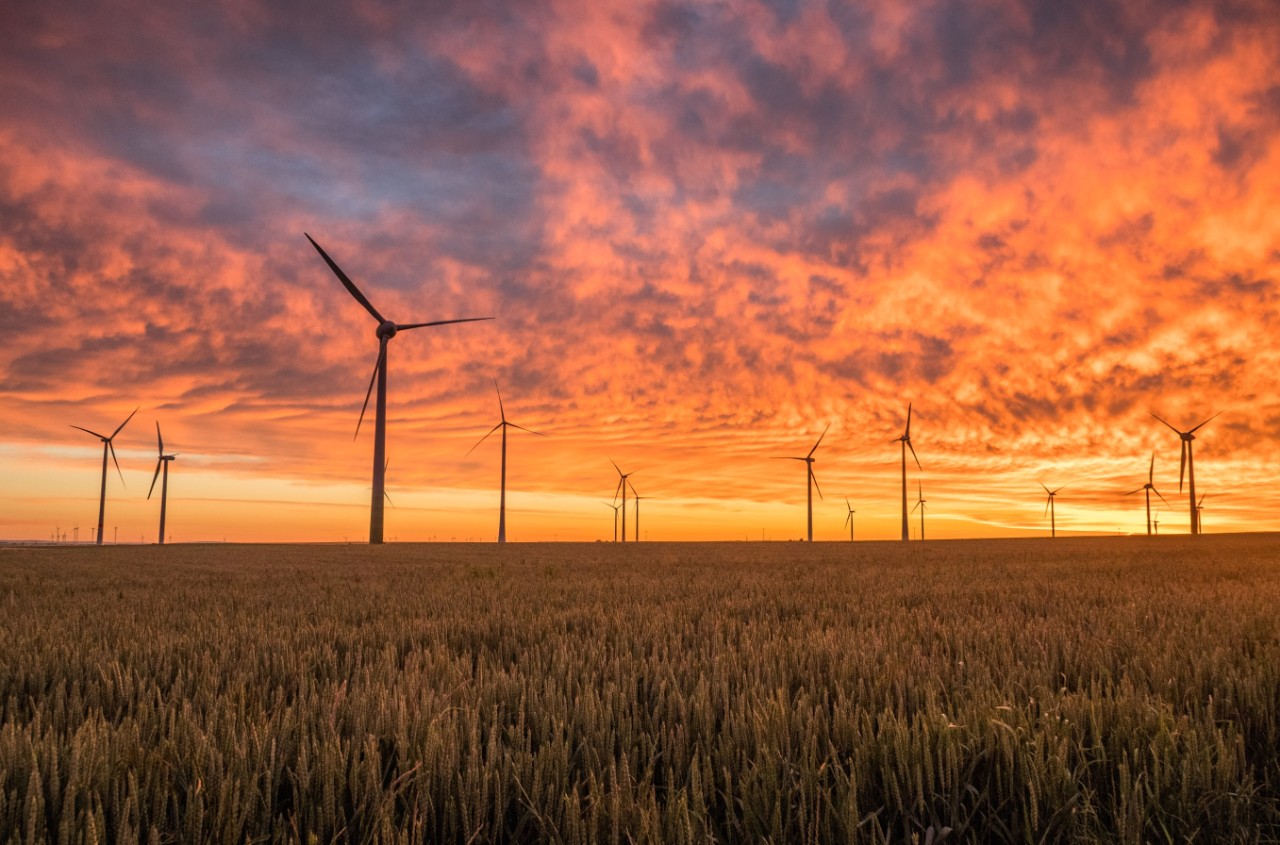
Featured image at top: University of Cincinnati researcher Annette Rowe is investigating carbon-neutral biofuel. Photo/Karsten Wurth/Unsplash
Related Stories
Sugar overload killing hearts
November 10, 2025
Two in five people will be told they have diabetes during their lifetime. And people who have diabetes are twice as likely to develop heart disease. One of the deadliest dangers? Diabetic cardiomyopathy. But groundbreaking University of Cincinnati research hopes to stop and even reverse the damage before it’s too late.
Is going nuclear the solution to Ohio’s energy costs?
November 10, 2025

The Ohio Capital Journal recently reported that as energy prices continue to climb, economists are weighing the benefits of going nuclear to curb costs. The publication dove into a Scioto Analysis survey of 18 economists to weigh the pros and cons of nuclear energy. One economist featured was Iryna Topolyan, PhD, professor of economics at the Carl H. Lindner College of Business.
App turns smartwatch into detector of structural heart disease
November 10, 2025

An app that uses an AI model to read a single-lead ECG from a smartwatch can detect structural heart disease, researchers reported at the 2025 Scientific Sessions of the American Heart Association. Although the technology requires further validation, researchers said it could help improve the identification of patients with heart failure, valvular conditions and left ventricular hypertrophy before they become symptomatic, which could improve the prognosis for people with these conditions.