
These robots can move your couch
UC engineers develop independent robots that cooperate

To train robots how to work independently but cooperatively, researchers at the University of Cincinnati gave them a relatable task: move a couch.
If you’ve ever helped someone move furniture, you know it takes coordination — simultaneously pushing or pulling and reacting based on what your helper is doing. That makes it an ideal problem to examine collaboration between robots, said Andrew Barth, a doctoral student in UC’s College of Engineering and Applied Science.
“It’s a good metaphor for cooperation,” Barth said.
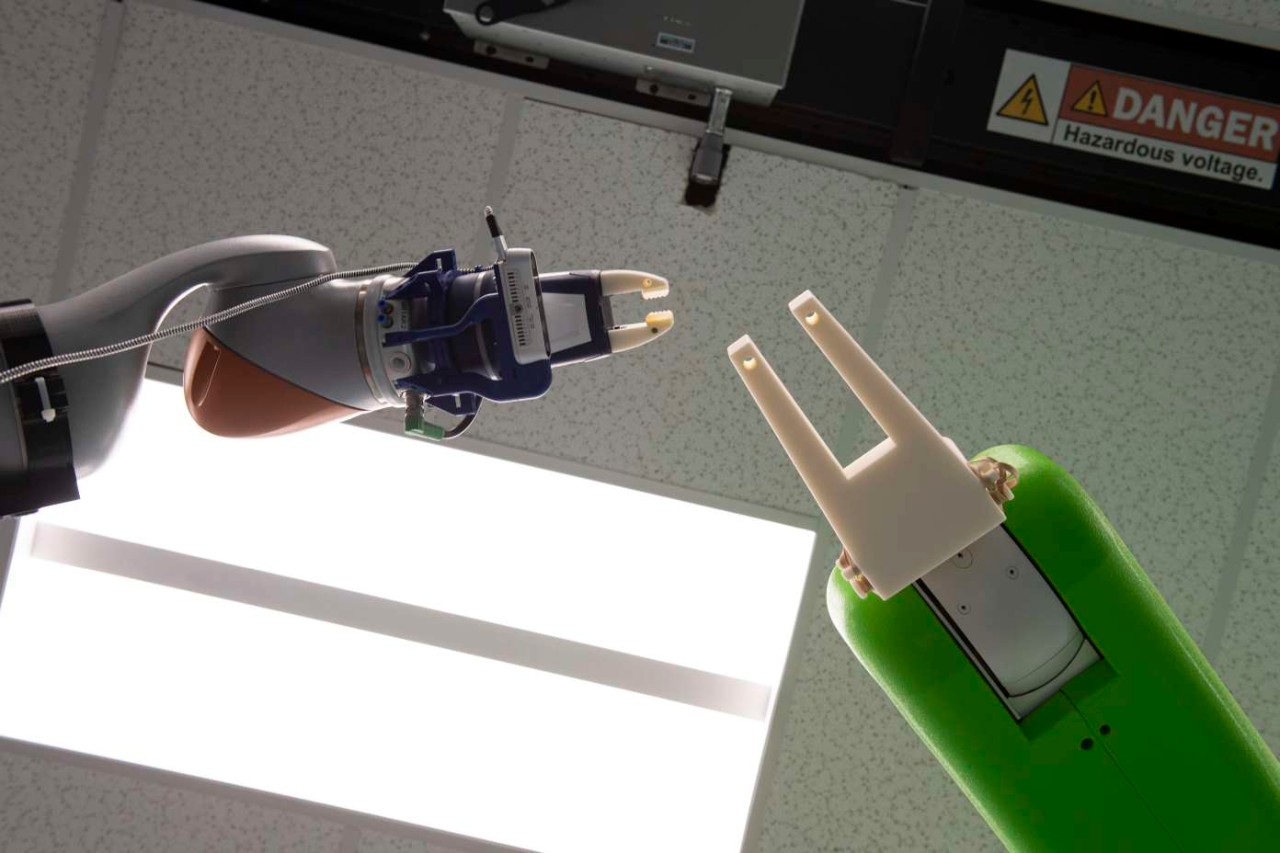
In Ou Ma's Intelligent Robotics and Autonomous Systems Lab, he and his students are engineering robots to work independently on tasks that require cooperation. Photo/Colleen Kelley/UC Creative + Brand
In the Intelligent Robotics and Autonomous Systems Lab of UC aerospace engineering professor Ou Ma, student researchers developed artificial intelligence to train robots to work together to move a couch — or in this case a long rod that served as a stand-in — around two obstacles and through a narrow door in computer simulations.
“We made it a little more difficult on ourselves. We want to accomplish the task with as little communication as possible among the robots,” student Barth said.
He was the lead author of a study on the project published in the journal Intelligent Service Robotics. Professor Ma, UC doctoral student Yufeng Sun and UC senior research associate Lin Zhang were co-authors.
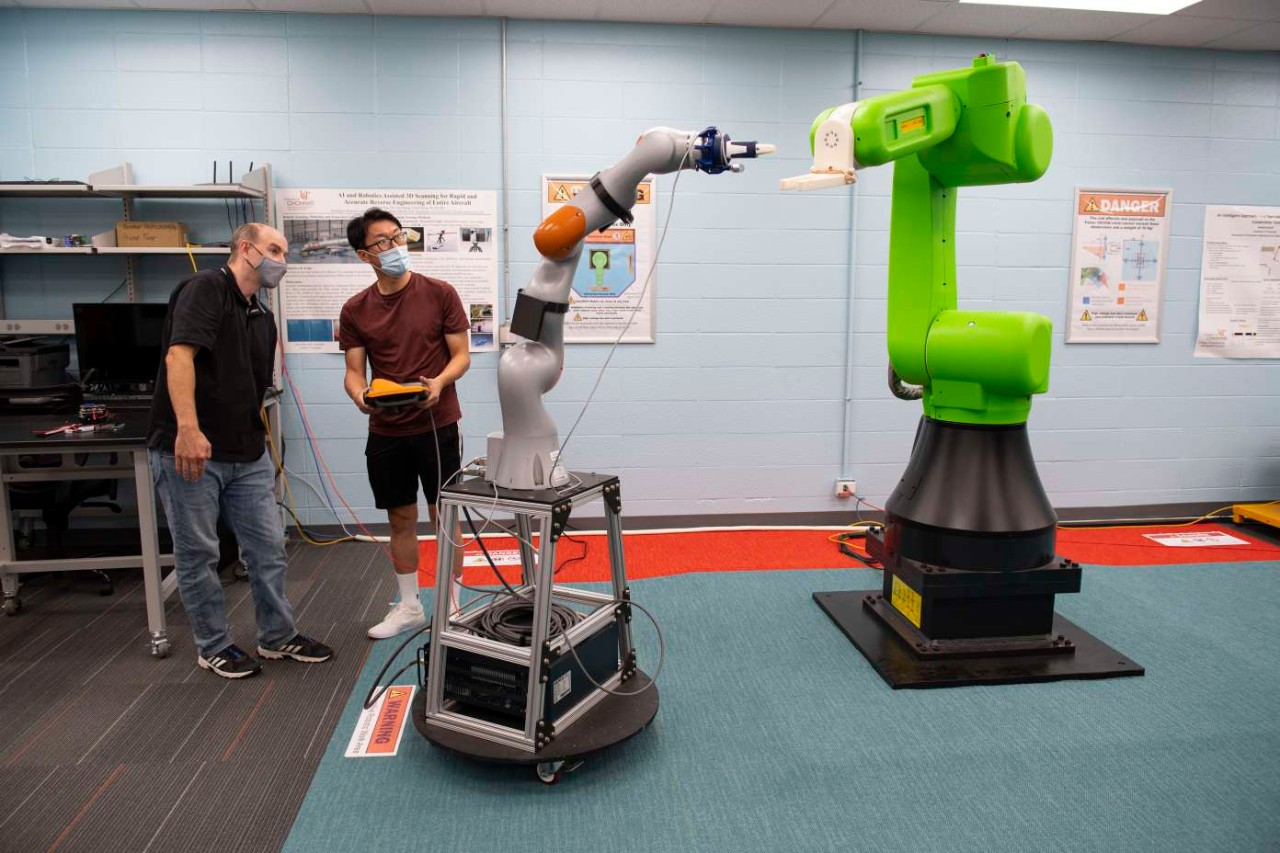
UC aerospace engineering graduate students Andrew Barth, left, and Yufeng Sun work on robitics projects in professor Ou Ma's lab. Photo/Colleen Kelley/UC Creative + Brand
Neither robot directed the other. And the two robots didn’t share their strategy in advance to complete the task. Instead, they turned to an artificial intelligence called genetic fuzzy logic. Fuzzy logic is an intelligent control technique that mimics human reasoning by replacing a simple binary classification (yes, no) with degrees of right or wrong. Genetic algorithms modify individual solutions to “learn” from past results to optimize performance over time.
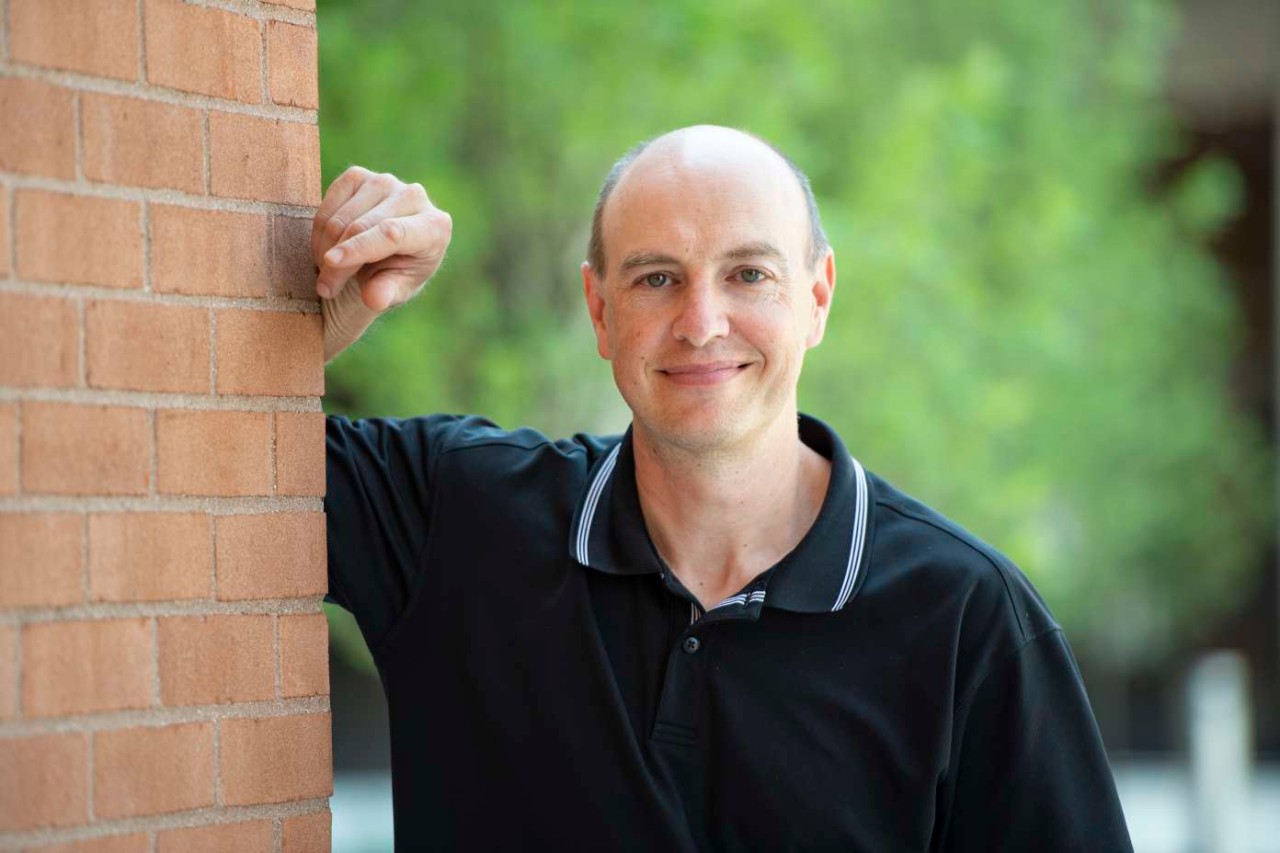
UC graduate student Andrew Barth was lead author of a study on cooperative robotics. Photo/Colleen Kelley/UC Creative + Brand
“Ultimately, we want to expand this to 10 or more robots working cooperatively on a project,” Barth said. “If you want to build a gigantic habitat in space, say, you’ll need a lot of robots working together. But if you were relying on a communications network and it goes down, then your whole project is done.”
If robots can work independently, losing one won’t make much difference. The others can compensate to complete the mission, Barth said.
Robots were given the task of carrying the virtual couch around two obstacles and through a narrow door. The robots successfully completed the task 95% of the time in simulations.
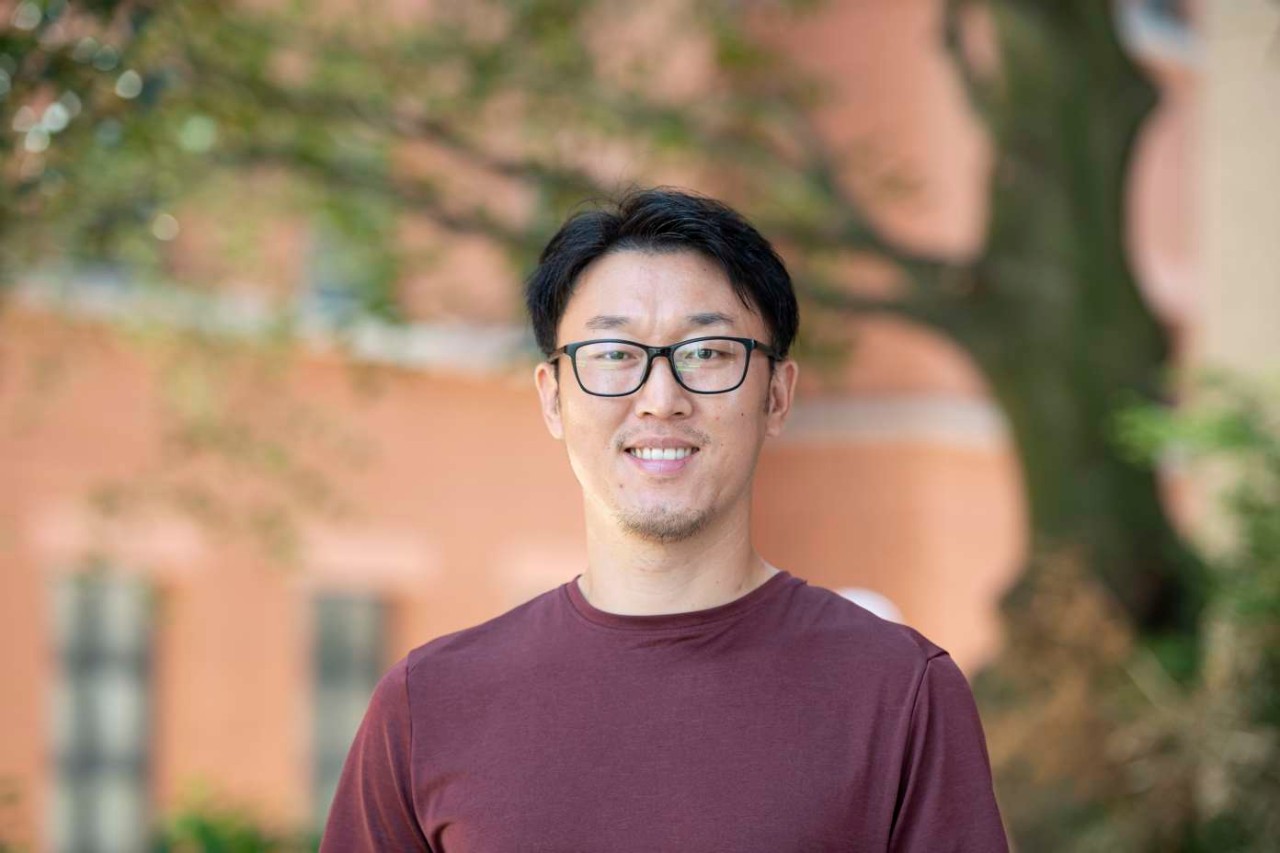
UC graduate student Yufeng Sun was a co-author of a study on cooperative robotics. Photo/Colleen Kelley/UC Creative + Brand
More importantly, the robot work partners were 93% successful in a completely new scenario — with two new unfamiliar obstacles and a target door in a different location. And the robots had nearly equal success without re-training, even when researchers changed other factors such as the size of the “couch.”
“If you can train robots to work semi-independently with as little information as possible, then you made your system more robust to that failure and made it easier for large groups to collaborate,” Barth said.
“Our long-term goal is for multiple robots to be able to cooperate to perform difficult tasks — like moving furniture,” Ma said.
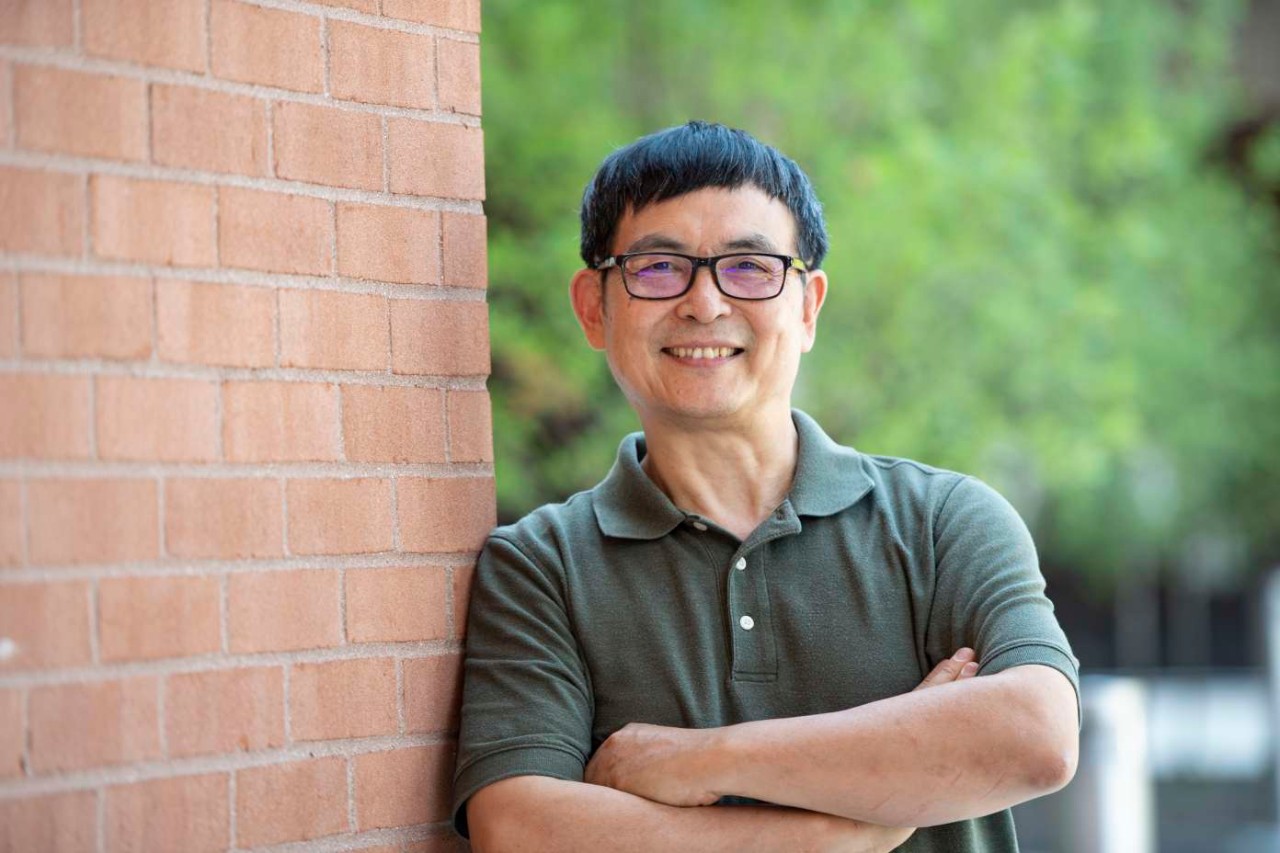
Aerospace engineering professor Ou Ma supervises UC's Intelligent Robotics and Autonomous Systems Lab. Photo/Colleen Kelley/UC Creative + Brand
Robotics have come a long way in the past 20 years, contributing to industry, space exploration and commerce.
Researchers are working hard to improve human safety around robots, which can boost productivity. Likewise, robots that can work cooperatively would create huge opportunities, Ma said.
“There are a host of applications. Any place you have jobs that multiple people are doing in the future, you could have multiple robots doing,” Ma said. “Currently, most robots work alone. But in the future we’ll need multiple robots working together just like people do together now.”
The control system he and his students are developing is scalable, which means they can add any number of robots to a task.
“And you don’t need to retrain them if suddenly it’s just four or six,” he said. “If one or two fail, the rest can carry on. That’s the key.”
Plus, you don’t need to reward your robot helpers with pizza.
Featured image at top: UC aerospace engineering professor Ou Ma, left, poses with students Yufeng Sun and Andrew Barth in Ma's Intelligent Robotics and Autonomous Systems Lab. Photo/Colleen Kelley/UC Creative + Brand
Impact Lives Here
The University of Cincinnati is leading public urban universities into a new era of innovation and impact. Our faculty, staff and students are saving lives, changing outcomes and bending the future in our city's direction. Next Lives Here.
Stay up to date on all UC's COVID-19 stories, or take a UC virtual visit and begin picturing yourself at an institution that inspires incredible stories.
Related Stories
UC launches Bearcats Affordability Grant
January 7, 2026
The University of Cincinnati is making college more attainable for students across Ohio with the creation of the Bearcats Affordability Grant. The new grant will provide a pathway to tuition-free college for students of families who make less than $75,000 per year. Beginning in fall 2026, the Bearcats Affordability Grant will cover the remaining cost of tuition for Ohio residents who are Pell eligible.
BearcatGPT AI platform now available to all UC faculty and staff
December 9, 2025
University of Cincinnati Digital Technology Solutions is excited to announce that BearcatGPT, the university’s private, secure AI platform, is now available to all UC faculty and staff.
Sugar overload killing hearts
November 10, 2025
Two in five people will be told they have diabetes during their lifetime. And people who have diabetes are twice as likely to develop heart disease. One of the deadliest dangers? Diabetic cardiomyopathy. But groundbreaking University of Cincinnati research hopes to stop and even reverse the damage before it’s too late.