NYT: UC professor talks about science behind mammoth study
Strontium analysis allows researchers to peer back in time to see how animals lived

The New York Times turned to a University of Cincinnati expert in strontium analysis to explain how studying this element can help researchers better understand how extinct animals like woolly mammoths lived.
Brooke Crowley, an associate professor of geology and anthropology in UC's College of Arts and Sciences, has analyzed strontium, hydrogen and other elements to track the movements of hawks, jaguars and even extinct horses based on what they were eating — or more precisely, where they were eating.
Strontium is absorbed in the food chain and becomes a telltale marker for researchers to learn about the habitats important to animals, including long-dead woolly mammoths that roamed Alaska.
A study in the journal Science by the University of Alaska pieced together the 28-year life of a woolly mammoth they named Kik that roamed what is now the Arctic National Wildlife Refuge more than 17,000 years ago. The researchers were able to use strontium analysis of Kik's surviving tusks found in the permafrost to track his yearly movements.
The unique strontium signature from the food he ate each year was embedded in layers of the growing tusks that researchers examined. Another elemental signature in the tusks — nitrogen — suggested Kik died from starvation.
“It’s rather amazing how much one can learn from little tiny bits of material from a now-extinct animal,” Crowley told the New York Times. “I’m particularly impressed that the authors were able to track this individual mammoth’s movements for his entire life.”
Crowley, who was not involved in the University of Alaska study, has examined strontium in other collected Ice Age mammal specimens to understand their migrations and use of the landscape in North America.
Featured image at top: Brooke Crowley is an associate professor of geology and anthropology in UC's College of Arts and Sciences. Photo/Jay Yocis/UC Creative + Brand

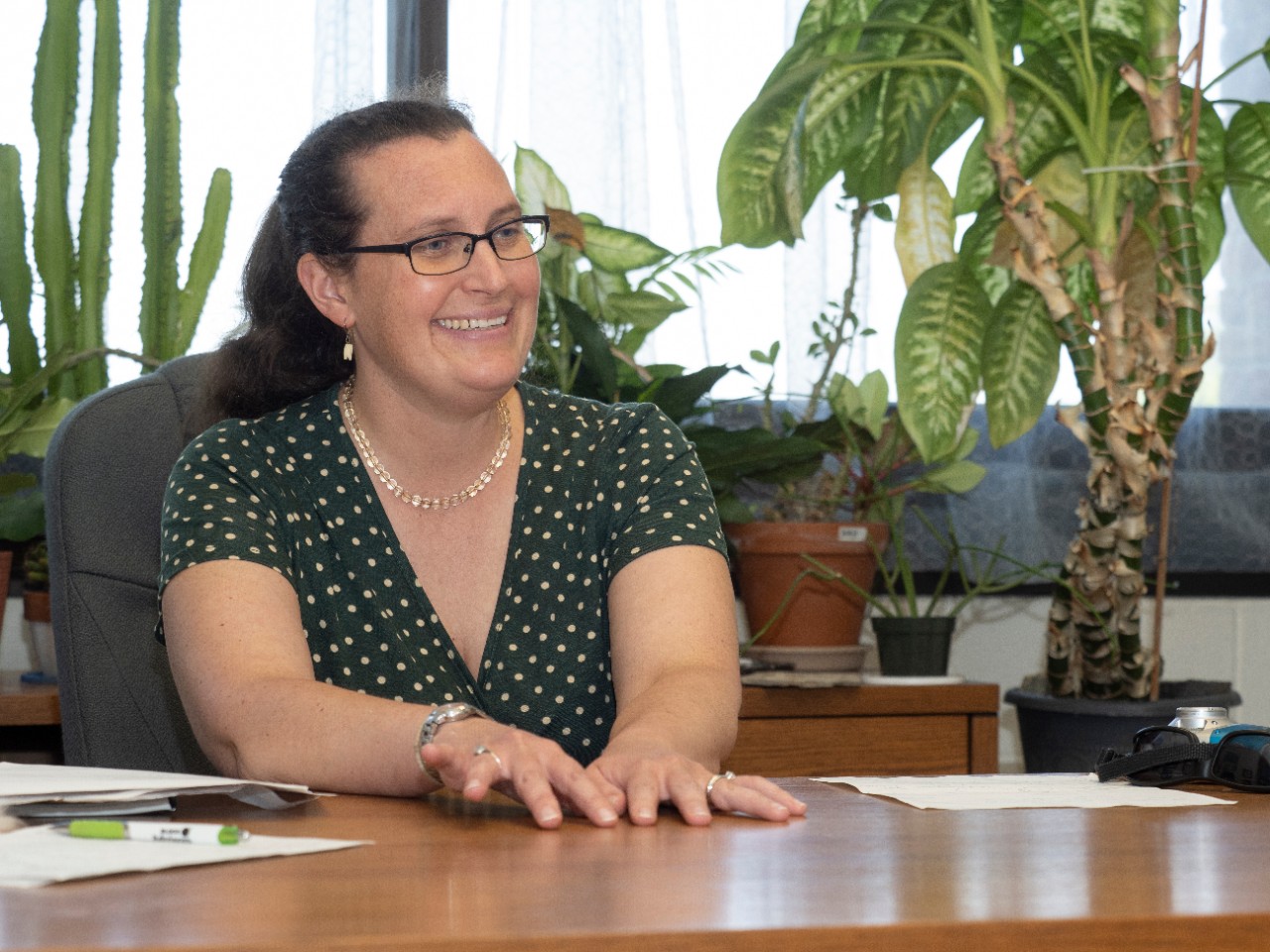
UC associate professor Brooke Crowley talked to the New York Times about how strontium analysis can help researchers learn more about extinct species. Photo/Joseph Fuqua II/UC Creative + Brand
More UC strontium research
Related Stories
Sugar overload killing hearts
November 10, 2025
Two in five people will be told they have diabetes during their lifetime. And people who have diabetes are twice as likely to develop heart disease. One of the deadliest dangers? Diabetic cardiomyopathy. But groundbreaking University of Cincinnati research hopes to stop and even reverse the damage before it’s too late.
Is going nuclear the solution to Ohio’s energy costs?
November 10, 2025

The Ohio Capital Journal recently reported that as energy prices continue to climb, economists are weighing the benefits of going nuclear to curb costs. The publication dove into a Scioto Analysis survey of 18 economists to weigh the pros and cons of nuclear energy. One economist featured was Iryna Topolyan, PhD, professor of economics at the Carl H. Lindner College of Business.
App turns smartwatch into detector of structural heart disease
November 10, 2025

An app that uses an AI model to read a single-lead ECG from a smartwatch can detect structural heart disease, researchers reported at the 2025 Scientific Sessions of the American Heart Association. Although the technology requires further validation, researchers said it could help improve the identification of patients with heart failure, valvular conditions and left ventricular hypertrophy before they become symptomatic, which could improve the prognosis for people with these conditions.