BBC: Maya's ingenious secret to survival
UC researchers find sophisticated water filtration in Tikal

The BBC spoke to a University of Cincinnati researcher about UC's discovery of sophisticated water filtration in the ancient Maya city of Tikal.
As part of its Ancient Engineering Marvels series, the BBC talked to Kenneth Tankersley, associate professor of anthropology in UC's College of Arts and Sciences, about a research project in Guatemala that identified minerals called zeolites in ancient Maya reservoirs used for drinking water. Zeolites are commonly used in water filtration today.

Kenneth Tankersley
UC researchers collected sediment samples from Tikal's reservoirs and found zeolites in the Corriental reservoir, an important source of drinking water for the city. UC researchers found a potential source of zeolites in a nearby spring called the Bajo de Azúcar.
"It doesn't take a lot of deduction to imagine someone from Tikal thinking, 'If sweet, clean water is coming out of this crystalline, volcanic tuff, maybe we could break some off and use it to make our water clean as well,'" Tankersley told the BBC.
UC's study was published in the Nature journal Scientific Reports. It was co-authored by UC researchers Nicholas Dunning, Christopher Carr, David Lentz and Vernon Scarborough. The researchers have collaborated on a number of groundbreaking archaeology projects in Mesoamerica.
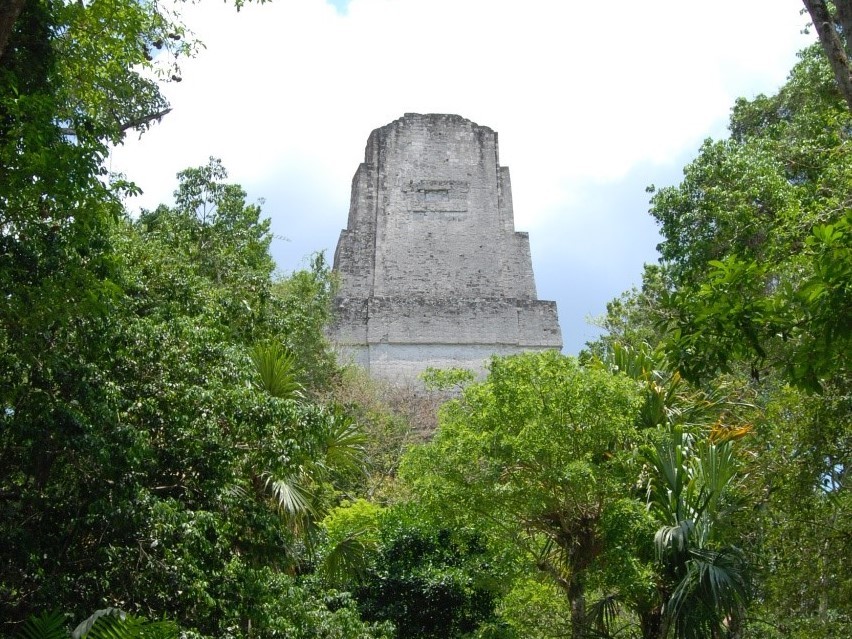
Featured image at top: The ancient Maya city of Tikal rises above the rainforest in Guatemala. Photo/David Lentz
Related Stories
Sugar overload killing hearts
November 10, 2025
Two in five people will be told they have diabetes during their lifetime. And people who have diabetes are twice as likely to develop heart disease. One of the deadliest dangers? Diabetic cardiomyopathy. But groundbreaking University of Cincinnati research hopes to stop and even reverse the damage before it’s too late.
Is going nuclear the solution to Ohio’s energy costs?
November 10, 2025

The Ohio Capital Journal recently reported that as energy prices continue to climb, economists are weighing the benefits of going nuclear to curb costs. The publication dove into a Scioto Analysis survey of 18 economists to weigh the pros and cons of nuclear energy. One economist featured was Iryna Topolyan, PhD, professor of economics at the Carl H. Lindner College of Business.
App turns smartwatch into detector of structural heart disease
November 10, 2025

An app that uses an AI model to read a single-lead ECG from a smartwatch can detect structural heart disease, researchers reported at the 2025 Scientific Sessions of the American Heart Association. Although the technology requires further validation, researchers said it could help improve the identification of patients with heart failure, valvular conditions and left ventricular hypertrophy before they become symptomatic, which could improve the prognosis for people with these conditions.