Medscape/Reuters Health: Long-Term Complications from Subcutaneous ICDs Assessed
UC physician comments on study featuring cardioverter defibrillators

Alexandru Costea, MD, professor in the UC College of Medicine and director of the Electrophysiology Center in the UC Heart, Lung and Vascular Institute, spoke with Reuters Health for a story discussing a study on implantable cardioverter defibrillators. The study followed a recall by the FDA of Boston Scientific’s S-ICD subcutaneous electrode (Model 3501) because possible fractures leading to possible malfunction of the device. According to the FDA, if the device fractures during use, it could become unable to deliver therapy to slow very fast heartbeats from cardiac arrest (tachycardia).
"It is important to realize that while very concerning for patients and medical communities, device recalls are rather frequent,” explains Costea in comments to Reuter Health.” Moreover, industry standards have been designed in such a manner that any potential impact on patients is minimized significantly. Therefore, while this study sheds some light on the usage of these subcutaneous defibrillators and their potential associated risks, it does not have a direct impact on patient care, clinical practice and/or research," he said.
Read the full article in Medscape online.
Learn more about Alexandru Costea, MD, online.
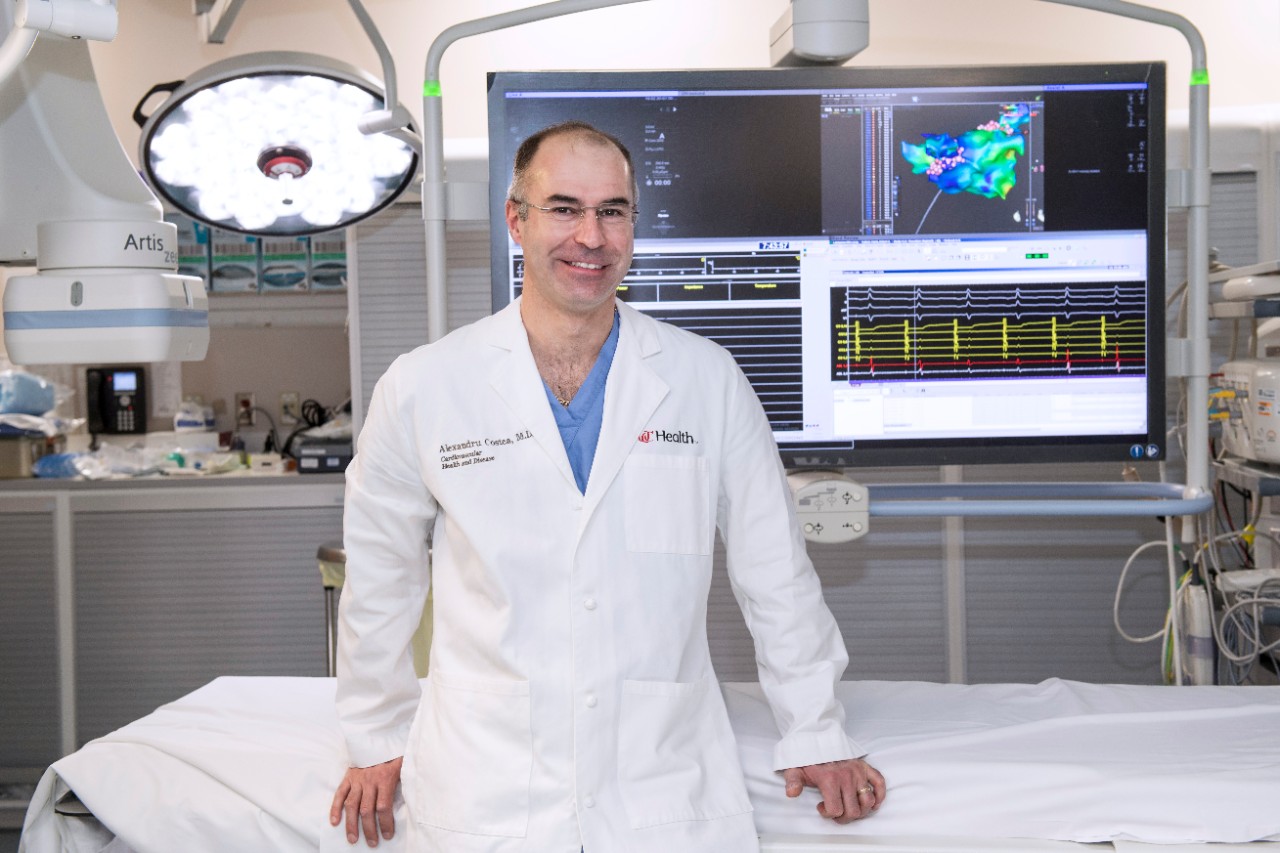
Featured image of Alexandru Costea, MD, taken by Colleen Kelley/UC Creative + Brand.
Related Stories
Sugar overload killing hearts
November 10, 2025
Two in five people will be told they have diabetes during their lifetime. And people who have diabetes are twice as likely to develop heart disease. One of the deadliest dangers? Diabetic cardiomyopathy. But groundbreaking University of Cincinnati research hopes to stop and even reverse the damage before it’s too late.
Is going nuclear the solution to Ohio’s energy costs?
November 10, 2025

The Ohio Capital Journal recently reported that as energy prices continue to climb, economists are weighing the benefits of going nuclear to curb costs. The publication dove into a Scioto Analysis survey of 18 economists to weigh the pros and cons of nuclear energy. One economist featured was Iryna Topolyan, PhD, professor of economics at the Carl H. Lindner College of Business.
App turns smartwatch into detector of structural heart disease
November 10, 2025

An app that uses an AI model to read a single-lead ECG from a smartwatch can detect structural heart disease, researchers reported at the 2025 Scientific Sessions of the American Heart Association. Although the technology requires further validation, researchers said it could help improve the identification of patients with heart failure, valvular conditions and left ventricular hypertrophy before they become symptomatic, which could improve the prognosis for people with these conditions.