The Atlantic: Why are some mammals killers?
UC evolutionary biologist Elizabeth Hobson explains lethal intraspecies aggression

The Atlantic spoke to a University of Cincinnati biologist about why murder isn’t unique to humans.
Some mammals kill other members of their kind. But the motives aren’t always clear, UC behavioral ecologist and evolutionary biologist Elizabeth Hobson said.
“Humans answer when you ask those questions,” she told the Atlantic. “They might lie, but at least they can answer.”

UC assistant professor Elizabeth Hobson. Photo/Andrew Higley/UC Creative + Brand
Hobson, an assistant professor in UC's College of Arts and Sciences, has studied the behavior of a variety of animals, including social birds such as monk parakeets and little blue penguins, in her Hobson Lab.
Male lions are known to engage in lethal battles with rivals and kill cubs when they take over prides. Chimpanzees have been known to kill other chimpanzees in brutal group fights some researchers have likened to warfare.
The Atlantic reported on a study by the Arid Zones Experimental Station in Spain on “adulticide,” the act of an adult animal killing another adult of its kind. So far, researchers have documented 352 of the approximately 6,500 mammals that kill others. And there are likely more.
The study found that most mammal perpetrators were males that killed other males. And often they were during dominance battles to vie for a mate. Hoofed animals from antelope to bison to bighorn sheep engage in violent clashes, sometimes with lethal results.
Hobson, who was not part of the study, told the Atlantic, “Some things just happen — there’s a bad fight and one gets stabbed worse than the other.”
By studying lethal aggression in other mammals, researchers hope to gain insights into what can drive people to similar ends.
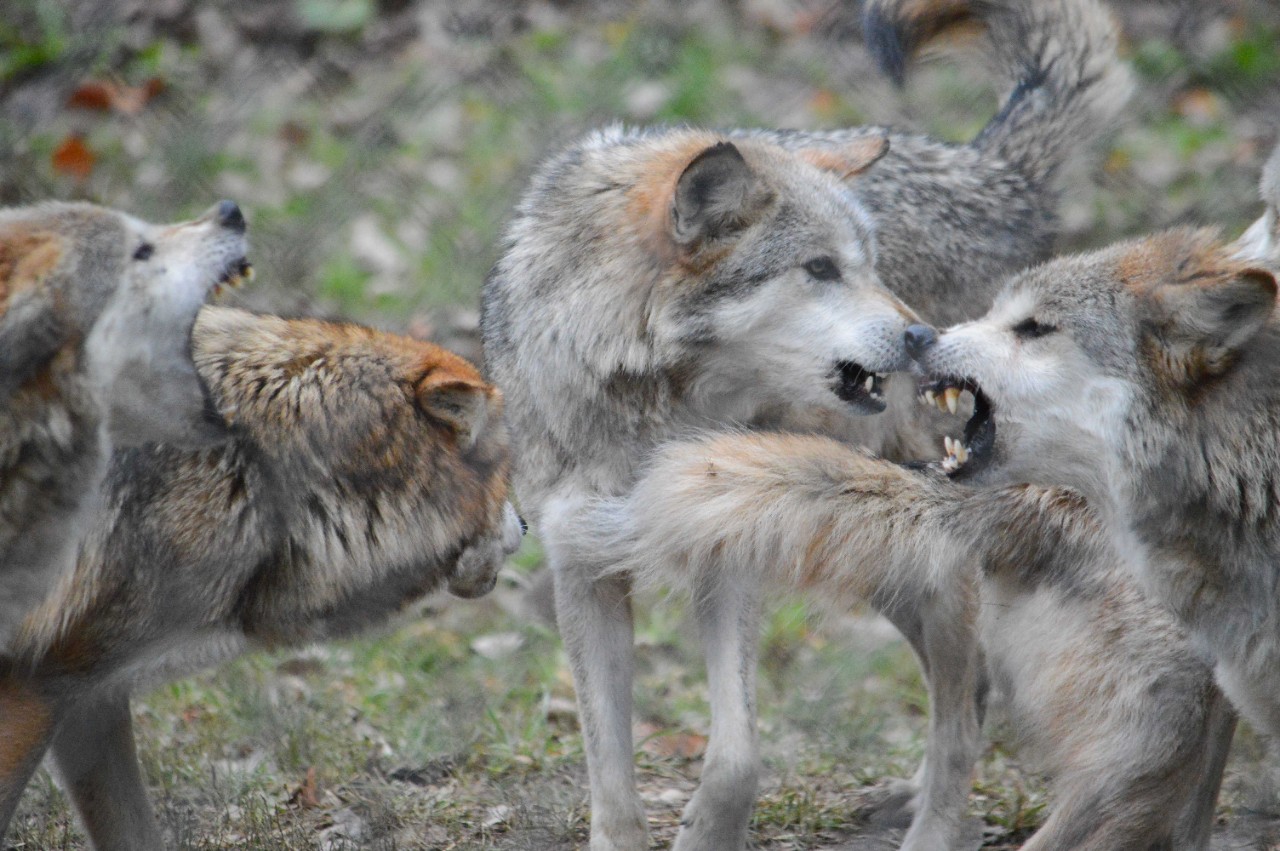
Featured image at top: Mexican wolves release aggression at the Columbus Zoo. Wild wolves are known to kill other adult wolves. Photo/Michael Miller

Hartebeest bucks refuse to give an inch in Uganda's Murchison Falls National Park. UC assistant professor Elizabeth Hobson said these battles can sometimes be lethal. Photo/Michael Miller
Related Stories
Sugar overload killing hearts
November 10, 2025
Two in five people will be told they have diabetes during their lifetime. And people who have diabetes are twice as likely to develop heart disease. One of the deadliest dangers? Diabetic cardiomyopathy. But groundbreaking University of Cincinnati research hopes to stop and even reverse the damage before it’s too late.
Is going nuclear the solution to Ohio’s energy costs?
November 10, 2025

The Ohio Capital Journal recently reported that as energy prices continue to climb, economists are weighing the benefits of going nuclear to curb costs. The publication dove into a Scioto Analysis survey of 18 economists to weigh the pros and cons of nuclear energy. One economist featured was Iryna Topolyan, PhD, professor of economics at the Carl H. Lindner College of Business.
App turns smartwatch into detector of structural heart disease
November 10, 2025

An app that uses an AI model to read a single-lead ECG from a smartwatch can detect structural heart disease, researchers reported at the 2025 Scientific Sessions of the American Heart Association. Although the technology requires further validation, researchers said it could help improve the identification of patients with heart failure, valvular conditions and left ventricular hypertrophy before they become symptomatic, which could improve the prognosis for people with these conditions.