Cincinnati Edition: Did ancient Maya build parks?
Biologist David Lentz talks to WVXU about UC's latest discoveries in Guatemala

WVXU’s Cincinnati Edition spoke to University of Cincinnati biology professor David Lentz about UC’s latest research in Guatemala’s ancient Maya city of Tikal.
UC’s multidisciplinary team found that Tikal’s reservoirs — critical sources of city drinking water — were lined with trees and wild vegetation that would have provided scenic natural beauty in the heart of the busy city.
UC developed a novel system to analyze ancient plant DNA in the sediment of Tikal’s temple and palace reservoirs to identify more than 30 species of trees, grasses, vines and flowering plants that lived along its banks more than 1,000 years ago. Their findings painted a picture of a lush, wild oasis.
“The most reasonable hypothesis was that the ancient Maya were planting fruit trees or perennials that would grow year upon year and stabilize the banks of the reservoirs,” Lentz told Cincinnati Edition host Michael Monks. “But it turned out they were preserving native species around the reservoirs. That was a surprise to us.”

UC biology professor David Lentz poses at Tikal. Photo/Provided
UC’s DNA analysis found towering rainforest trees and other wild-growing plants in sediment samples in the reservoir. Lentz said the lush vegetation along the reservoir would have offered shade and natural beauty.
“It was a place of beauty. And it was a place maybe of contemplation to get away from the bustle of the city. So it was very much like one of our parks,” Lentz said.
With the help of the Florida company Rapid Genomics, UC’s scientists developed a novel probe to select plant DNA in the sediment samples. And they were able to amplify small strands of DNA from chloroplasts, the plant structures where photosynthesis takes place. Then researchers could match the ancient Tikal samples with the DNA of known plant species in much the same way scientists amplify ribosomal DNA to identify species of bacteria.
"This is really a big step forward for archaeology. I think it's going to be a very valuable technique going forward," Lentz told Cincinnati Edition.
Lentz credited the multidisciplinary team of anthropologists, biologists, geographers and geneticists from UC’s College of Arts and Sciences and UC’s College of Medicine for their latest discoveries.
“That’s the great thing about working at Tier 1 research university,” Lentz said, referencing the Carnegie Foundation’s designation for UC. “We had a lot of people involved in this project.”
They included geography professor Nicholas Dunning, anthropologist Vernon Scarborough, biologists Stephanie Meyers and Eric Tepe and geneticist Alison Weiss along with Trinity Hamilton, now with the University of Minnesota, and their longtime Guatemala collaborator Liwy Grazioso from the University of San Carlos of Guatemala.
UC’s research team recently secured a National Science Foundation grant to continue its work, this time in Mexico.
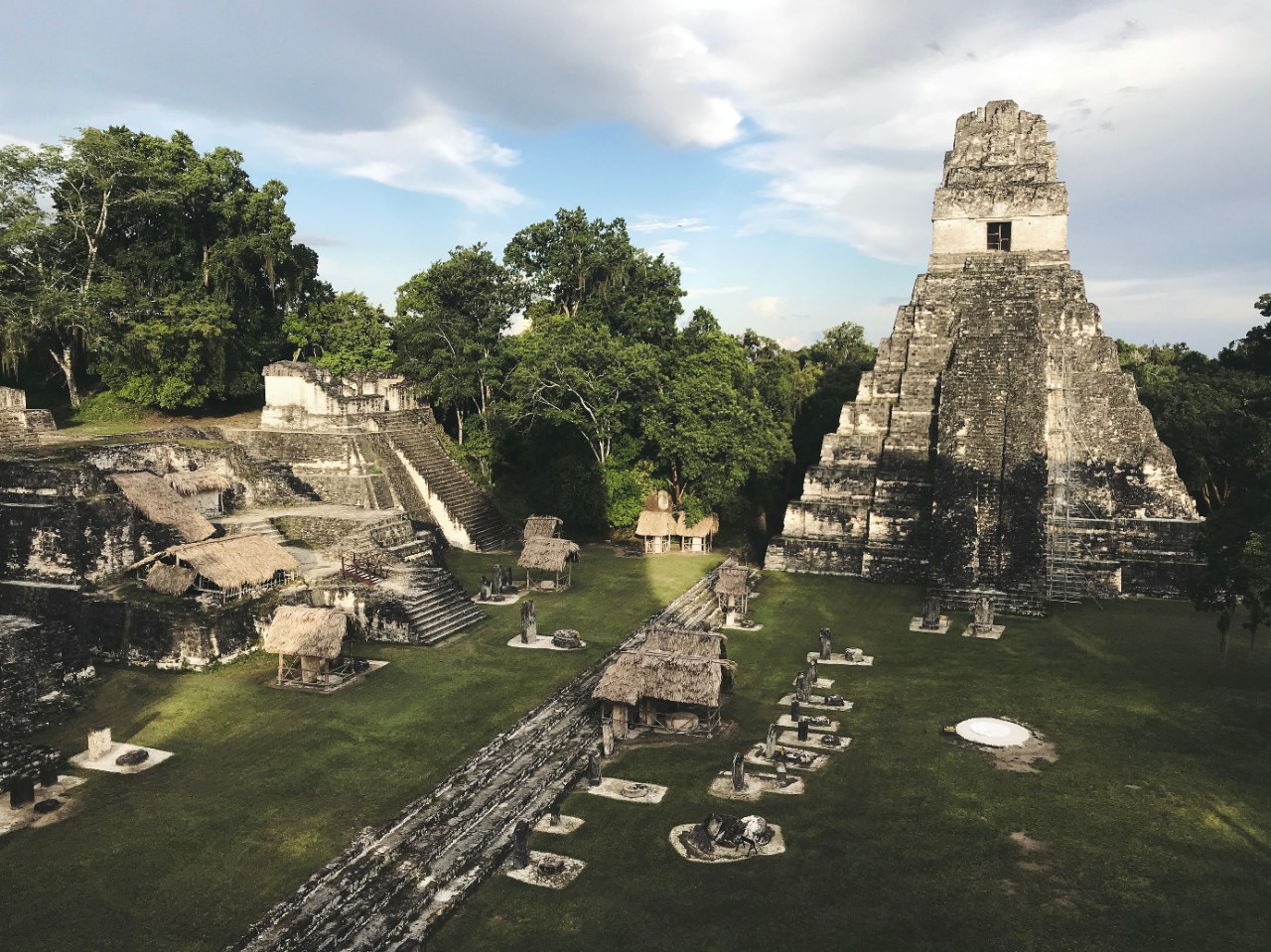
Featured image at top: The ancient Maya city of Tikal. Photo/Jimmy Baum/Unsplash

UC professors Vernon Scarborough, left, David Lentz and Nicholas Dunning have collaborated on numerous archaeological research projects. Photo/Provided
Related Stories
Sugar overload killing hearts
November 10, 2025
Two in five people will be told they have diabetes during their lifetime. And people who have diabetes are twice as likely to develop heart disease. One of the deadliest dangers? Diabetic cardiomyopathy. But groundbreaking University of Cincinnati research hopes to stop and even reverse the damage before it’s too late.
Is going nuclear the solution to Ohio’s energy costs?
November 10, 2025

The Ohio Capital Journal recently reported that as energy prices continue to climb, economists are weighing the benefits of going nuclear to curb costs. The publication dove into a Scioto Analysis survey of 18 economists to weigh the pros and cons of nuclear energy. One economist featured was Iryna Topolyan, PhD, professor of economics at the Carl H. Lindner College of Business.
App turns smartwatch into detector of structural heart disease
November 10, 2025

An app that uses an AI model to read a single-lead ECG from a smartwatch can detect structural heart disease, researchers reported at the 2025 Scientific Sessions of the American Heart Association. Although the technology requires further validation, researchers said it could help improve the identification of patients with heart failure, valvular conditions and left ventricular hypertrophy before they become symptomatic, which could improve the prognosis for people with these conditions.