WVXU: UC professor offers scientific take on UFO sightings
Cincinnati Edition talks to UC assistant professor Daniel Cuppoletti about aerial phenomena

WVXU's Cincinnati Edition turned to University of Cincinnati assistant professor Daniel Cuppoletti to help explain what's behind reports of unidentified aerial phenomena.
The nonprofit Mutual UFO Network, which investigates reports of unexplained aerial phenomena, is moving its headquarters to Cincinnati. The group's volunteer investigators across the country pursue sightings of unidentified objects or aerial phenomena to try to find an explanation.
It's a subject that's getting more attention in recent years. Accounts of the inexplicable observations have captured the imagination of the public and national news media this year.
The U.S. Department of Defense is expected to present findings to Congress later this month on 10 years of military observations of these unexplained phenomena.
Cincinnati Edition host Michael Monks spoke to Cuppoletti, who provided a scientific perspective. Cuppoletti is an assistant professor of aerospace engineering in UC's College of Engineering and Applied Science.
"As a scientist, we have to have a hypothesis and validate it with data," he said.
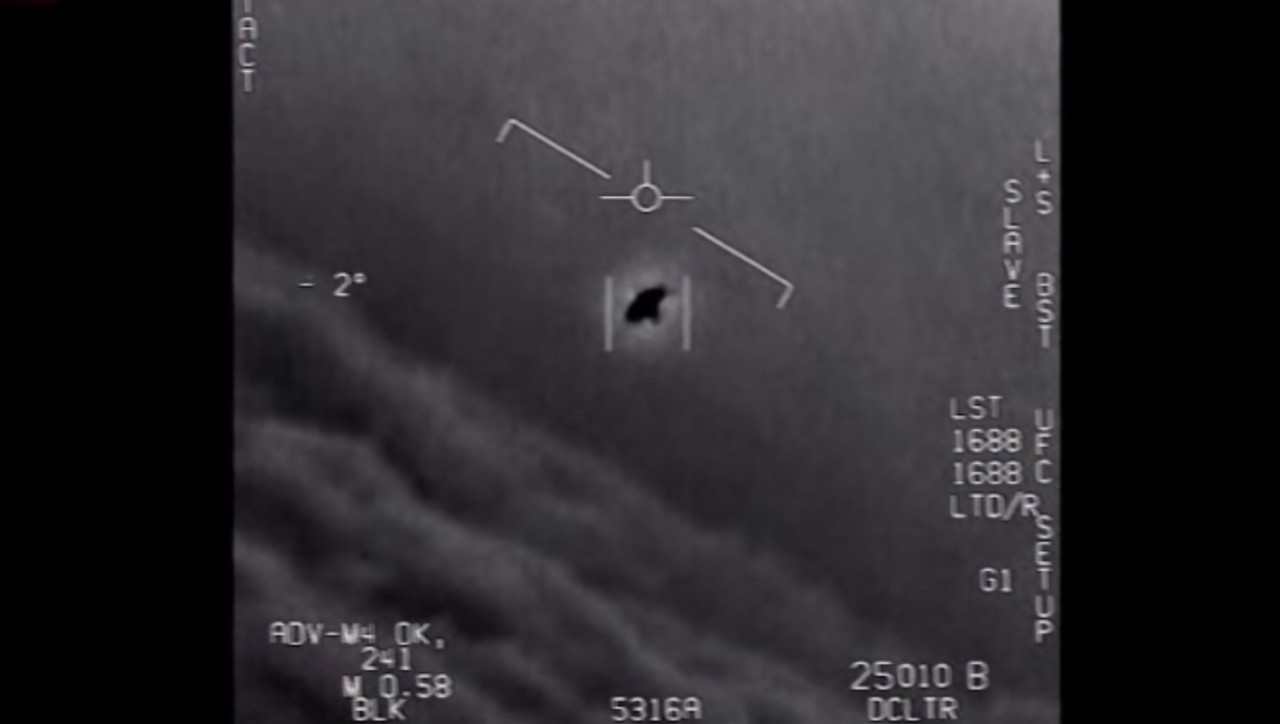
"All of these videos released are sensor-based videos and infrared cameras. Sensors can be tricked," Cuppoletti said. "If you're a photographer and take a photo that has a lens flare, that's an optical phenomenon."
Cuppoletti has conducted research at the Air Force Research Laboratory and for military contractors. He said sky watchers might be disappointed if they are waiting for the U.S. government to provide much insight, particularly if the explanation involves classified military hardware.
But healthy skepticism is warranted, especially when it comes to speculation about spying by foreign adversaries or visits by extraterrestrials, he said.
"These are very unlikely scenarios," Cuppoletti said. "The U.S. intelligence community is 850,000 people with a budget of $60 billion. They are very focused on monitoring all of our coasts for national security."
Featured image at top: A still frame from a video taken from a military aircraft. Photo/U.S. Department of Defense
Related Stories
Sugar overload killing hearts
November 10, 2025
Two in five people will be told they have diabetes during their lifetime. And people who have diabetes are twice as likely to develop heart disease. One of the deadliest dangers? Diabetic cardiomyopathy. But groundbreaking University of Cincinnati research hopes to stop and even reverse the damage before it’s too late.
Is going nuclear the solution to Ohio’s energy costs?
November 10, 2025

The Ohio Capital Journal recently reported that as energy prices continue to climb, economists are weighing the benefits of going nuclear to curb costs. The publication dove into a Scioto Analysis survey of 18 economists to weigh the pros and cons of nuclear energy. One economist featured was Iryna Topolyan, PhD, professor of economics at the Carl H. Lindner College of Business.
App turns smartwatch into detector of structural heart disease
November 10, 2025

An app that uses an AI model to read a single-lead ECG from a smartwatch can detect structural heart disease, researchers reported at the 2025 Scientific Sessions of the American Heart Association. Although the technology requires further validation, researchers said it could help improve the identification of patients with heart failure, valvular conditions and left ventricular hypertrophy before they become symptomatic, which could improve the prognosis for people with these conditions.