Ophthalmology Times: Investigators receive grant to develop alternative to treat eye disease
Research study led by UC pharmacy faculty shows promise for treating eye diseases

A team of researchers at the University of Cincinnati's Department of Chemistry and Department of Ophthalmology, in collaboration with researchers at Cincinnati Children's Hospital Medical Center and the Ohio State University, have received a four-year, $1.6 million grant from the National Institutes of Health/National Eye Institute to develop a drug delivery system that is more efficient and longer lasting than conventional eye injections.
"Direct injections of medications into the eye are not only an unpleasant experience but repeated injections can lead to severe adverse effects to the eye, which can be sight-threatening," says Kevin Li, the UC pharmaceutical scientist who is leading the research study.
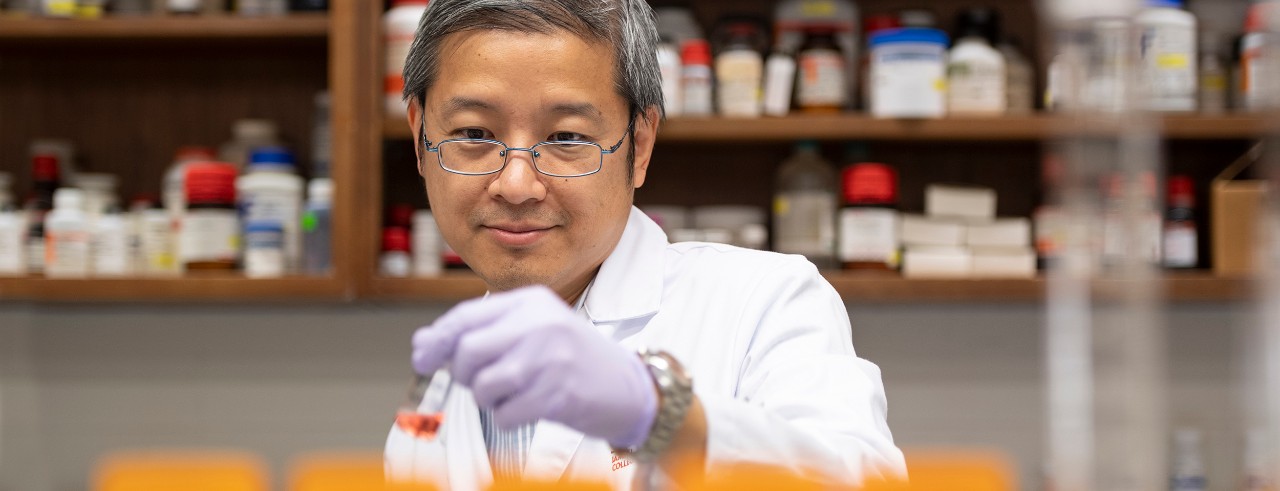
Featured image at top of Kevin Li, PhD. Photo/Colleen Kelley/UC Creative + Brand.
Impact Lives Here
The University of Cincinnati is leading public urban universities into a new era of innovation and impact. Our faculty, staff and students are saving lives, changing outcomes and bending the future in our city's direction. Next Lives Here.
Related Stories
Sugar overload killing hearts
November 10, 2025
Two in five people will be told they have diabetes during their lifetime. And people who have diabetes are twice as likely to develop heart disease. One of the deadliest dangers? Diabetic cardiomyopathy. But groundbreaking University of Cincinnati research hopes to stop and even reverse the damage before it’s too late.
Is going nuclear the solution to Ohio’s energy costs?
November 10, 2025

The Ohio Capital Journal recently reported that as energy prices continue to climb, economists are weighing the benefits of going nuclear to curb costs. The publication dove into a Scioto Analysis survey of 18 economists to weigh the pros and cons of nuclear energy. One economist featured was Iryna Topolyan, PhD, professor of economics at the Carl H. Lindner College of Business.
App turns smartwatch into detector of structural heart disease
November 10, 2025

An app that uses an AI model to read a single-lead ECG from a smartwatch can detect structural heart disease, researchers reported at the 2025 Scientific Sessions of the American Heart Association. Although the technology requires further validation, researchers said it could help improve the identification of patients with heart failure, valvular conditions and left ventricular hypertrophy before they become symptomatic, which could improve the prognosis for people with these conditions.