UC launches Space Research Institute
Director and faculty chairs announced

The University of Cincinnati Office of Research has launched the interdisciplinary Space Research Institute for Discovery and Exploration as part of Research2030, UC’s 10-year strategic plan for research.
Charles Doarn was named director of the institute. Doarn is professor and program director of UC’s Master in Public Health Program in the Department of Environmental and Public Health Sciences in the College of Medicine. When he first came to UC in 2003, Doarn was executive director of the Center for Surgical Innovation. He’s worked with many aerospace institutions, including with NASA on preparedness and its telemedicine plan.
The UC Space Research Institute has also named two professors to lend their expertise to the institute as faculty chairs.
Ou Ma is Alan B. Shepard Endowed Chair for Exploration and professor of aerospace engineering. He leads the Intelligent Robotics and Autonomous Systems Lab in the College of Engineering and Applied Science. Ma’s research includes developing technologies for autonomous robots that can work independently but cooperatively. Ma collaborated on the design of the Canadarm, a series of robotic arms used on the Space Shuttle and International Space Station.
Tomasz Stepinski is Thomas Jefferson Chair of Space Exploration for the institute. Stepinski is head of UC’s Space Informatics Lab in the College of Arts and Sciences where his research team develops intelligent algorithms and online tools for intuitive exploration of large spatial datasets from planetary data. He worked for NASA’s Lunar and Planetary Institute for 20 years before coming to UC.
The institute is hosting a virtual meeting with NASA Glenn Research Center, “The Future of Aeronautics: Connecting UC, NASA and Industry in Ohio,” on March 19.
Read the full announcement from UC’s Office of Research and learn more about the Space Research Institute.
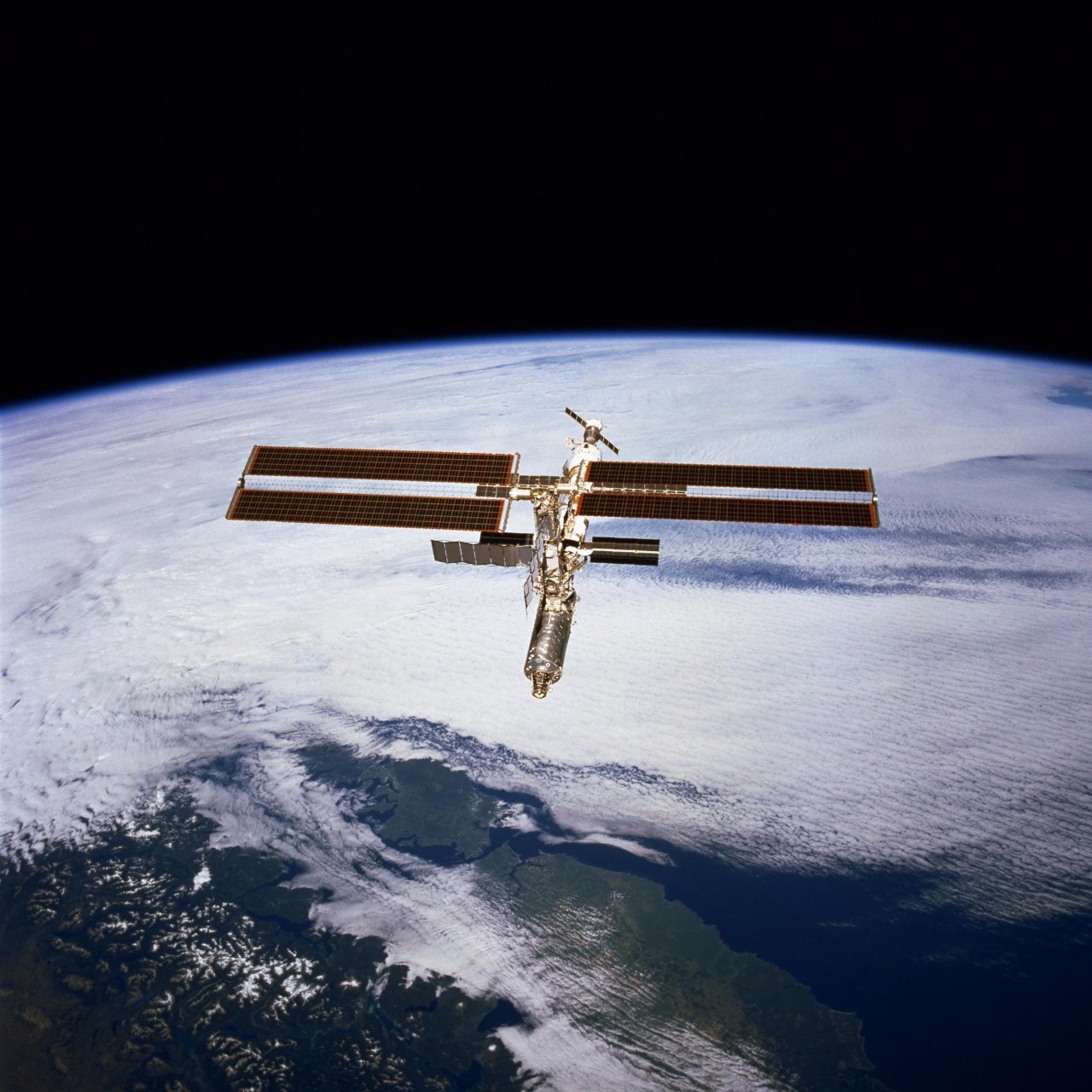
Featured image at top: The International Space Station. UC professor Ou Ma developed the robotic arms used aboard the station while leading research and development as senior project engineer for MDA Space Systems. Photo/NASA
Related Stories
Sugar overload killing hearts
November 10, 2025
Two in five people will be told they have diabetes during their lifetime. And people who have diabetes are twice as likely to develop heart disease. One of the deadliest dangers? Diabetic cardiomyopathy. But groundbreaking University of Cincinnati research hopes to stop and even reverse the damage before it’s too late.
App turns smartwatch into detector of structural heart disease
November 10, 2025

An app that uses an AI model to read a single-lead ECG from a smartwatch can detect structural heart disease, researchers reported at the 2025 Scientific Sessions of the American Heart Association. Although the technology requires further validation, researchers said it could help improve the identification of patients with heart failure, valvular conditions and left ventricular hypertrophy before they become symptomatic, which could improve the prognosis for people with these conditions.
Combination immunotherapy helps overcome melanoma treatment resistance
November 10, 2025

MSN highlighted research led by the University of Cincinnati Cancer Center's Trisha Wise-Draper showing a combination of immunotherapy medications can activate a robust immune response and help overcome treatment resistance in patients with refractory melanoma.