UPI: UC geologist photographs oldest known land fossils
International research team writes about microfossils found in China

United Press International reported on a discovery coauthored by a University of Cincinnati geologist of the oldest known land fossils on Earth.
The microfossils of fungi were found in 635-million-year-old sedimentary rock in China. The discovery was published in the journal Nature Communications.
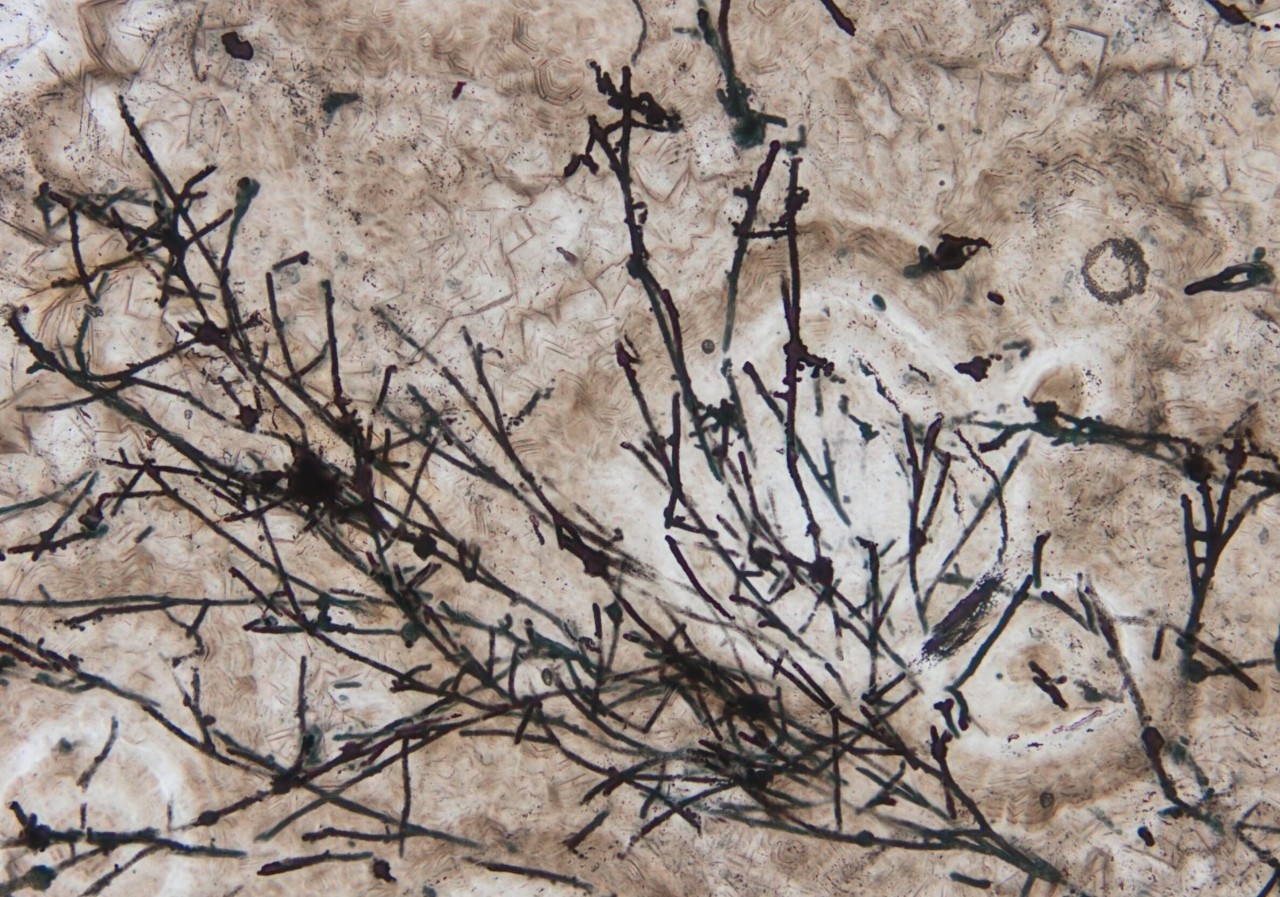
UC associate professor of geology Andrew Czaja, a paper co-author, captured microscopic images of the crystal-like fungus. Researchers believe fungus in caves helped speed the end of a planet-wide ice age by reversing feedback loops.
The discovery could suggest that fungus predated terrestrial plants.
Lead author Tian Gan, a postdoctoral researcher with the Chinese Academy of Sciences, called the finding "an accidental discovery."
But Gan said the fossil could help us better understand the forces behind climate change more than 600 million years ago.
Featured image at top: A microscopic image shows the filament-like microfossils found in China. Photo by Andrew Czaja/University of Cincinnati.

UC geologist Andrew Czaja, pictured in this file photo, was part of an international team that discovered 635-million-year-old microfossils in China. Photo/Joseph Fuqua II/UC Creative + Brand
Related Stories
Sugar overload killing hearts
November 10, 2025
Two in five people will be told they have diabetes during their lifetime. And people who have diabetes are twice as likely to develop heart disease. One of the deadliest dangers? Diabetic cardiomyopathy. But groundbreaking University of Cincinnati research hopes to stop and even reverse the damage before it’s too late.
Is going nuclear the solution to Ohio’s energy costs?
November 10, 2025

The Ohio Capital Journal recently reported that as energy prices continue to climb, economists are weighing the benefits of going nuclear to curb costs. The publication dove into a Scioto Analysis survey of 18 economists to weigh the pros and cons of nuclear energy. One economist featured was Iryna Topolyan, PhD, professor of economics at the Carl H. Lindner College of Business.
App turns smartwatch into detector of structural heart disease
November 10, 2025

An app that uses an AI model to read a single-lead ECG from a smartwatch can detect structural heart disease, researchers reported at the 2025 Scientific Sessions of the American Heart Association. Although the technology requires further validation, researchers said it could help improve the identification of patients with heart failure, valvular conditions and left ventricular hypertrophy before they become symptomatic, which could improve the prognosis for people with these conditions.