Save a life and light up the holidays
Hoxworth giving festive holiday socks to donors

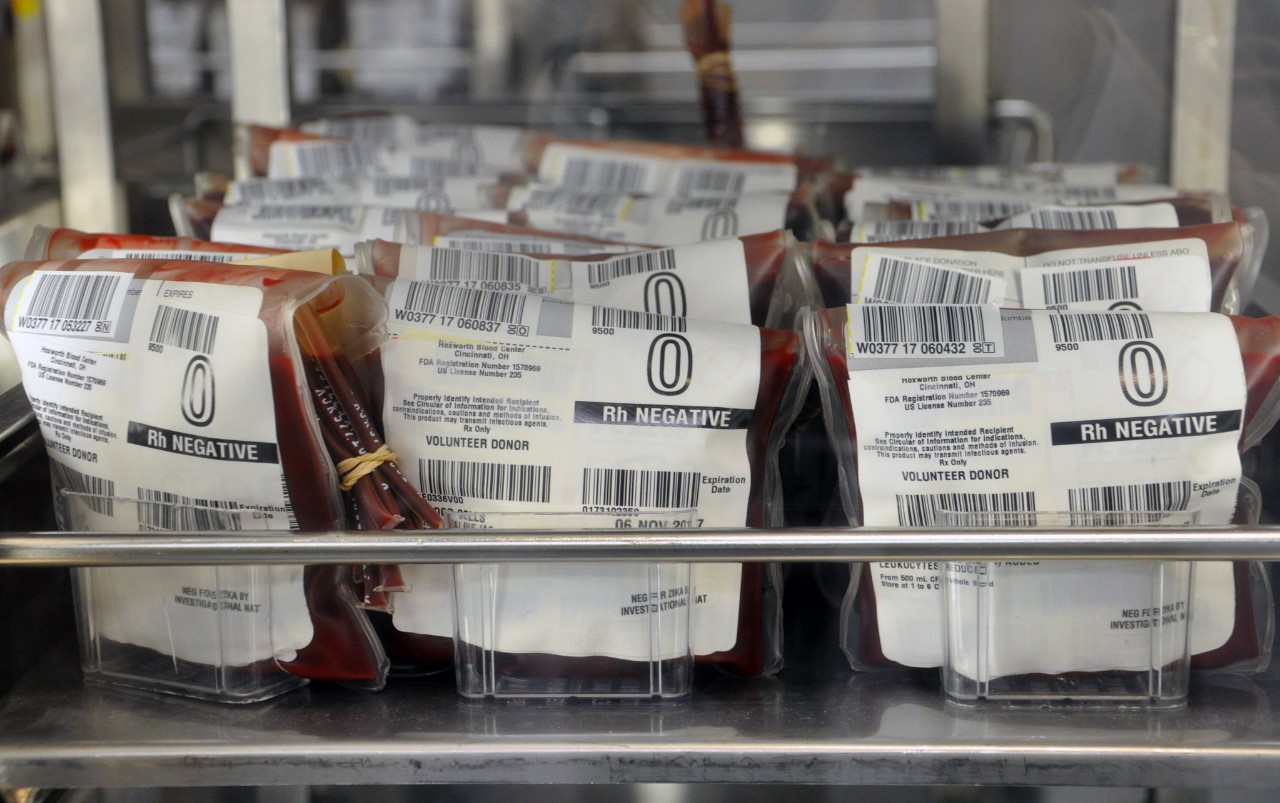
Hoxworth Blood Center, University of Cincinnati is spreading holiday cheer early this year by offering donors a festive gift when they come and donate blood.
All donors at Hoxworth Neighborhood Donor Centers will receive a pair of light-up Hoxworth Holiday socks through Saturday, Dec. 12.

“It is no secret that 2020 has been a stressful year for most of us, and for blood banks across the country, the need for blood products causes added strain around the holidays,” said Alecia Lipton, director of public relations at Hoxworth Blood Center. “We figured that our donors could benefit from a little early holiday cheer — so when they roll up a sleeve at one of our seven Neighborhood Donor Centers, they’ll get an exclusive gift from us.”
Lipton noted that cancer treatments, traumas, and emergency surgeries don’t stop during the holiday season — and patients will still require blood products while the community is busy purchasing gifts and hanging decorations. She also added that there is an urgent need for recovered COVID-19 patients to donate convalescent plasma, especially as cases of the virus surge in the Tri-State area.
Hoxworth continues to follow social distancing guidelines at donor centers and blood drives. Masks are required per local guidelines.
To schedule a donation, call (513) 451-0910 or visit www.hoxworth.org. Appointments are encouraged at this time in order to maintain social distancing protocol.
Hoxworth Blood Center, University of Cincinnati was founded in 1938 and serves more than 30 hospitals in 18 counties in Southwestern Ohio, Northern Kentucky and Southeastern Indiana. Annually, Hoxworth collects more than 90,000 units of blood from local donors to help save the lives of patients in area hospitals. Hoxworth Blood Center: Saving Lives Close to Home.
Related Stories
Sugar overload killing hearts
November 10, 2025
Two in five people will be told they have diabetes during their lifetime. And people who have diabetes are twice as likely to develop heart disease. One of the deadliest dangers? Diabetic cardiomyopathy. But groundbreaking University of Cincinnati research hopes to stop and even reverse the damage before it’s too late.
App turns smartwatch into detector of structural heart disease
November 10, 2025

An app that uses an AI model to read a single-lead ECG from a smartwatch can detect structural heart disease, researchers reported at the 2025 Scientific Sessions of the American Heart Association. Although the technology requires further validation, researchers said it could help improve the identification of patients with heart failure, valvular conditions and left ventricular hypertrophy before they become symptomatic, which could improve the prognosis for people with these conditions.
Combination immunotherapy helps overcome melanoma treatment resistance
November 10, 2025

MSN highlighted research led by the University of Cincinnati Cancer Center's Trisha Wise-Draper showing a combination of immunotherapy medications can activate a robust immune response and help overcome treatment resistance in patients with refractory melanoma.